Gujarat Ship Haji Ali Sinks in Strait of Hormuz | Crew Safe

Digital Desk

Gujarat Ship Haji Ali Sinks in Strait of Hormuz | Crew Safe

Another Gujarat cargo ship MSV Haji Ali sank in the Strait of Hormuz after being hit near Oman. All 14 crew rescued as Netanyahu UAE visit controversy adds to regional tensions amid Iran conflict.

Gujarat Cargo Ship Sinks in Strait of Hormuz Amid Rising Tensions

MSV Haji Ali hit near Oman coast, all crew rescued

In the latest incident to heighten concerns over maritime security in the Strait of Hormuz, a Gujarat-owned cargo ship sank after being struck by what initial reports described as a drone or missile-like projectile on May 13. The vessel, identified as the MSV Haji Ali, was en route from Berbera Port in Somalia to Sharjah when the attack occurred in Omani waters.

Oman Coast Guard teams responded swiftly and rescued all 14 crew members safely despite the ship catching fire after the strike. The vessel became stranded off the Omani coast around 3:30 am, according to ship owner Sultan Ahmed Ansar, a resident of Dwarka in Gujarat.

This marks yet another setback for Indian-linked shipping in the region as the ongoing Iran-related conflict, referred to in Israeli operations as “Operation Roaring Lion,” continues to disrupt vital sea lanes. The Strait of Hormuz remains a critical chokepoint for global oil and cargo traffic, with multiple vessels already facing threats in recent weeks.

Owner confirms route and timeline

Speaking to local media, Ansar said the Haji Ali was engaged in routine cargo movement when the incident occurred. Details of the exact weapon used are still under investigation, but sources familiar with the matter pointed to heightened activity by regional actors in the area. No group has immediately claimed responsibility.

Indian authorities are monitoring the situation closely. Similar to the safe passage provided to the India-bound LPG tanker MV Sunshine earlier on May 14, naval and maritime agencies have been coordinating security for Indian-flagged or owned vessels traversing the Gulf. The Haji Ali incident, however, ended differently with the loss of the ship.

Netanyahu’s secret UAE visit sparks diplomatic row

Parallel to the maritime incident, a political controversy erupted over reports of a secret visit by Israeli Prime Minister Benjamin Netanyahu to the United Arab Emirates. Israel’s Prime Minister’s Office confirmed the visit took place during the ongoing operation, but the UAE has denied the claims, creating confusion and diplomatic friction between the two sides.

The visit, if confirmed independently, comes at a sensitive time when backchannel engagements and public posturing often shape narratives in West Asian geopolitics. Analysts suggest such high-level movements could signal efforts to coordinate on security matters amid the broader conflict involving Iran.

Iranian assertions and regional fallout

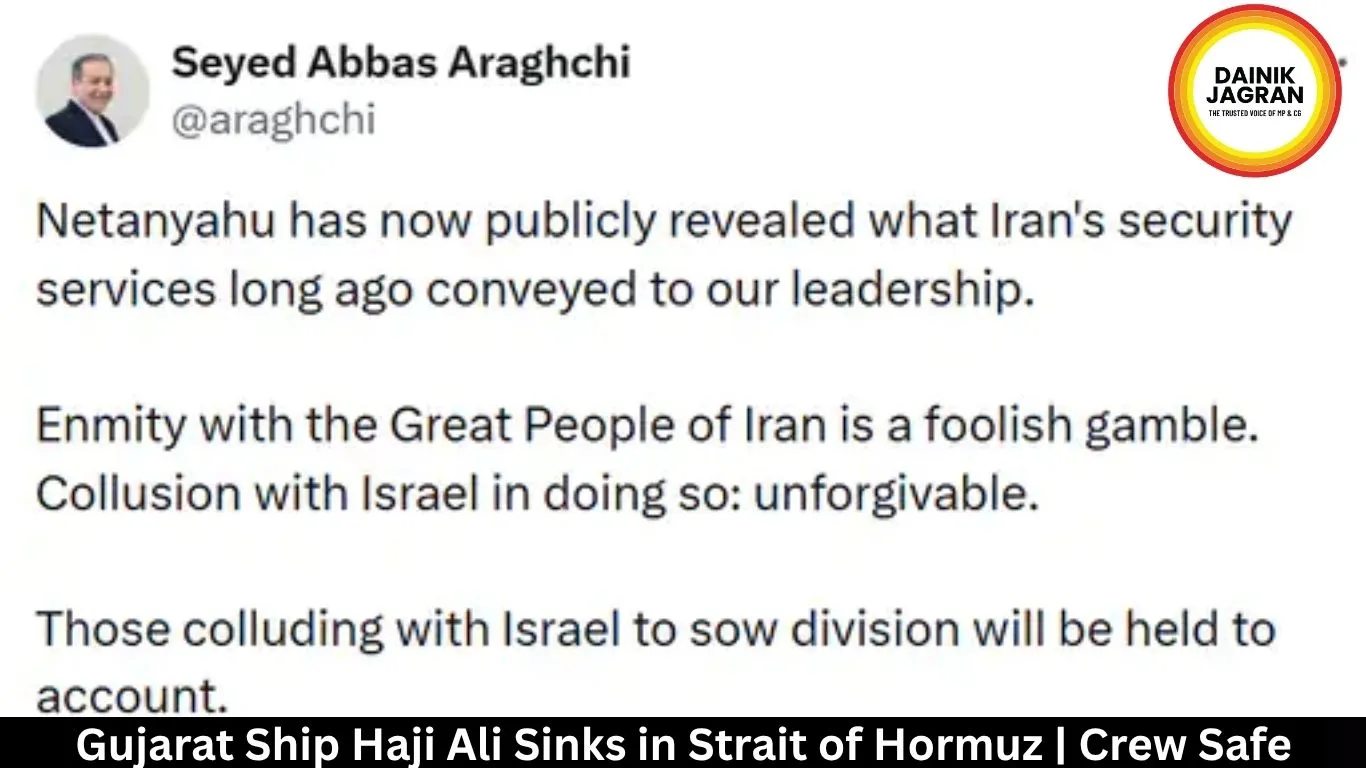
Iranian Foreign Minister Seyed Abbas Araghchi, currently in New Delhi for a BRICS foreign ministers’ meeting, claimed that Iranian security forces had prior information about developments in the region. His remarks added to the war of words as multiple actors trade allegations.

Meanwhile, US officials have continued to defend actions against Iran. Secretary of State Marco Rubio reiterated that Iran’s missile capabilities were intended to shield a future nuclear breakout, a charge Tehran has consistently denied. US President Donald Trump, ahead of talks with Chinese President Xi Jinping, warned that Iran must compromise or face consequences, while noting discussions on the Hormuz crisis alongside trade issues.

Economic and strategic implications

The sinking of the Haji Ali and repeated incidents in the Strait of Hormuz have raised insurance costs and forced shipping companies to reassess routes. For India, which relies heavily on energy imports through the Gulf, any prolonged disruption poses risks to fuel security and trade.

Gujarat, with its strong maritime connections and ports like Kandla and Mundra, has deep stakes in the region. Families of seafarers, many hailing from coastal districts such as Dwarka, often bear the human cost of these conflicts.

On the diplomatic front, South Korean officials blamed Iran for a separate attack on one of their cargo ships, while operations to clear unexploded ordnance continue in Iranian areas. Hezbollah also reported fresh attacks on Israeli positions in southern Lebanon, adding layers to the multi-front tensions.

Safe passages continue amid uncertainty

Despite the risks, several vessels including a Chinese supertanker carrying two million barrels of crude have managed to transit the strait. Indian agencies continue to extend support to merchant ships, as seen with the MV Sunshine.

As the conflict enters a critical phase, with the US seeking additional defence funding and regional players adjusting positions, the safety of commercial shipping remains a pressing concern. Observers will be watching how Oman, India, and other stakeholders coordinate to secure these vital waters in the coming days.

The incident involving the Gujarat ship once again underscores the fragile balance in one of the world’s most important maritime corridors.
 

--------

🚨 Beat the News Rush – Join Now!

Get breaking alerts, hot exclusives, and game-changing stories instantly on your phone. No delays, no fluff – just the edge you need. ⚡

Tap to join: 

🟢 WhatsApp Channel: Dainik Jagran MP CG

Crave more?

🅕 Facebook: Dainik Jagran MP CG English

🅧 Twitter (X): Dainik Jagran MP CG

🅘 Instagram: Dainik Jagran MP CG

Share the fire – keep your crew ahead! 🗞️🔥

english.dainikjagranmpcg.com
14 May 2026 By Abhishek Joshi

Gujarat Ship Haji Ali Sinks in Strait of Hormuz | Crew Safe

Digital Desk

Gujarat Cargo Ship Sinks in Strait of Hormuz Amid Rising Tensions

MSV Haji Ali hit near Oman coast, all crew rescued

In the latest incident to heighten concerns over maritime security in the Strait of Hormuz, a Gujarat-owned cargo ship sank after being struck by what initial reports described as a drone or missile-like projectile on May 13. The vessel, identified as the MSV Haji Ali, was en route from Berbera Port in Somalia to Sharjah when the attack occurred in Omani waters.

Oman Coast Guard teams responded swiftly and rescued all 14 crew members safely despite the ship catching fire after the strike. The vessel became stranded off the Omani coast around 3:30 am, according to ship owner Sultan Ahmed Ansar, a resident of Dwarka in Gujarat.

This marks yet another setback for Indian-linked shipping in the region as the ongoing Iran-related conflict, referred to in Israeli operations as “Operation Roaring Lion,” continues to disrupt vital sea lanes. The Strait of Hormuz remains a critical chokepoint for global oil and cargo traffic, with multiple vessels already facing threats in recent weeks.

Owner confirms route and timeline

Speaking to local media, Ansar said the Haji Ali was engaged in routine cargo movement when the incident occurred. Details of the exact weapon used are still under investigation, but sources familiar with the matter pointed to heightened activity by regional actors in the area. No group has immediately claimed responsibility.

Indian authorities are monitoring the situation closely. Similar to the safe passage provided to the India-bound LPG tanker MV Sunshine earlier on May 14, naval and maritime agencies have been coordinating security for Indian-flagged or owned vessels traversing the Gulf. The Haji Ali incident, however, ended differently with the loss of the ship.

Netanyahu’s secret UAE visit sparks diplomatic row

Parallel to the maritime incident, a political controversy erupted over reports of a secret visit by Israeli Prime Minister Benjamin Netanyahu to the United Arab Emirates. Israel’s Prime Minister’s Office confirmed the visit took place during the ongoing operation, but the UAE has denied the claims, creating confusion and diplomatic friction between the two sides.

The visit, if confirmed independently, comes at a sensitive time when backchannel engagements and public posturing often shape narratives in West Asian geopolitics. Analysts suggest such high-level movements could signal efforts to coordinate on security matters amid the broader conflict involving Iran.

Iranian assertions and regional fallout

Iranian Foreign Minister Seyed Abbas Araghchi, currently in New Delhi for a BRICS foreign ministers’ meeting, claimed that Iranian security forces had prior information about developments in the region. His remarks added to the war of words as multiple actors trade allegations.

Meanwhile, US officials have continued to defend actions against Iran. Secretary of State Marco Rubio reiterated that Iran’s missile capabilities were intended to shield a future nuclear breakout, a charge Tehran has consistently denied. US President Donald Trump, ahead of talks with Chinese President Xi Jinping, warned that Iran must compromise or face consequences, while noting discussions on the Hormuz crisis alongside trade issues.

Economic and strategic implications

The sinking of the Haji Ali and repeated incidents in the Strait of Hormuz have raised insurance costs and forced shipping companies to reassess routes. For India, which relies heavily on energy imports through the Gulf, any prolonged disruption poses risks to fuel security and trade.

Gujarat, with its strong maritime connections and ports like Kandla and Mundra, has deep stakes in the region. Families of seafarers, many hailing from coastal districts such as Dwarka, often bear the human cost of these conflicts.

On the diplomatic front, South Korean officials blamed Iran for a separate attack on one of their cargo ships, while operations to clear unexploded ordnance continue in Iranian areas. Hezbollah also reported fresh attacks on Israeli positions in southern Lebanon, adding layers to the multi-front tensions.

Safe passages continue amid uncertainty

Despite the risks, several vessels including a Chinese supertanker carrying two million barrels of crude have managed to transit the strait. Indian agencies continue to extend support to merchant ships, as seen with the MV Sunshine.

As the conflict enters a critical phase, with the US seeking additional defence funding and regional players adjusting positions, the safety of commercial shipping remains a pressing concern. Observers will be watching how Oman, India, and other stakeholders coordinate to secure these vital waters in the coming days.

The incident involving the Gujarat ship once again underscores the fragile balance in one of the world’s most important maritime corridors.
 

https://english.dainikjagranmpcg.com/special-news/gujarat-ship-haji-ali-sinks-in-strait-of-hormuz/article-18247

Latest News