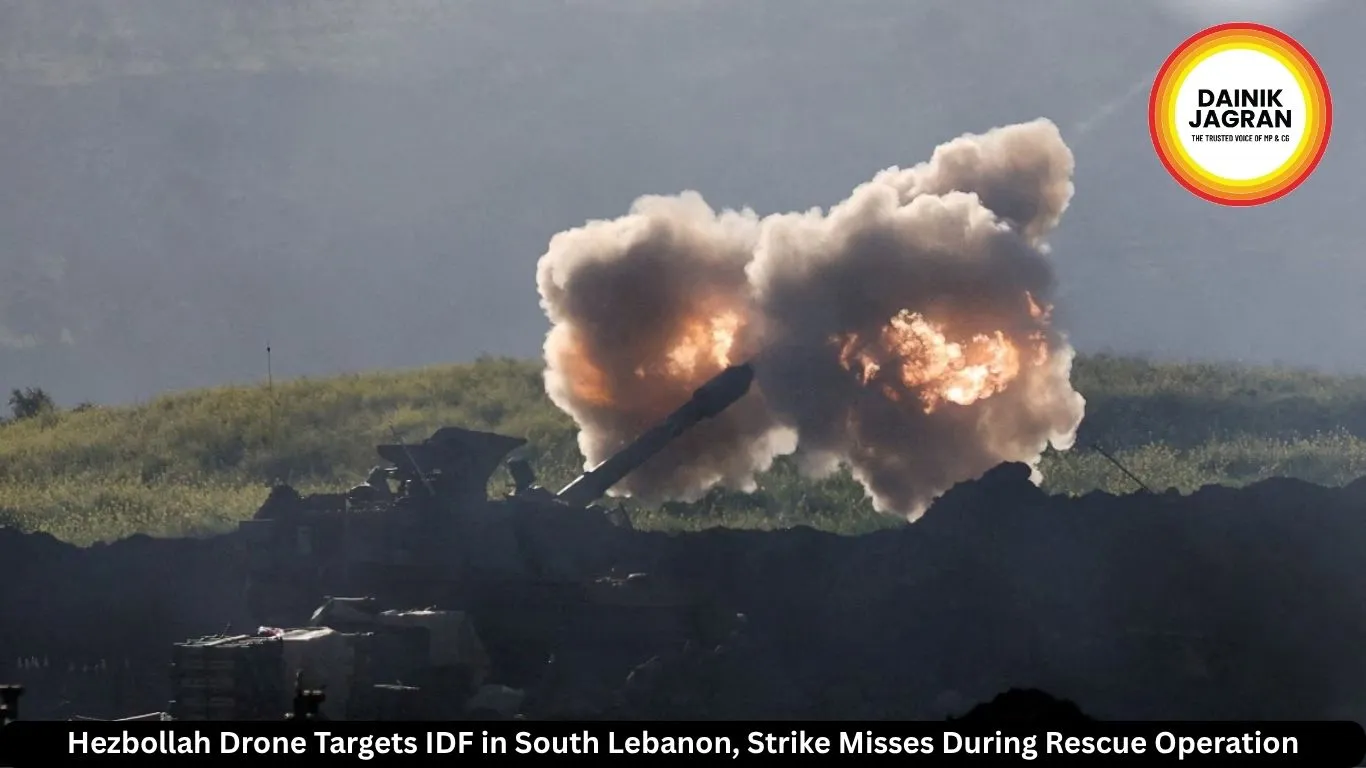
Hezbollah Drone Targets IDF in South Lebanon, Strike Misses During Rescue Operation

International Desk

Hezbollah Drone Targets IDF in South Lebanon, Strike Misses During Rescue Operation

Israel-Hezbollah conflict intensifies after Hezbollah launched FPV drones at IDF troops in southern Lebanon, with one strike missing its target.

The Israel-Hezbollah conflict flared up again after Hezbollah launched a fresh drone strike targeting Israeli Defence Forces (IDF) personnel in southern Lebanon, according to reports emerging from the region. The attack, carried out using FPV (First Person View) drones, reportedly targeted Israeli troops during a medical evacuation operation near the border.

Visuals released by Hezbollah and circulated widely on social media showed Israeli soldiers moving injured personnel towards a helicopter when at least one drone approached the convoy at high speed. While the strike triggered panic among troops on the ground, the drone failed to hit its primary target, as per initial battlefield assessments.

Drone Targets Troops

Hezbollah claimed the attack was aimed at Israeli soldiers and military vehicles engaged in a CASEVAC, or casualty evacuation, mission in southern Lebanon. The group said the operation formed part of its ongoing response to Israeli military activity along the border.

According to footage released by Hezbollah’s media channels, one FPV drone flew dangerously close to Israeli troops and an evacuation helicopter before crashing nearby and exploding. Another drone was reportedly intercepted mid-air after Israeli forces opened fire.

Israeli military officials have not confirmed any fatalities from the strike. Early reports indicated that while the attack disrupted troop movement and forced immediate defensive action, no Israeli soldiers were killed in the incident.

Footage Shows Chaos

The released footage captured moments of confusion as Israeli soldiers scrambled for cover after spotting the incoming drone. Gunfire could be heard as troops attempted to shoot down the aerial threat while continuing evacuation efforts for wounded personnel.

Security analysts tracking the conflict said the footage underlined a growing battlefield trend in which low-cost attack drones are increasingly being used to harass troop positions and disrupt military logistics.

The incident has added to concerns over the expanding use of precision drone warfare in the Israel-Hezbollah conflict, especially in high-risk frontline zones where troop movement remains vulnerable.

Hezbollah’s Drone Strategy

Hezbollah has steadily expanded its use of FPV drones in recent months, shifting from conventional rocket fire to smaller, more agile aerial attacks. Military observers say the tactic mirrors methods seen in the Russia-Ukraine war, where low-cost drones have altered frontline combat.

These drones are typically equipped with cameras and explosive payloads, allowing operators to guide them directly towards military targets. Hezbollah has repeatedly claimed such systems have been used to strike Israeli armour, troop carriers and forward operating positions. The latest strike reflects that evolving strategy, even though the drone appears to have missed its intended target.

Israeli Operations Continue

Despite the attempted strike, the IDF has continued operations in southern Lebanon, where Israeli forces remain engaged in cross-border military action against Hezbollah positions. Israeli officials have maintained that operations are aimed at degrading Hezbollah’s offensive capabilities near the frontier.

The latest exchange signals that neither side is stepping back. Cross-border fire, drone launches and missile exchanges have continued despite repeated international calls for de-escalation.

According to regional security reports, both sides have increasingly relied on drones for surveillance, targeting and tactical disruption, making aerial threats a central feature of the conflict.

Regional Tensions Rise

The renewed hostilities have raised concerns over a broader regional spillover, especially as tensions remain high across West Asia. Analysts say repeated exchanges between Israel and Hezbollah risk drawing the region into a wider conflict if strikes intensify further.

The growing use of drones has also shifted military calculations on both sides, with conventional troop movement becoming more exposed to fast-moving and hard-to-detect attacks.

What Happens Next

Military observers expect both Israel and Hezbollah to sustain pressure along the southern Lebanon front in the coming days. More drone interceptions, retaliatory strikes and tactical exchanges remain likely as both sides test each other’s battlefield response.

For now, the failed drone strike has reinforced one reality: the Israel-Hezbollah conflict is entering a more unpredictable phase, where low-cost drone warfare is shaping the next round of escalation.


--------

๐Ÿšจ Beat the News Rush โ€“ Join Now!

Get breaking alerts, hot exclusives, and game-changing stories instantly on your phone. No delays, no fluff โ€“ just the edge you need. โšก

Tap to join:ย 

๐ŸŸข WhatsApp Channel: Dainik Jagran MP CG

Crave more?

๐Ÿ…• Facebook: Dainik Jagran MP CG English

๐Ÿ…ง Twitter (X): Dainik Jagran MP CG

๐Ÿ…˜ Instagram: Dainik Jagran MP CG

Share the fire โ€“ keep your crew ahead! ๐Ÿ—ž๏ธ๐Ÿ”ฅ

english.dainikjagranmpcg.com
27 Apr 2026 By ROHIT

Hezbollah Drone Targets IDF in South Lebanon, Strike Misses During Rescue Operation

International Desk

The Israel-Hezbollah conflict flared up again after Hezbollah launched a fresh drone strike targeting Israeli Defence Forces (IDF) personnel in southern Lebanon, according to reports emerging from the region. The attack, carried out using FPV (First Person View) drones, reportedly targeted Israeli troops during a medical evacuation operation near the border.

Visuals released by Hezbollah and circulated widely on social media showed Israeli soldiers moving injured personnel towards a helicopter when at least one drone approached the convoy at high speed. While the strike triggered panic among troops on the ground, the drone failed to hit its primary target, as per initial battlefield assessments.

Drone Targets Troops

Hezbollah claimed the attack was aimed at Israeli soldiers and military vehicles engaged in a CASEVAC, or casualty evacuation, mission in southern Lebanon. The group said the operation formed part of its ongoing response to Israeli military activity along the border.

According to footage released by Hezbollah’s media channels, one FPV drone flew dangerously close to Israeli troops and an evacuation helicopter before crashing nearby and exploding. Another drone was reportedly intercepted mid-air after Israeli forces opened fire.

Israeli military officials have not confirmed any fatalities from the strike. Early reports indicated that while the attack disrupted troop movement and forced immediate defensive action, no Israeli soldiers were killed in the incident.

Footage Shows Chaos

The released footage captured moments of confusion as Israeli soldiers scrambled for cover after spotting the incoming drone. Gunfire could be heard as troops attempted to shoot down the aerial threat while continuing evacuation efforts for wounded personnel.

Security analysts tracking the conflict said the footage underlined a growing battlefield trend in which low-cost attack drones are increasingly being used to harass troop positions and disrupt military logistics.

The incident has added to concerns over the expanding use of precision drone warfare in the Israel-Hezbollah conflict, especially in high-risk frontline zones where troop movement remains vulnerable.

Hezbollah’s Drone Strategy

Hezbollah has steadily expanded its use of FPV drones in recent months, shifting from conventional rocket fire to smaller, more agile aerial attacks. Military observers say the tactic mirrors methods seen in the Russia-Ukraine war, where low-cost drones have altered frontline combat.

These drones are typically equipped with cameras and explosive payloads, allowing operators to guide them directly towards military targets. Hezbollah has repeatedly claimed such systems have been used to strike Israeli armour, troop carriers and forward operating positions. The latest strike reflects that evolving strategy, even though the drone appears to have missed its intended target.

Israeli Operations Continue

Despite the attempted strike, the IDF has continued operations in southern Lebanon, where Israeli forces remain engaged in cross-border military action against Hezbollah positions. Israeli officials have maintained that operations are aimed at degrading Hezbollah’s offensive capabilities near the frontier.

The latest exchange signals that neither side is stepping back. Cross-border fire, drone launches and missile exchanges have continued despite repeated international calls for de-escalation.

According to regional security reports, both sides have increasingly relied on drones for surveillance, targeting and tactical disruption, making aerial threats a central feature of the conflict.

Regional Tensions Rise

The renewed hostilities have raised concerns over a broader regional spillover, especially as tensions remain high across West Asia. Analysts say repeated exchanges between Israel and Hezbollah risk drawing the region into a wider conflict if strikes intensify further.

The growing use of drones has also shifted military calculations on both sides, with conventional troop movement becoming more exposed to fast-moving and hard-to-detect attacks.

What Happens Next

Military observers expect both Israel and Hezbollah to sustain pressure along the southern Lebanon front in the coming days. More drone interceptions, retaliatory strikes and tactical exchanges remain likely as both sides test each other’s battlefield response.

For now, the failed drone strike has reinforced one reality: the Israel-Hezbollah conflict is entering a more unpredictable phase, where low-cost drone warfare is shaping the next round of escalation.

https://english.dainikjagranmpcg.com/international/hezbollah-drone-targets-idf-in-south-lebanon-strike-misses-during/article-17449

Latest News