


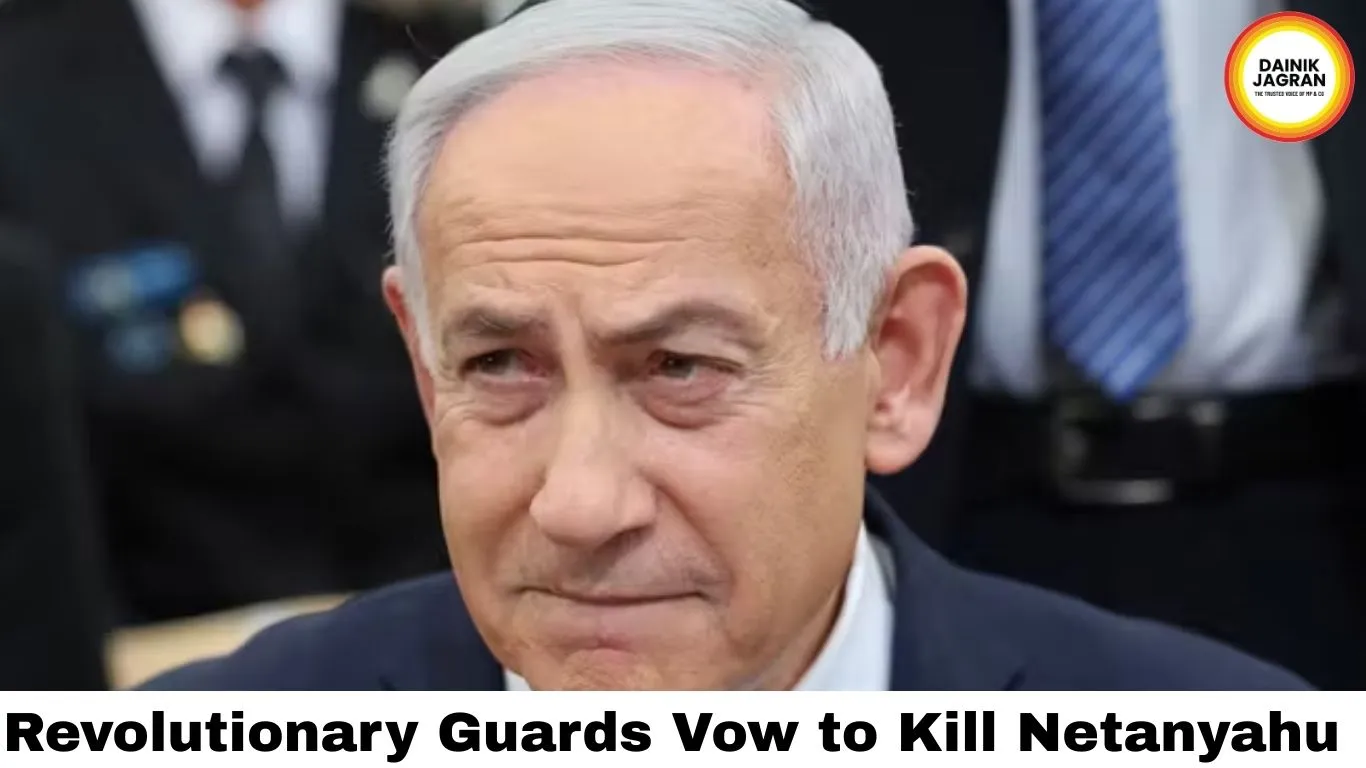
Iran-Israel War March 2026: Revolutionary Guards Vow to Kill Netanyahu, Explosions in Bahrain, Trump Rejects Ceasefire Deal
Digital Desk
The Iran-Israel-US war that erupted on February 28, 2026 showed no signs of slowing on Sunday, March 15, as Iran's Revolutionary Guards issued a direct death threat against Israeli Prime Minister Benjamin Netanyahu, explosions rocked the Bahraini capital of Manama, and US President Donald Trump declared he was not ready to accept any deal with Iran — saying the terms were not good enough yet.
Revolutionary Guards Vow to 'Pursue and Kill' Netanyahu
Iran's Islamic Revolutionary Guard Corps issued a stark public threat on Sunday through their official website Sepah News, directly targeting the Israeli Prime Minister. "If this child-killing criminal is alive, we will continue to pursue and kill him with full force," the statement declared.
The threat came amid swirling social media claims that Netanyahu had already been killed in an Iranian strike. The office of the Israeli Prime Minister moved quickly to shut down those claims, stating clearly that the reports were fake news and that the Prime Minister was alive and well.
Netanyahu: 'Iran Is No Longer the Same Iran'
At his first press conference since the war began, held on March 12 via video link due to security concerns, Netanyahu declared that nearly two weeks of joint US-Israeli bombardment had fundamentally changed Iran. He claimed the strikes had killed senior nuclear scientists, inflicted severe damage on the Revolutionary Guards and Basij forces, and disrupted Iran's nuclear and ballistic missile programmes.
"Iran is no longer the same Iran," Netanyahu said, adding that the attacks had prevented Tehran from moving its nuclear projects deeper underground. He also issued a barely veiled threat against Iran's newly appointed supreme leader Mojtaba Khamenei — who has not appeared in public since being named successor to the slain Ayatollah Ali Khamenei — saying he would not take out a life insurance policy on any leader of what he called terror organisations. He dismissed the younger Khamenei as a puppet of the Revolutionary Guards who could not show his face in public.
Netanyahu stated that the aim of the war was to create conditions for the Iranian people to rise up and overthrow the regime from within — though he admitted he could not be certain that would happen. "You can lead someone to water; you cannot make him drink," he said.
Trump Rejects Deal, Questions Iran's Leadership
Speaking in a television interview on Saturday, US President Donald Trump confirmed that Iran had shown willingness to negotiate a deal to end the war, but said he was not ready to accept it. "The terms aren't good enough yet," Trump said, declining to elaborate on what terms would be acceptable.
Trump also questioned whether Iran's newly appointed supreme leader was still alive, reflecting uncertainty within Washington about the leadership situation inside Tehran. He further raised doubts about whether Iran had dropped naval mines into the Strait of Hormuz — the critical waterway through which a significant portion of global energy supplies pass — though he vowed to open the strait one way or another.
Explosions in Bahrain, Oil Terminal Fire at Fujairah
The war's impact continued to spread across the Gulf region on Sunday. Two explosions were heard over the capital of Bahrain, Manama, in the early hours of the morning as Iran continued its strikes against targets across the region.
In the UAE, oil loading operations at the Fujairah emirate — a major crude export hub handling approximately one million barrels per day — resumed after being halted following a drone attack and fire the previous day. Fujairah sits outside the Strait of Hormuz and its disruption had added to global energy market anxiety.
Russia Supplying Drones to Iran Against US and Israel
Ukrainian President Volodymyr Zelensky confirmed in a television interview on Saturday that Russia is supplying Iran with Shahed drones being used against American and Israeli forces. "It is 100 percent facts," Zelensky said, adding that the drones Iran is using against US bases are Russian-manufactured versions of the original Shahed design. Russia has used thousands of similar drones against Ukraine since 2022.
US Military Casualties Rising
The human cost of the war for American forces has been growing steadily. A US Air Force KC-135 aerial refuelling aircraft crashed in western Iraq on Thursday, killing six crew members. The Pentagon confirmed the crash was not caused by hostile fire. The six killed were identified as John Klinner, Ariana Savino, Ashley Pruitt, Seth Koval, Curtis Angst, and Tyler Simmons. The crash brought the total number of US military personnel killed in operations against Iran to at least 13 since the war began.
The US State Department has also ordered all non-emergency government employees and their family members to leave Oman, citing growing safety risks as the conflict continues to expand across the region.
.jpg)




