
.jpg)

.jpg)
Iran War Day 16 Live Updates: Kharg Island Bombed, Oil Hits $100, New Supreme Leader Vows Hormuz Stays Closed, 3.2 Million Displaced
Digital Desk
The Iran-Israel-US war entered its 16th day on Sunday, March 15, with the conflict escalating sharply on multiple fronts simultaneously — US forces striking Iran's most critical oil export hub at Kharg Island, Iran's new Supreme Leader issuing his first public statement vowing to keep the Strait of Hormuz closed, global oil prices surging past $100 a barrel, and the United Nations confirming that 3.2 million Iranians have been displaced since the war began on February 28.
US Strikes Kharg Island — Iran's Oil Crown Jewel
The single biggest military development of the past 48 hours was a large-scale US precision strike on Kharg Island — a five-kilometre stretch of land off Iran's northern Gulf coast that handles approximately 90 percent of the country's crude oil exports. President Trump announced the strikes on Friday night, declaring that American forces had "totally obliterated every military target" on the island.
Crucially, Trump stated that he had deliberately chosen not to destroy the island's oil infrastructure — but issued a direct threat that he would "immediately reconsider this decision" if Iran continued interfering with the free passage of ships through the Strait of Hormuz. Iran's parliament speaker had earlier warned the US would face consequences if it attacked any Iranian Gulf islands. A regional Iranian official said oil export operations from Kharg Island were "continuing as normal" after the strikes, with no casualties reported among island residents.
New Supreme Leader: Hormuz Stays Closed
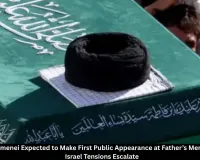
In his first public statement since being named Iran's Supreme Leader following his father's assassination on February 28, Mojtaba Khamenei broke his silence through a message read by a presenter on Iranian state television. He vowed that the Strait of Hormuz would remain closed and that Iran would continue its attacks on Gulf neighbours for as long as US and Israeli strikes on Iran continue.
The statement was described by analysts as firmly non-conciliatory and a direct rejection of international pressure to reopen the waterway. Khamenei has not appeared on camera at any point since assuming power — a fact that has fuelled persistent rumours about his health. US Defense Secretary Pete Hegseth claimed the new Supreme Leader was "wounded and likely disfigured." Iran's Foreign Minister Abbas Araghchi pushed back sharply, saying there was "no problem" with the new Supreme Leader and that "he will continue performing his duties according to the Constitution."
Trump Rejects Deal, Asks World to Send Warships
Speaking in a television interview on Saturday evening, Trump confirmed that Iran had put forward terms for a ceasefire deal. He rejected the offer, stating the terms were "not good enough yet" and declining to specify what he would accept. He also raised fresh doubts about whether Mojtaba Khamenei was even alive, pointing to his complete absence from any camera footage since becoming Supreme Leader.
Trump separately called on the world's major economies — specifically naming the United Kingdom, China, France, Japan, and South Korea — to send warships to the Strait of Hormuz to help keep the critical shipping lane open. Neither the UK nor China confirmed they were doing so. Trump also said US Navy escorts for oil tankers through the strait would happen "soon" and that he was "thinking about taking over" the strait entirely.
Oil Crosses $100, Global Markets Rocked
The Strait of Hormuz — through which approximately 20 percent of the world's daily oil supply normally travels — has been effectively closed to international shipping since the war began. The closure, combined with attacks on energy infrastructure across the Gulf, sent global oil prices surging past $100 a barrel during trading, reaching levels not seen since 2022. Prices briefly touched $120 before pulling back sharply in a single trading session — one of the most volatile days in energy markets in years.
Iran's Foreign Minister stated that the Strait was not fully closed — but only to ships with ties to the United States and Israel. He confirmed that 22 Indian-flagged vessels carrying liquefied gas were sailing through the strait, with two having crossed through safely. Two Indian government vessels were also confirmed to have crossed the Strait of Hormuz safely and were en route back to India.
Iran also signalled it was considering allowing a limited number of oil tankers through the strait — but only if the cargo was traded in Chinese yuan rather than US dollars, a significant geopolitical condition that reflects the broader economic battle being waged alongside the military one.
3.2 Million Iranians Displaced, 2,000+ Killed
The United Nations refugee agency confirmed that up to 3.2 million Iranians have been displaced since the war began — between 600,000 and one million households forced to flee their homes, primarily from Tehran and other urban centres, relocating to northern and rural areas of the country. The displacement has also severely impacted existing refugee communities inside Iran, particularly Afghan refugees already living in precarious conditions.
Iran's Red Crescent Society reported that more than 1,200 Iranians have been killed in US and Israeli strikes. Total casualties across Iran and Lebanon since the war began have exceeded 2,000. At least 826 people have been killed in Lebanon — including 106 children — as Israel simultaneously intensified its campaign against Hezbollah. Thirteen US service members have also been killed, with two additional deaths from non-combat causes.
Iran Threatens American Companies Across the Region
Following the Kharg Island strikes, Iran's Foreign Minister warned that Tehran would now consider all American-linked energy infrastructure across the region as legitimate targets. "Iran will attack any energy infrastructure in the region which belongs to an American company or in which an American company is a shareholder," he stated — a significant escalation of Iran's declared rules of engagement that sent fresh anxiety through Gulf energy markets.
The IRGC separately issued a warning urging civilians to evacuate areas near facilities in which Americans hold shareholding interests across the region.
F1 Bahrain and Saudi Arabia Grand Prix Cancelled
The war's ripple effects reached global sport on Saturday, when Formula One officials announced the cancellation of the Bahrain and Saudi Arabia Grand Prix races that had been scheduled for April. Both events were called off due to the ongoing conflict and security situation across the Gulf region — marking the first time in the modern era that an active global conflict has directly forced the cancellation of Formula One races.
Kuwait International Airport also suffered damage from strikes, and Air India cancelled the majority of its Delhi-Dubai flights following UAE airspace restrictions.
Russia-US Energy Talks, EU Warning
The Kremlin confirmed that discussions were underway between Moscow and Washington about cooperating to stabilise global energy markets disrupted by the war and the Hormuz closure. However, a Kremlin spokesperson said it was "too early to speak about any effective cooperation."
European Union President Antonio Costa declared during a speech to EU ambassadors in Brussels that Russia was the only winner of the ongoing war — gaining higher energy revenues, profiting from diverted Western military resources, and benefiting from reduced global attention on the war in Ukraine.

.jpg)




