Iran Rejects US 15-Point Peace Plan: What It Means for the World Right Now

Digital Desk

Iran Rejects US 15-Point Peace Plan: What It Means for the World Right Now

Iran has rejected the US 15-point peace plan calling it "unreasonable." Here's what happened, what Iran demands, and what comes next.

Iran Rejects US 15-Point Peace Plan: What It Means for the World Right Now

The world was watching. And Tehran said no.

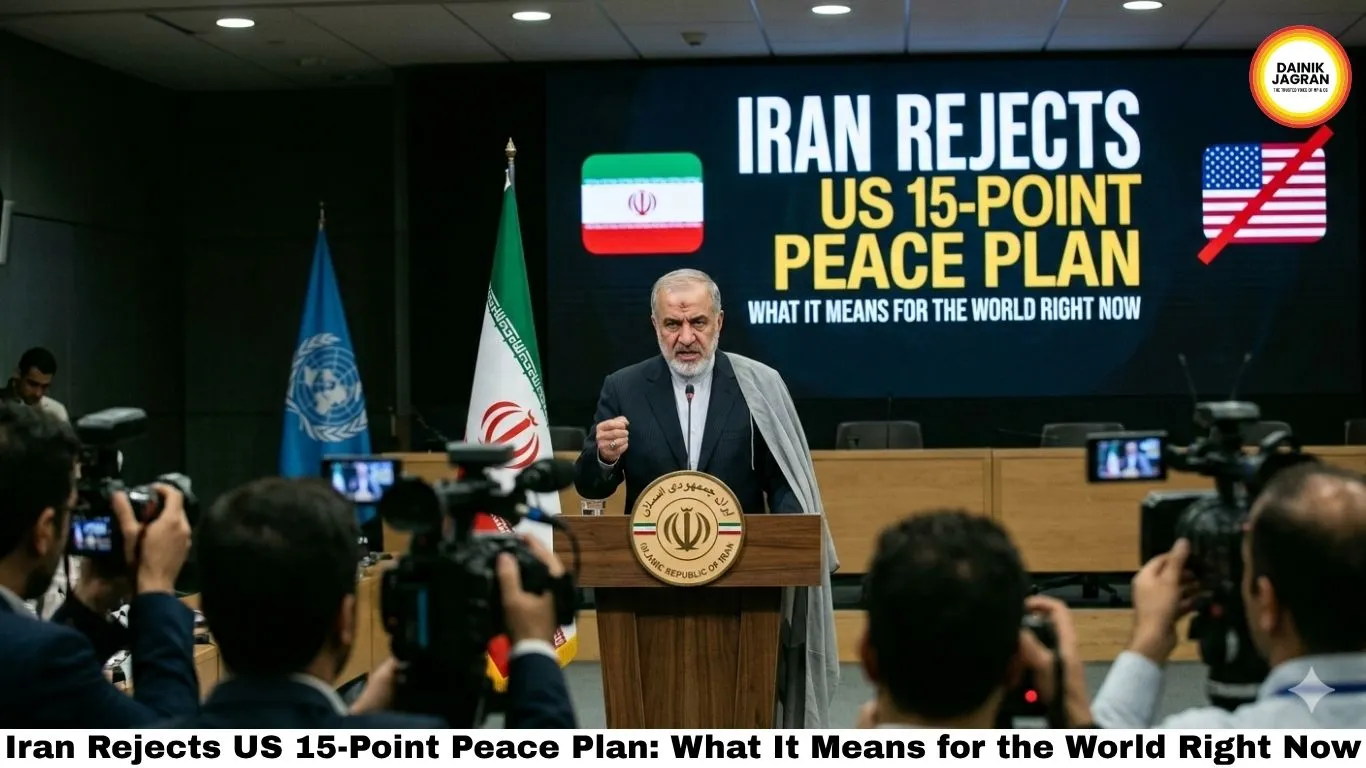
In one of the most consequential diplomatic rejections of 2026, Iran has flatly turned down a 15-point peace proposal put forward by the United States — a plan designed to end the ongoing US-Israeli military campaign against Iran. The rejection has pushed an already volatile conflict deeper into dangerous territory, rattled global oil markets, and left international mediators scrambling for a new path forward.

What Was Inside the US Peace Plan

The American proposal, delivered through Pakistani mediators, was sweeping in its demands. It called on Iran to dismantle its main nuclear facilities, restrict its missile arsenal to purely defensive use, and commit to keeping the Strait of Hormuz — through which roughly one-fifth of the world's oil travels — open and free from disruption. In return, Washington offered sanctions relief and certain economic concessions.

On paper, it was a grand bargain. In Tehran, it was received very differently.

Why Iran Said No — In Its Own Words

Iranian officials did not mince words. A diplomatic source described the plan to Al Jazeera as "extremely maximalist and unreasonable," adding pointedly that it was "not beautiful, even on paper." Foreign Minister Abbas Araghchi went further, stating on state television that Iran has not engaged in negotiations to end the war and does not plan to do so.

Perhaps the most striking statement came from Iranian state media: "The end of the war will occur when Iran decides it should end — not when Trump envisions its conclusion." That is not the language of a nation looking for an exit. That is the language of a nation digging in.

Iran's Five Counter-Conditions

Rather than accepting the US framework, Tehran presented five conditions of its own. Iran demands a complete end to all aggression, binding guarantees that attacks will never recur, full compensation for war damages, a comprehensive ceasefire across all fronts including against allied resistance groups, and formal recognition of Iranian sovereignty over the Strait of Hormuz. These terms are, by any reading, unacceptable to Washington in their current form.

The Situation on the Ground

While diplomats exchanged proposals, the bombs kept falling. Israel launched fresh airstrikes on Tehran. The United States deployed additional paratroopers and Marines to the region. Iran retaliated with strikes on Israel and Gulf Arab nations, including an assault that triggered a massive fire at Kuwait International Airport. The human cost is staggering — more than 1,200 civilians killed inside Iran from US-Israeli strikes, at least 1,000 dead in Lebanon, and 13 American service members killed so far.

What This Means for You: Oil, Economy, and Daily Life

This conflict is not happening in a vacuum. Brent crude oil is trading at around $100 a barrel — up roughly 35% since the war began. Economists warn that sustained high energy prices will feed into rising food costs, higher mortgage rates, and increased fuel prices globally. For ordinary people in India and around the world, a war thousands of kilometres away is already showing up in household budgets.

What Happens Next

The White House struck a defiant tone, with press secretary Karoline Leavitt claiming the US was "close to achieving its core objectives" while warning Iran of consequences if diplomacy fails entirely. Meanwhile, Pakistani mediators are pushing for in-person US-Iran talks, possibly as early as this week. Whether Tehran agrees remains deeply uncertain.

Iran's rejection of the US peace plan is not just a diplomatic setback — it is a signal that this conflict has entered a harder, longer phase. With both sides escalating militarily, oil markets under pressure, and civilian casualties mounting, the stakes for the entire world have never been higher. The next 72 hours of diplomacy may determine whether talks get a second chance — or whether the crisis deepens beyond anyone's ability to contain it.

english.dainikjagranmpcg.com
26 Mar 2026 By Jiya.S

Iran Rejects US 15-Point Peace Plan: What It Means for the World Right Now

Digital Desk

Iran Rejects US 15-Point Peace Plan: What It Means for the World Right Now

The world was watching. And Tehran said no.

In one of the most consequential diplomatic rejections of 2026, Iran has flatly turned down a 15-point peace proposal put forward by the United States — a plan designed to end the ongoing US-Israeli military campaign against Iran. The rejection has pushed an already volatile conflict deeper into dangerous territory, rattled global oil markets, and left international mediators scrambling for a new path forward.

What Was Inside the US Peace Plan

The American proposal, delivered through Pakistani mediators, was sweeping in its demands. It called on Iran to dismantle its main nuclear facilities, restrict its missile arsenal to purely defensive use, and commit to keeping the Strait of Hormuz — through which roughly one-fifth of the world's oil travels — open and free from disruption. In return, Washington offered sanctions relief and certain economic concessions.

On paper, it was a grand bargain. In Tehran, it was received very differently.

Why Iran Said No — In Its Own Words

Iranian officials did not mince words. A diplomatic source described the plan to Al Jazeera as "extremely maximalist and unreasonable," adding pointedly that it was "not beautiful, even on paper." Foreign Minister Abbas Araghchi went further, stating on state television that Iran has not engaged in negotiations to end the war and does not plan to do so.

Perhaps the most striking statement came from Iranian state media: "The end of the war will occur when Iran decides it should end — not when Trump envisions its conclusion." That is not the language of a nation looking for an exit. That is the language of a nation digging in.

Iran's Five Counter-Conditions

Rather than accepting the US framework, Tehran presented five conditions of its own. Iran demands a complete end to all aggression, binding guarantees that attacks will never recur, full compensation for war damages, a comprehensive ceasefire across all fronts including against allied resistance groups, and formal recognition of Iranian sovereignty over the Strait of Hormuz. These terms are, by any reading, unacceptable to Washington in their current form.

The Situation on the Ground

While diplomats exchanged proposals, the bombs kept falling. Israel launched fresh airstrikes on Tehran. The United States deployed additional paratroopers and Marines to the region. Iran retaliated with strikes on Israel and Gulf Arab nations, including an assault that triggered a massive fire at Kuwait International Airport. The human cost is staggering — more than 1,200 civilians killed inside Iran from US-Israeli strikes, at least 1,000 dead in Lebanon, and 13 American service members killed so far.

What This Means for You: Oil, Economy, and Daily Life

This conflict is not happening in a vacuum. Brent crude oil is trading at around $100 a barrel — up roughly 35% since the war began. Economists warn that sustained high energy prices will feed into rising food costs, higher mortgage rates, and increased fuel prices globally. For ordinary people in India and around the world, a war thousands of kilometres away is already showing up in household budgets.

What Happens Next

The White House struck a defiant tone, with press secretary Karoline Leavitt claiming the US was "close to achieving its core objectives" while warning Iran of consequences if diplomacy fails entirely. Meanwhile, Pakistani mediators are pushing for in-person US-Iran talks, possibly as early as this week. Whether Tehran agrees remains deeply uncertain.

Iran's rejection of the US peace plan is not just a diplomatic setback — it is a signal that this conflict has entered a harder, longer phase. With both sides escalating militarily, oil markets under pressure, and civilian casualties mounting, the stakes for the entire world have never been higher. The next 72 hours of diplomacy may determine whether talks get a second chance — or whether the crisis deepens beyond anyone's ability to contain it.

https://english.dainikjagranmpcg.com/international/iran-rejects-us-15-point-peace-plan-what-it-means-for/article-16028

Advertisement

Latest News