Israel-Lebanon Agree to Renew Ceasefire, Plan Security Zones in Southern Lebanon Without Hezbollah Presence
Beirut/Jerusalem
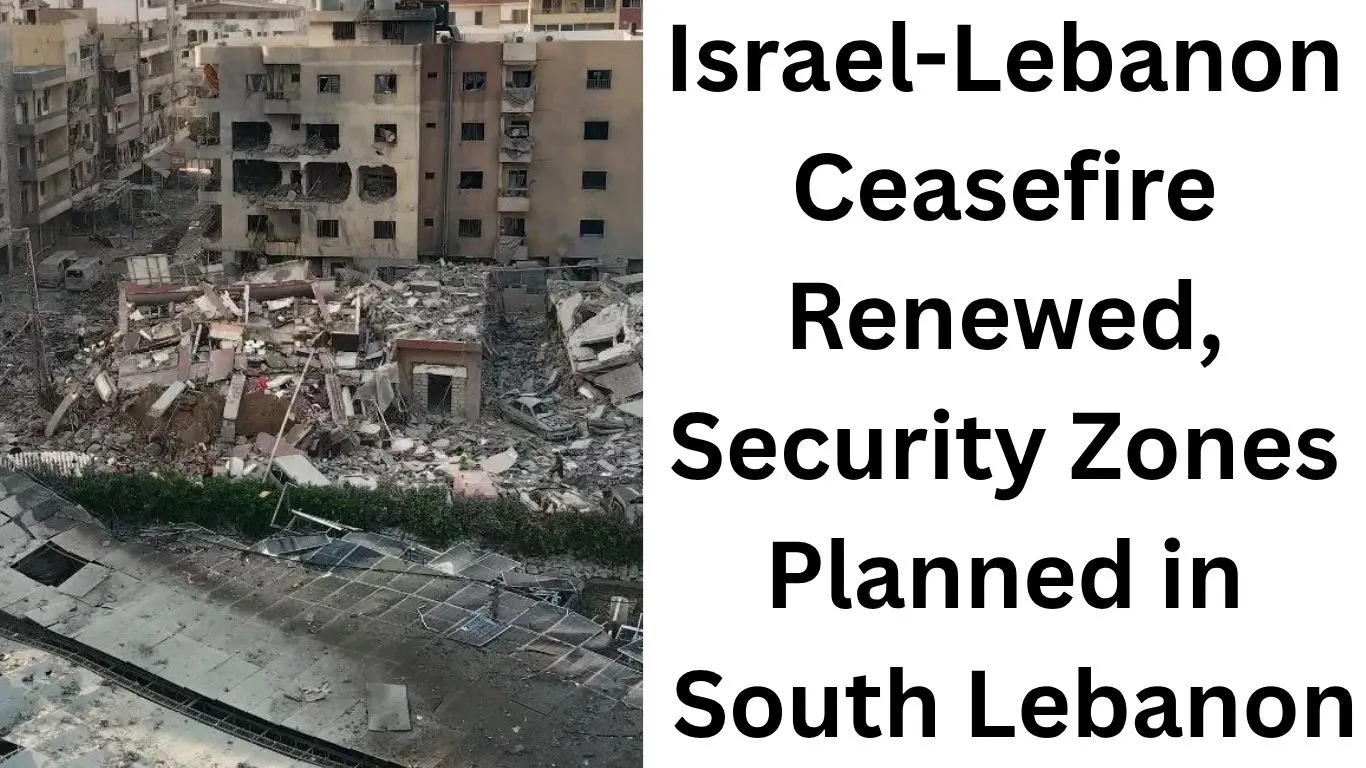
Israel and Lebanon have agreed to reinstate a ceasefire under US mediation, along with a new security arrangement that includes the creation of designated security zones in southern Lebanon where Hezbollah will not be allowed to operate. The development comes after a fourth round of talks facilitated by the United States, aimed at reducing tensions along the volatile border region.
According to a joint statement issued after the negotiations, the ceasefire will remain in place only if Hezbollah halts all attacks and withdraws its fighters from areas south of the Litani River. The proposed security zones will be placed under the control of the Lebanese Army, which will be responsible for maintaining law and order and ensuring that no armed Hezbollah presence remains in those areas.
However, details regarding the implementation of these security zones remain unclear, including how enforcement will be carried out on the ground. Officials indicated that the agreement is intended as a step toward a more stable and permanent security arrangement between the two countries.
The statement also emphasized that the future of Lebanon should be determined solely by its own government and that of Israel, without interference from external actors or organizations. This remark is widely interpreted as an indirect reference to Iran, which is a key supporter of Hezbollah and has repeatedly opposed Israeli military operations in Lebanon.
Notably, Hezbollah was not included in the negotiations, despite being the central actor in the ongoing conflict dynamics. The exclusion has raised questions about the durability of the agreement, even as diplomatic efforts continue under US supervision.
Despite the announcement of a ceasefire framework, violence on the ground has not fully stopped. On Wednesday, Israeli drone strikes in southern Lebanon reportedly killed at least six people. Lebanese security officials also reported that a car near southern Beirut was targeted in a separate strike.
Israel, on the other hand, claimed that it intercepted a suspicious aerial target launched from Hezbollah-controlled areas before it could reach Israeli territory. The exchange highlights the fragile nature of the ceasefire and ongoing military readiness on both sides.
Iranian Foreign Minister Abbas Araghchi warned that any Israeli strike on Beirut would trigger a strong response from Tehran, further raising concerns of regional escalation. Iran continues to maintain close ties with Hezbollah and has consistently condemned Israeli military actions in Lebanon.
Meanwhile, US President Donald Trump said he had personally urged Israeli Prime Minister Benjamin Netanyahu to halt military operations in Lebanon during recent escalations. Netanyahu acknowledged that differences may exist between him and Trump on certain issues, but stated that both leaders remain aligned on their stance regarding Iran.

--------
🚨 Beat the News Rush – Join Now!
Get breaking alerts, hot exclusives, and game-changing stories instantly on your phone. No delays, no fluff – just the edge you need. ⚡
Tap to join:
🟢 WhatsApp Channel: Dainik Jagran MP CG
Crave more?
🅕 Facebook: Dainik Jagran MP CG English
🅧 Twitter (X): Dainik Jagran MP CG
🅘 Instagram: Dainik Jagran MP CG
Share the fire – keep your crew ahead! 🗞️🔥
Israel-Lebanon Agree to Renew Ceasefire, Plan Security Zones in Southern Lebanon Without Hezbollah Presence
Beirut/Jerusalem
Israel and Lebanon have agreed to reinstate a ceasefire under US mediation, along with a new security arrangement that includes the creation of designated security zones in southern Lebanon where Hezbollah will not be allowed to operate. The development comes after a fourth round of talks facilitated by the United States, aimed at reducing tensions along the volatile border region.
According to a joint statement issued after the negotiations, the ceasefire will remain in place only if Hezbollah halts all attacks and withdraws its fighters from areas south of the Litani River. The proposed security zones will be placed under the control of the Lebanese Army, which will be responsible for maintaining law and order and ensuring that no armed Hezbollah presence remains in those areas.
However, details regarding the implementation of these security zones remain unclear, including how enforcement will be carried out on the ground. Officials indicated that the agreement is intended as a step toward a more stable and permanent security arrangement between the two countries.
The statement also emphasized that the future of Lebanon should be determined solely by its own government and that of Israel, without interference from external actors or organizations. This remark is widely interpreted as an indirect reference to Iran, which is a key supporter of Hezbollah and has repeatedly opposed Israeli military operations in Lebanon.
Notably, Hezbollah was not included in the negotiations, despite being the central actor in the ongoing conflict dynamics. The exclusion has raised questions about the durability of the agreement, even as diplomatic efforts continue under US supervision.
Despite the announcement of a ceasefire framework, violence on the ground has not fully stopped. On Wednesday, Israeli drone strikes in southern Lebanon reportedly killed at least six people. Lebanese security officials also reported that a car near southern Beirut was targeted in a separate strike.
Israel, on the other hand, claimed that it intercepted a suspicious aerial target launched from Hezbollah-controlled areas before it could reach Israeli territory. The exchange highlights the fragile nature of the ceasefire and ongoing military readiness on both sides.
Iranian Foreign Minister Abbas Araghchi warned that any Israeli strike on Beirut would trigger a strong response from Tehran, further raising concerns of regional escalation. Iran continues to maintain close ties with Hezbollah and has consistently condemned Israeli military actions in Lebanon.
Meanwhile, US President Donald Trump said he had personally urged Israeli Prime Minister Benjamin Netanyahu to halt military operations in Lebanon during recent escalations. Netanyahu acknowledged that differences may exist between him and Trump on certain issues, but stated that both leaders remain aligned on their stance regarding Iran.