


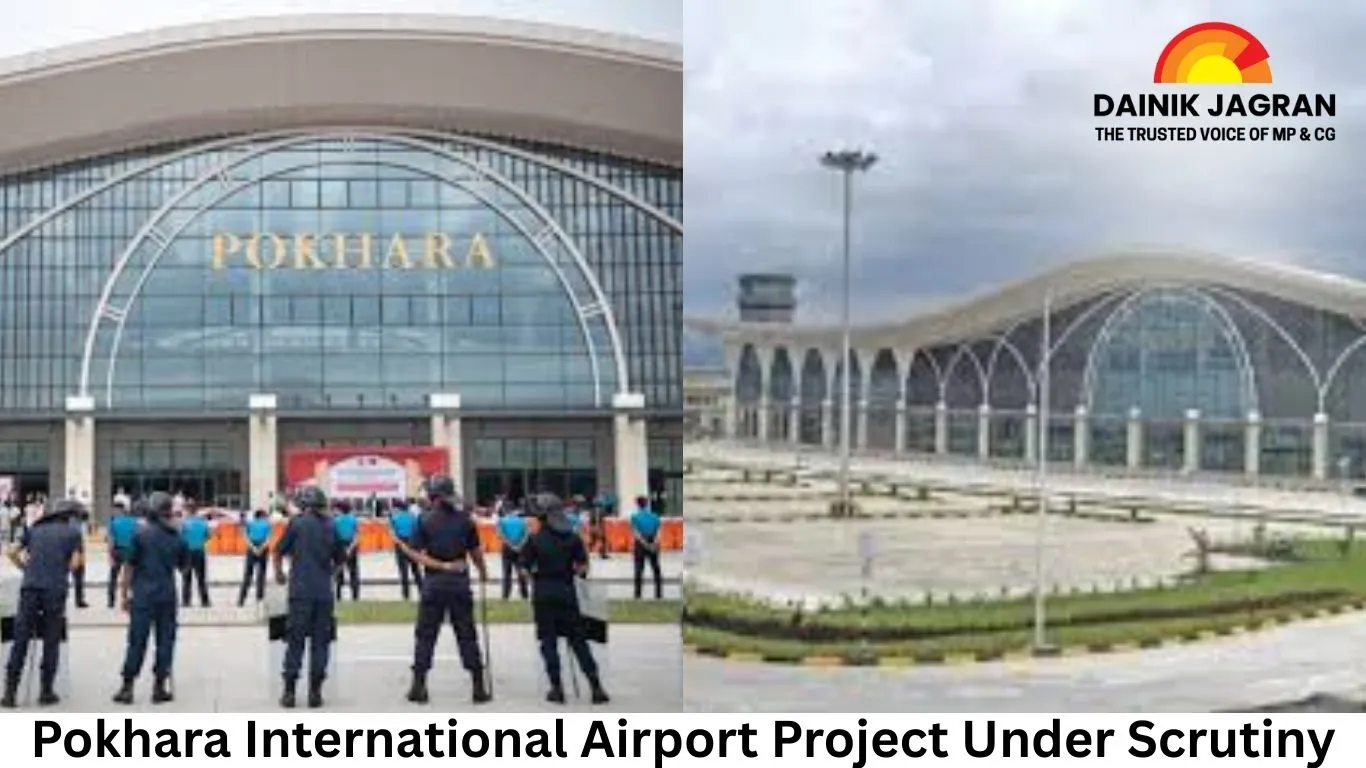
Pokhara International Airport Project Under Scrutiny: Nepal Files Corruption Case Against 55, Including Chinese Firm
Digital Desk
The airport, built with a loan from China’s Exim Bank, began operations in 2023. It was promoted as Western Nepal’s new international gateway and a catalyst for tourism growth. However, in the two-and-a-half years since its launch, the airport has handled only 45 international flights and around 3,000 passengers, far below projections. Test flights by Himalayan Airlines and Sichuan Airlines could not translate into sustained operations, raising questions about the project’s feasibility and planning.
According to the CIAA charge sheet, the project cost initially estimated at the equivalent of ₹620 crore in 2012 was inflated to ₹892 crore. Investigators allege that senior Nepali officials colluded with the Chinese contractor to manipulate figures and push through unjustified cost revisions. Construction formally began in 2016 during then–Prime Minister KP Sharma Oli’s tenure, when negotiations with the Chinese side accelerated.
Among those charged are former finance minister Ramsharan Mahat, former tourism ministers Bhim Prasad Acharya, Deepak Chandra Amatya, Ramkumar Shrestha, and the late Bahadur Bogati. Senior bureaucrats, including suspended Civil Aviation Authority director general Pradeep Adhikari and two former director generals, have also been named.
The CIAA has described the alleged fraud as systemic, spanning approval stages, contract evaluation, and financial oversight. The agency claims the inflated expenditure burdened Nepal with debt while the airport failed to attract international traffic as promised.
The case is now before the Special Court, where hearings are expected to begin soon. The controversy has renewed debate over Nepal’s dependency on foreign loans for large-scale infrastructure and the long-term viability of prestige projects lacking clear demand assessments.




.jpg)




