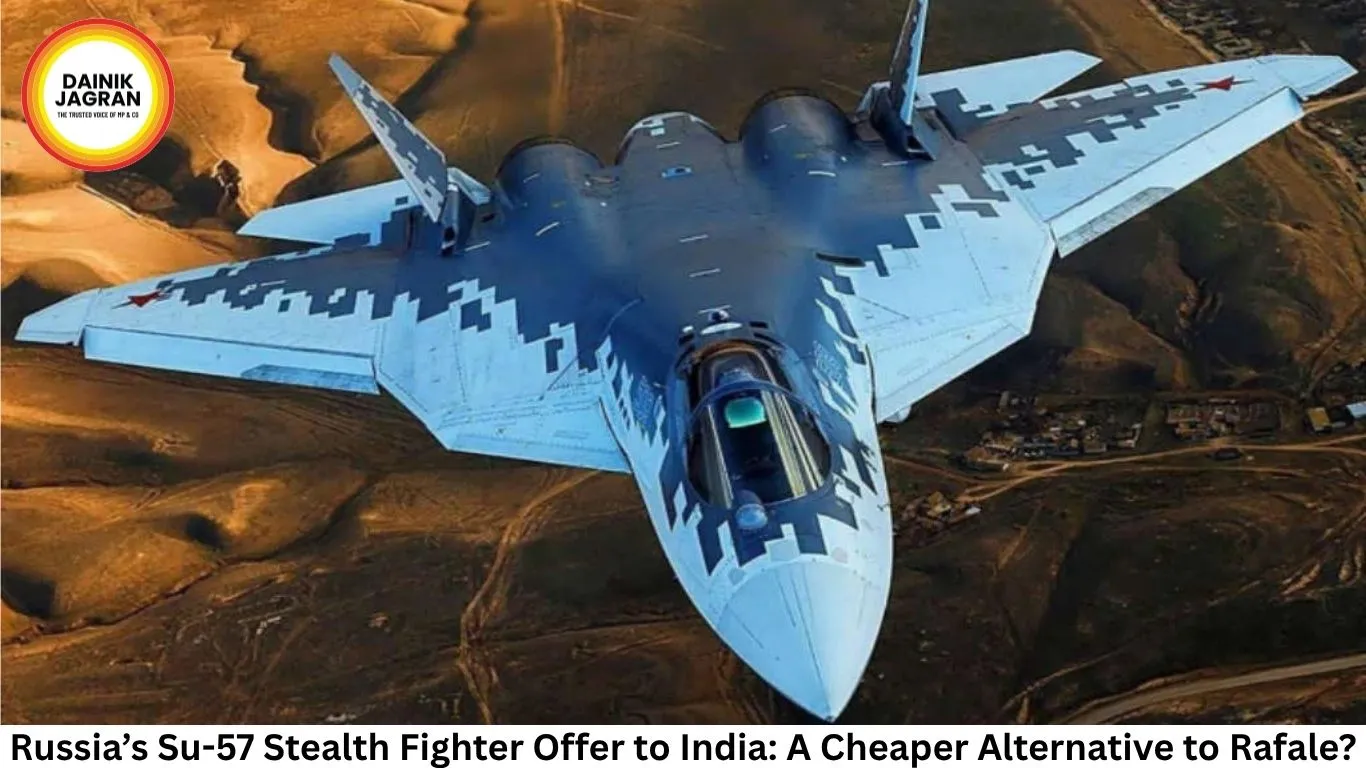
Russia’s Su-57 Stealth Fighter Offer to India: A Cheaper Alternative to Rafale?
Digital Desk
Moscow proposes joint production of Su-57 fifth-generation jets with India, raising debate over cost, capability, and strategic value compared to Rafale fighters.
India’s search for a fifth-generation stealth fighter has gained momentum as Russia formally proposed co-development and manufacturing of the Su-57 with full technology transfer. The offer, made under the “Make in India” framework, includes initial delivery of ready aircraft followed by local production with Hindustan Aeronautics Limited (HAL).
Russian President Vladimir Putin has indicated that there are “no restrictions” on cooperation, including sharing of critical software source code. This would allow India to integrate indigenous weapons and electronic systems, significantly increasing operational flexibility.
The proposal comes at a crucial time when the Indian Air Force currently lacks any operational fifth-generation fighter aircraft, while neighbouring countries continue to advance their stealth capabilities.
Cost Advantage vs Rafale
The Su-57 is estimated to cost between $35 million and $50 million per unit, making it significantly cheaper than many Western stealth aircraft. However, defence analysts caution that the total cost of ownership is much higher once weapons, maintenance, training, and infrastructure are included.
India’s 2016 deal for 36 Rafale jets, signed with France, was valued at approximately ₹59,000 crore, translating to around ₹1,640 crore per aircraft when including full support systems and India-specific upgrades.
Dassault Rafale remains one of India’s most advanced combat platforms, but the Su-57 proposal is being seen as a potential lower-cost entry into fifth-generation technology.
Fifth-Generation Fighter Gap
India’s indigenous Advanced Medium Combat Aircraft (AMCA) program is still under development and is expected to enter service in the 2030s. Until then, the Indian Air Force faces a capability gap in stealth aviation.
Currently, only three countries—the United States, China, and Russia—operate or produce fifth-generation fighter jets. The US F-35 remains the most widely exported stealth aircraft globally, with multiple allied nations already operating it.
Russia’s pitch is strategically positioned at a time when China is also advancing its J-35 stealth fighter program, increasing regional competition in air superiority technologies.
India’s Strategic Calculus
India has historically been cautious about fully committing to US stealth fighter programs due to restrictions on technology access and operational flexibility. American platforms, while highly advanced, often come with strict usage and integration limitations.
The Su-57 offer, on the other hand, is being promoted as a more open architecture system, potentially allowing India to modify and localize systems under its defence production ecosystem.
However, defence experts note that the aircraft’s actual performance record, production scale, and engine reliability remain key factors that India will need to evaluate before making any decision.
--------
🚨 Beat the News Rush – Join Now!
Get breaking alerts, hot exclusives, and game-changing stories instantly on your phone. No delays, no fluff – just the edge you need. ⚡
Tap to join:
🟢 WhatsApp Channel: Dainik Jagran MP CG
Crave more?
🅕 Facebook: Dainik Jagran MP CG English
🅧 Twitter (X): Dainik Jagran MP CG
🅘 Instagram: Dainik Jagran MP CG
Share the fire – keep your crew ahead! 🗞️🔥
Russia’s Su-57 Stealth Fighter Offer to India: A Cheaper Alternative to Rafale?
Digital Desk
India’s search for a fifth-generation stealth fighter has gained momentum as Russia formally proposed co-development and manufacturing of the Su-57 with full technology transfer. The offer, made under the “Make in India” framework, includes initial delivery of ready aircraft followed by local production with Hindustan Aeronautics Limited (HAL).
Russian President Vladimir Putin has indicated that there are “no restrictions” on cooperation, including sharing of critical software source code. This would allow India to integrate indigenous weapons and electronic systems, significantly increasing operational flexibility.
The proposal comes at a crucial time when the Indian Air Force currently lacks any operational fifth-generation fighter aircraft, while neighbouring countries continue to advance their stealth capabilities.
Cost Advantage vs Rafale
The Su-57 is estimated to cost between $35 million and $50 million per unit, making it significantly cheaper than many Western stealth aircraft. However, defence analysts caution that the total cost of ownership is much higher once weapons, maintenance, training, and infrastructure are included.
India’s 2016 deal for 36 Rafale jets, signed with France, was valued at approximately ₹59,000 crore, translating to around ₹1,640 crore per aircraft when including full support systems and India-specific upgrades.
Dassault Rafale remains one of India’s most advanced combat platforms, but the Su-57 proposal is being seen as a potential lower-cost entry into fifth-generation technology.
Fifth-Generation Fighter Gap
India’s indigenous Advanced Medium Combat Aircraft (AMCA) program is still under development and is expected to enter service in the 2030s. Until then, the Indian Air Force faces a capability gap in stealth aviation.
Currently, only three countries—the United States, China, and Russia—operate or produce fifth-generation fighter jets. The US F-35 remains the most widely exported stealth aircraft globally, with multiple allied nations already operating it.
Russia’s pitch is strategically positioned at a time when China is also advancing its J-35 stealth fighter program, increasing regional competition in air superiority technologies.
India’s Strategic Calculus
India has historically been cautious about fully committing to US stealth fighter programs due to restrictions on technology access and operational flexibility. American platforms, while highly advanced, often come with strict usage and integration limitations.
The Su-57 offer, on the other hand, is being promoted as a more open architecture system, potentially allowing India to modify and localize systems under its defence production ecosystem.
However, defence experts note that the aircraft’s actual performance record, production scale, and engine reliability remain key factors that India will need to evaluate before making any decision.