
Katra Special Train Coach Splits at Ludhiana Station, Toilet Damage Triggers Panic
Digital Desk
Coupler failure between coaches of New Delhi–Katra Special train leads to separation at Ludhiana station; passengers report panic but no injuries confirmed.
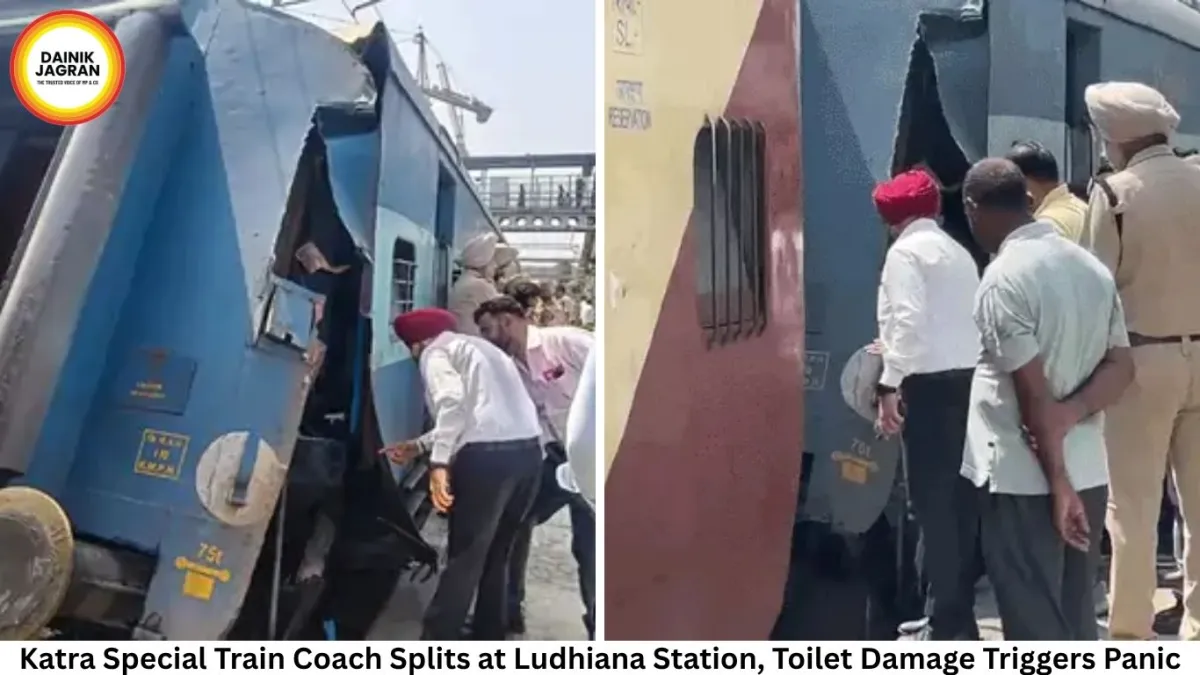
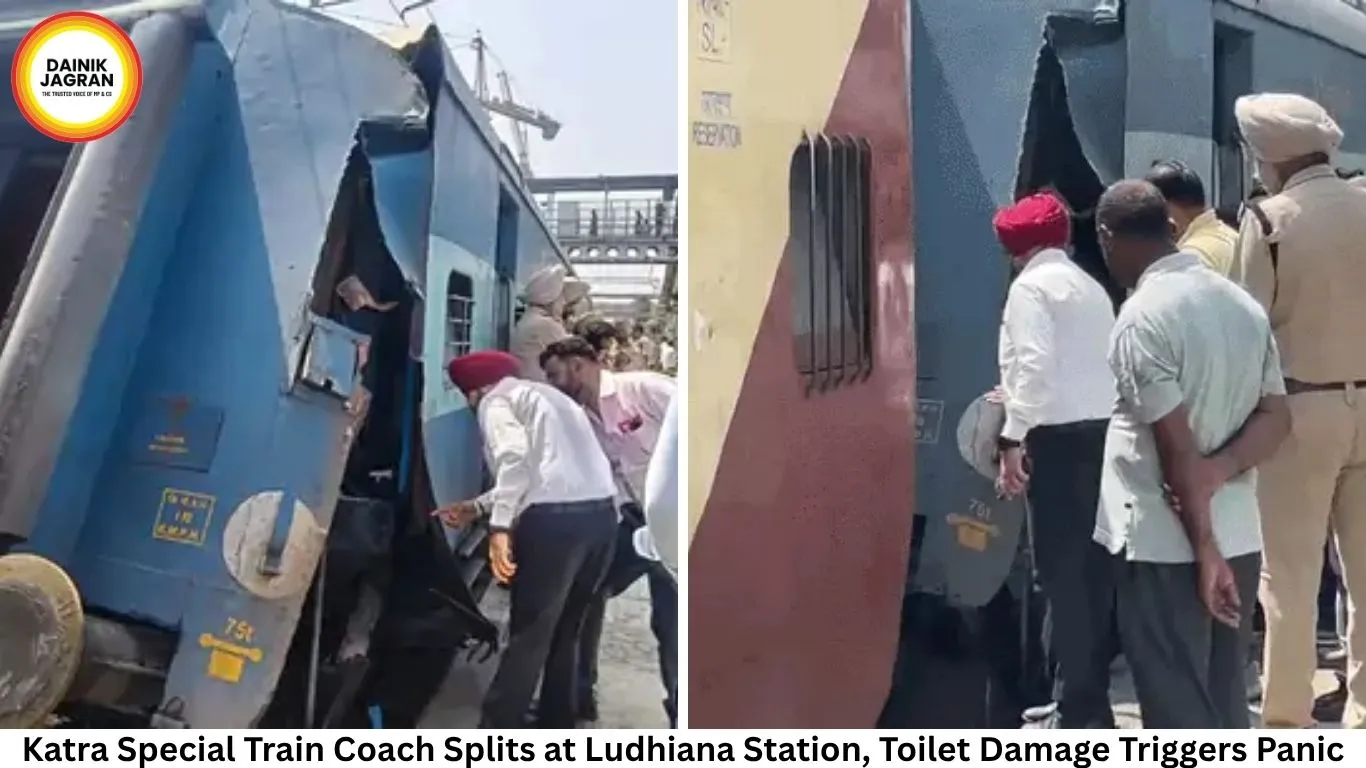
A serious technical malfunction was reported on the New Delhi–Shri Mata Vaishno Devi Katra Special train (04081) at Ludhiana Railway Station on Saturday morning when the coupler connecting two coaches broke as the train was preparing to depart. The impact led to the separation of coaches and damage to the toilet section of a sleeper coach, triggering panic among passengers on board.
A loud sound was heard at the time of the incident, leading some passengers to initially suspect an explosion. However, railway officials later clarified that it was a mechanical failure and not a blast.
Railway and Police Response
Following the incident, personnel from the Railway Protection Force and local police reached the site and secured the area. Technical teams began inspecting the affected coaches immediately after the train was brought under control.
Officials confirmed that the issue appeared to be linked to a welding failure in the S-2 sleeper coach, which likely weakened due to the age of the coach. Authorities also stated that no passenger was injured and the situation was brought under control quickly.
Indian Railways officials have initiated a detailed investigation into the incident to determine maintenance lapses and assess coach safety standards.
Passengers Describe Panic
Passengers onboard reported confusion and fear at the time of the incident. Some claimed that a loud blast-like sound was heard as the train began to move, following which people rushed out of their seats in panic.
One passenger, Amit Chauhan, said the train had already been delayed earlier in Delhi and was operating with older coaches. He alleged that there was a lack of basic facilities such as drinking water and criticised the overall condition of the train before departure.
He further stated that had the incident occurred at higher speed, the consequences could have been far more serious.
Preliminary Findings
Railway engineers examining the site indicated that the coupler failure and damage to the toilet section were likely caused by structural weakness in the coach’s welding points. Preliminary assessments suggest that age-related wear may have contributed to the breakdown.
Authorities have ruled out any explosion or sabotage and urged the public not to circulate rumours regarding the incident.
Safety Concerns Raised
The incident has once again raised concerns about the condition of older railway coaches and maintenance practices on long-distance routes. Experts note that coupler failures, although rare, can pose serious risks if not detected during routine inspections.
Railway officials have assured that corrective action will be taken based on the findings of the ongoing investigation.

--------
🚨 Beat the News Rush – Join Now!
Get breaking alerts, hot exclusives, and game-changing stories instantly on your phone. No delays, no fluff – just the edge you need. ⚡
Tap to join:
🟢 WhatsApp Channel: Dainik Jagran MP CG
Crave more?
🅕 Facebook: Dainik Jagran MP CG English
🅧 Twitter (X): Dainik Jagran MP CG
🅘 Instagram: Dainik Jagran MP CG
Share the fire – keep your crew ahead! 🗞️🔥
Katra Special Train Coach Splits at Ludhiana Station, Toilet Damage Triggers Panic
Digital Desk
A serious technical malfunction was reported on the New Delhi–Shri Mata Vaishno Devi Katra Special train (04081) at Ludhiana Railway Station on Saturday morning when the coupler connecting two coaches broke as the train was preparing to depart. The impact led to the separation of coaches and damage to the toilet section of a sleeper coach, triggering panic among passengers on board.
A loud sound was heard at the time of the incident, leading some passengers to initially suspect an explosion. However, railway officials later clarified that it was a mechanical failure and not a blast.
Railway and Police Response
Following the incident, personnel from the Railway Protection Force and local police reached the site and secured the area. Technical teams began inspecting the affected coaches immediately after the train was brought under control.
Officials confirmed that the issue appeared to be linked to a welding failure in the S-2 sleeper coach, which likely weakened due to the age of the coach. Authorities also stated that no passenger was injured and the situation was brought under control quickly.
Indian Railways officials have initiated a detailed investigation into the incident to determine maintenance lapses and assess coach safety standards.
Passengers Describe Panic
Passengers onboard reported confusion and fear at the time of the incident. Some claimed that a loud blast-like sound was heard as the train began to move, following which people rushed out of their seats in panic.
One passenger, Amit Chauhan, said the train had already been delayed earlier in Delhi and was operating with older coaches. He alleged that there was a lack of basic facilities such as drinking water and criticised the overall condition of the train before departure.
He further stated that had the incident occurred at higher speed, the consequences could have been far more serious.
Preliminary Findings
Railway engineers examining the site indicated that the coupler failure and damage to the toilet section were likely caused by structural weakness in the coach’s welding points. Preliminary assessments suggest that age-related wear may have contributed to the breakdown.
Authorities have ruled out any explosion or sabotage and urged the public not to circulate rumours regarding the incident.
Safety Concerns Raised
The incident has once again raised concerns about the condition of older railway coaches and maintenance practices on long-distance routes. Experts note that coupler failures, although rare, can pose serious risks if not detected during routine inspections.
Railway officials have assured that corrective action will be taken based on the findings of the ongoing investigation.