


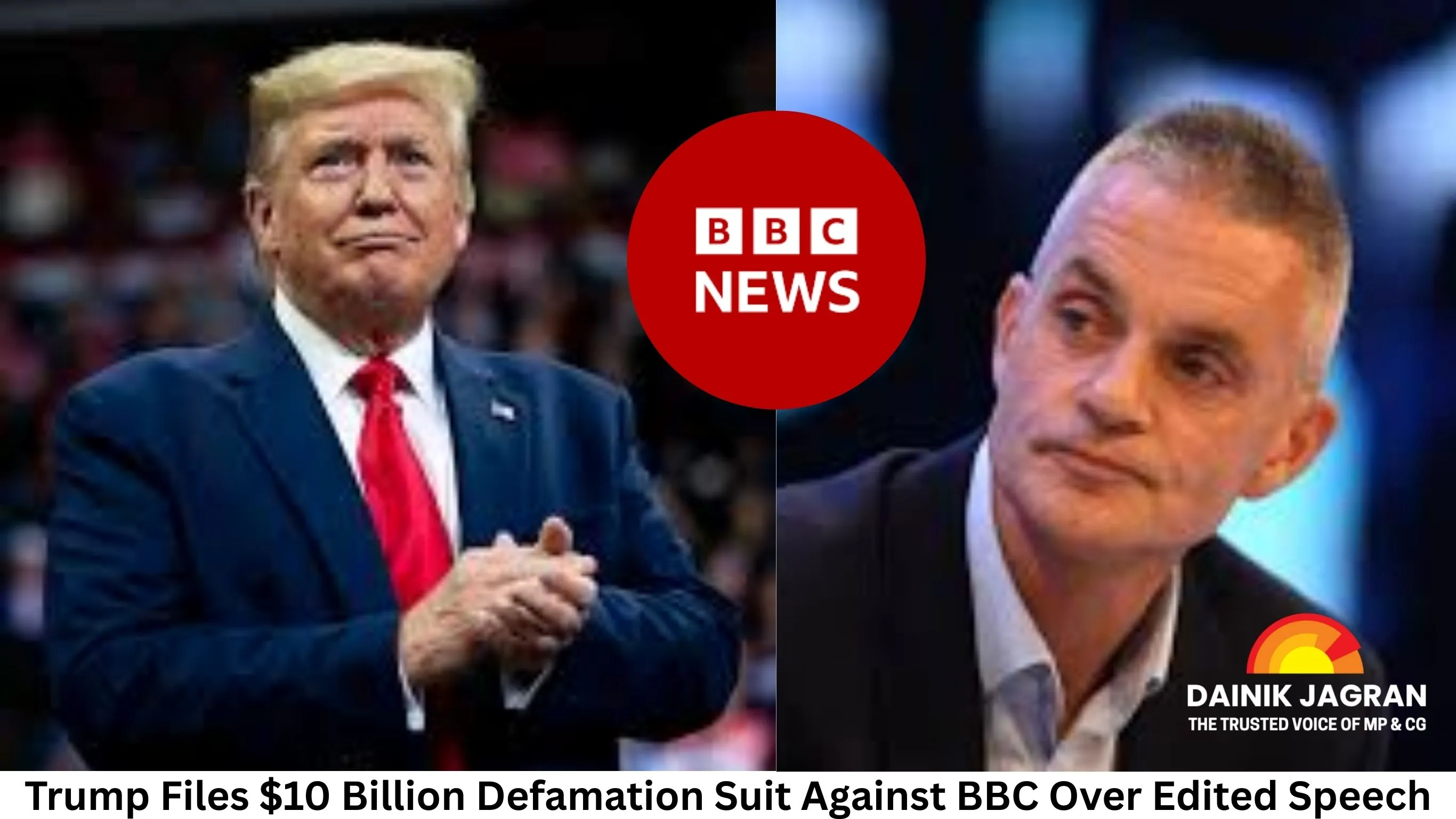
Trump Files $10 Billion Defamation Suit Against BBC Over Edited Speech
Digital Desk
The controversy stems from the BBC’s editing of two separate excerpts of Trump’s speech, recorded roughly 50 minutes apart, which were presented as if he continuously urged supporters toward violent action at the US Capitol. Trump’s legal team alleges the broadcaster “intentionally, maliciously, and deceptively doctored his speech,” distorting his message and portraying him as inciting the Capitol riot.
The BBC had issued an apology in November, acknowledging that the edit was unintentional and promising that the clip would not air again. However, the broadcaster rejected Trump’s $1 billion defamation claim at the time, stating it had no basis. BBC Chair Samir Shah personally conveyed regret to the White House, while Director-General Tim Davie and News CEO Deborah Turness resigned following the backlash.
The documentary edited together Trump’s statements—first urging supporters to “peacefully and patriotically make our voices heard” and later saying, “If you don’t fight like hell, you’re not going to have a country anymore”—to imply a continuous call for violence. Critics have described this “cut-and-join” approach as misleading and a distortion of his remarks.
The BBC, in response to the lawsuit, argued that the program was never broadcast in the United States, Trump suffered no harm, the edit was intended to shorten content rather than deceive, and political commentary is protected under US law. The broadcaster is also reviewing similar editing issues in past programs.
Trump’s legal team has demanded that the documentary be withdrawn, an official apology issued, and damages awarded. The case highlights ongoing tensions over media accountability, editorial standards, and the depiction of political speech on global platforms.

.jpg)




