Trump Puts US-Saudi Nuclear Deal on Hold, Demands Israel Ties Before Implementation

Digital Desk

Trump Puts US-Saudi Nuclear Deal on Hold, Demands Israel Ties Before Implementation

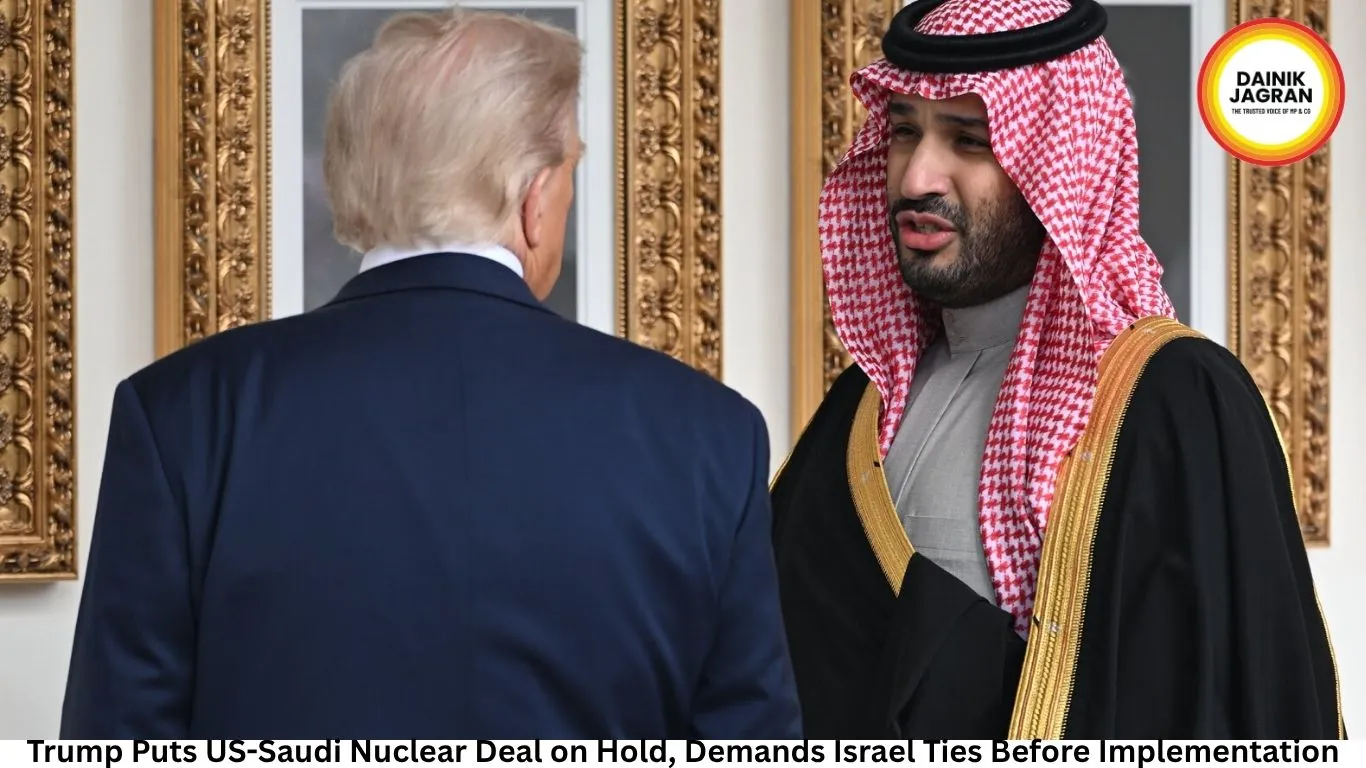
Just 24 hours after signing a landmark civil nuclear cooperation agreement with Saudi Arabia, US President Donald Trump paused its implementation, insisting Riyadh must first normalize diplomatic relations with Israel under the Abraham Accords. The move has injected fresh uncertainty into one of the most significant strategic agreements in the Middle East.

A landmark civil nuclear cooperation agreement between the United States and Saudi Arabia has entered uncertain territory just one day after it was signed, following US President Donald Trump's decision to halt its implementation until Riyadh establishes diplomatic relations with Israel.

The agreement, signed in Washington after nearly two decades of negotiations, was initially viewed as a major breakthrough in US-Saudi strategic ties. However, within 24 hours of the signing ceremony, Trump announced new conditions that could significantly delay or even derail the deal.

According to the US President, Saudi Arabia must join the Abraham Accords and formally recognize Israel before the nuclear cooperation agreement can move forward. Trump also reaffirmed that Washington would not allow Saudi Arabia to enrich uranium on its own territory, citing concerns over nuclear weapons proliferation.

Trump Adds New Conditions

The civil nuclear agreement was signed in the presence of US Energy Secretary Chris Wright and was expected to strengthen cooperation in peaceful nuclear energy, including reactor development, technology transfer, and energy diversification.

Soon after the signing, however, Trump stated on his Truth Social platform that Saudi Arabia's participation in the Abraham Accords was essential for implementing the agreement.

He argued that expanding diplomatic recognition of Israel would reinforce regional stability and strengthen the US-led strategic alliance in West Asia.

The President also emphasized that while America supports Saudi Arabia's civilian nuclear ambitions, uranium enrichment within the kingdom would not be permitted because the technology could potentially be diverted for military purposes.

Reports Suggest Internal Disagreement

Several media reports indicate that the White House was not fully aligned on the timing of the agreement's announcement.

According to reports, Trump was reportedly unhappy after Energy Secretary Chris Wright publicly announced the deal before receiving what the President considered final political clearance.

The situation reportedly became more complicated after criticism emerged from conservative media outlets, including Fox News and The Wall Street Journal, questioning the safeguards included in the agreement.

Reports suggest the White House had instructed the Department of Energy to delay the public announcement. However, the department proceeded with the signing ceremony and informed the media, leading to speculation about differences within the administration.

The White House has denied any internal conflict, maintaining that linking the agreement with Saudi-Israel normalization has always been part of Trump's broader Middle East strategy.

Saudi Arabia Reportedly Surprised

According to CNN, Saudi officials were caught off guard by Trump's latest announcement.

Negotiators had reportedly finalized a draft framework that would allow Saudi Arabia to enrich uranium under strict international supervision.

Trump's public rejection of uranium enrichment therefore came as an unexpected development for Riyadh.

Saudi Arabia has consistently argued that it requires a complete civilian nuclear fuel cycle to meet its long-term energy and economic diversification goals under Vision 2030.

However, Washington has traditionally opposed allowing countries in the region to develop domestic uranium enrichment capabilities due to concerns about future military applications.

Why Uranium Enrichment Matters

Uranium enrichment is a critical step in producing fuel for civilian nuclear power plants.

When uranium is enriched to relatively low levels, it is used to generate electricity. However, if enrichment reaches much higher concentrations, the same technology can potentially be used to manufacture nuclear weapons.

Because of this dual-use nature, uranium enrichment remains one of the world's most sensitive nuclear technologies.

The United States has historically restricted such capabilities even among close allies, preferring that nuclear fuel be supplied through international arrangements rather than produced domestically.

Trump reiterated that Saudi Arabia would receive US assistance for peaceful nuclear energy but would not be allowed to independently enrich uranium.

Abraham Accords Become Central Issue

Trump's latest decision places renewed attention on the Abraham Accords, the US-brokered diplomatic initiative launched in 2020 that normalized relations between Israel and several Arab nations, including the United Arab Emirates, Bahrain, Morocco and Sudan.

Successive US administrations have viewed Saudi Arabia as the most significant potential addition to the accords because of its influence across the Arab and Islamic worlds.

However, Riyadh has repeatedly maintained that it will not establish formal diplomatic ties with Israel unless meaningful progress is achieved toward creating an independent Palestinian state.

The ongoing conflict in Gaza has further complicated normalization efforts, making Trump's new condition politically sensitive for Saudi leadership.

Strategic Implications

The uncertainty surrounding the agreement carries broader geopolitical implications.

Supporters of the deal argue that continued US involvement would keep Saudi Arabia within the Western nuclear framework while ensuring strict international oversight.

Critics warn that if Washington ultimately abandons the agreement, Saudi Arabia could seek alternative nuclear partnerships with countries such as China or Russia, potentially expanding their strategic influence across West Asia.

For now, the future of the agreement remains uncertain as diplomatic negotiations continue between Washington and Riyadh.

Whether both sides can bridge differences over Israel and uranium enrichment will determine if one of the region's most significant nuclear cooperation agreements eventually comes into force or becomes another casualty of the complex politics shaping the Middle East.

--------

๐Ÿšจ Beat the News Rush โ€“ Join Now!

Get breaking alerts, hot exclusives, and game-changing stories instantly on your phone. No delays, no fluff โ€“ just the edge you need. โšก

Tap to join:ย 

๐ŸŸข WhatsApp Channel: Dainik Jagran MP CG

Crave more?

๐Ÿ…• Facebook: Dainik Jagran MP CG English

๐Ÿ…ง Twitter (X): Dainik Jagran MP CG

๐Ÿ…˜ Instagram: Dainik Jagran MP CG

Share the fire โ€“ keep your crew ahead! ๐Ÿ—ž๏ธ๐Ÿ”ฅ

english.dainikjagranmpcg.com
24 Jul 2026 By Rishita

Trump Puts US-Saudi Nuclear Deal on Hold, Demands Israel Ties Before Implementation

Digital Desk

A landmark civil nuclear cooperation agreement between the United States and Saudi Arabia has entered uncertain territory just one day after it was signed, following US President Donald Trump's decision to halt its implementation until Riyadh establishes diplomatic relations with Israel.

The agreement, signed in Washington after nearly two decades of negotiations, was initially viewed as a major breakthrough in US-Saudi strategic ties. However, within 24 hours of the signing ceremony, Trump announced new conditions that could significantly delay or even derail the deal.

According to the US President, Saudi Arabia must join the Abraham Accords and formally recognize Israel before the nuclear cooperation agreement can move forward. Trump also reaffirmed that Washington would not allow Saudi Arabia to enrich uranium on its own territory, citing concerns over nuclear weapons proliferation.

Trump Adds New Conditions

The civil nuclear agreement was signed in the presence of US Energy Secretary Chris Wright and was expected to strengthen cooperation in peaceful nuclear energy, including reactor development, technology transfer, and energy diversification.

Soon after the signing, however, Trump stated on his Truth Social platform that Saudi Arabia's participation in the Abraham Accords was essential for implementing the agreement.

He argued that expanding diplomatic recognition of Israel would reinforce regional stability and strengthen the US-led strategic alliance in West Asia.

The President also emphasized that while America supports Saudi Arabia's civilian nuclear ambitions, uranium enrichment within the kingdom would not be permitted because the technology could potentially be diverted for military purposes.

Reports Suggest Internal Disagreement

Several media reports indicate that the White House was not fully aligned on the timing of the agreement's announcement.

According to reports, Trump was reportedly unhappy after Energy Secretary Chris Wright publicly announced the deal before receiving what the President considered final political clearance.

The situation reportedly became more complicated after criticism emerged from conservative media outlets, including Fox News and The Wall Street Journal, questioning the safeguards included in the agreement.

Reports suggest the White House had instructed the Department of Energy to delay the public announcement. However, the department proceeded with the signing ceremony and informed the media, leading to speculation about differences within the administration.

The White House has denied any internal conflict, maintaining that linking the agreement with Saudi-Israel normalization has always been part of Trump's broader Middle East strategy.

Saudi Arabia Reportedly Surprised

According to CNN, Saudi officials were caught off guard by Trump's latest announcement.

Negotiators had reportedly finalized a draft framework that would allow Saudi Arabia to enrich uranium under strict international supervision.

Trump's public rejection of uranium enrichment therefore came as an unexpected development for Riyadh.

Saudi Arabia has consistently argued that it requires a complete civilian nuclear fuel cycle to meet its long-term energy and economic diversification goals under Vision 2030.

However, Washington has traditionally opposed allowing countries in the region to develop domestic uranium enrichment capabilities due to concerns about future military applications.

Why Uranium Enrichment Matters

Uranium enrichment is a critical step in producing fuel for civilian nuclear power plants.

When uranium is enriched to relatively low levels, it is used to generate electricity. However, if enrichment reaches much higher concentrations, the same technology can potentially be used to manufacture nuclear weapons.

Because of this dual-use nature, uranium enrichment remains one of the world's most sensitive nuclear technologies.

The United States has historically restricted such capabilities even among close allies, preferring that nuclear fuel be supplied through international arrangements rather than produced domestically.

Trump reiterated that Saudi Arabia would receive US assistance for peaceful nuclear energy but would not be allowed to independently enrich uranium.

Abraham Accords Become Central Issue

Trump's latest decision places renewed attention on the Abraham Accords, the US-brokered diplomatic initiative launched in 2020 that normalized relations between Israel and several Arab nations, including the United Arab Emirates, Bahrain, Morocco and Sudan.

Successive US administrations have viewed Saudi Arabia as the most significant potential addition to the accords because of its influence across the Arab and Islamic worlds.

However, Riyadh has repeatedly maintained that it will not establish formal diplomatic ties with Israel unless meaningful progress is achieved toward creating an independent Palestinian state.

The ongoing conflict in Gaza has further complicated normalization efforts, making Trump's new condition politically sensitive for Saudi leadership.

Strategic Implications

The uncertainty surrounding the agreement carries broader geopolitical implications.

Supporters of the deal argue that continued US involvement would keep Saudi Arabia within the Western nuclear framework while ensuring strict international oversight.

Critics warn that if Washington ultimately abandons the agreement, Saudi Arabia could seek alternative nuclear partnerships with countries such as China or Russia, potentially expanding their strategic influence across West Asia.

For now, the future of the agreement remains uncertain as diplomatic negotiations continue between Washington and Riyadh.

Whether both sides can bridge differences over Israel and uranium enrichment will determine if one of the region's most significant nuclear cooperation agreements eventually comes into force or becomes another casualty of the complex politics shaping the Middle East.

https://english.dainikjagranmpcg.com/international/trump-puts-us-saudi-nuclear-deal-on-hold-demands-israel-ties/article-23437

Trending News