

Trump-Xi talks in Beijing amid trade, Taiwan tensions

Digital Desk

Trump-Xi talks in Beijing amid trade, Taiwan tensions

Trump-Xi talks begin in Beijing as the leaders discuss tariffs, Taiwan, tech rivalry and the Iran war amid rising US-China tensions.


Trump-Xi talks begin in Beijing amid trade and Taiwan tensions

Trump-Xi talks have opened in Beijing as both sides weigh tariffs, Taiwan and wider geopolitical tensions.

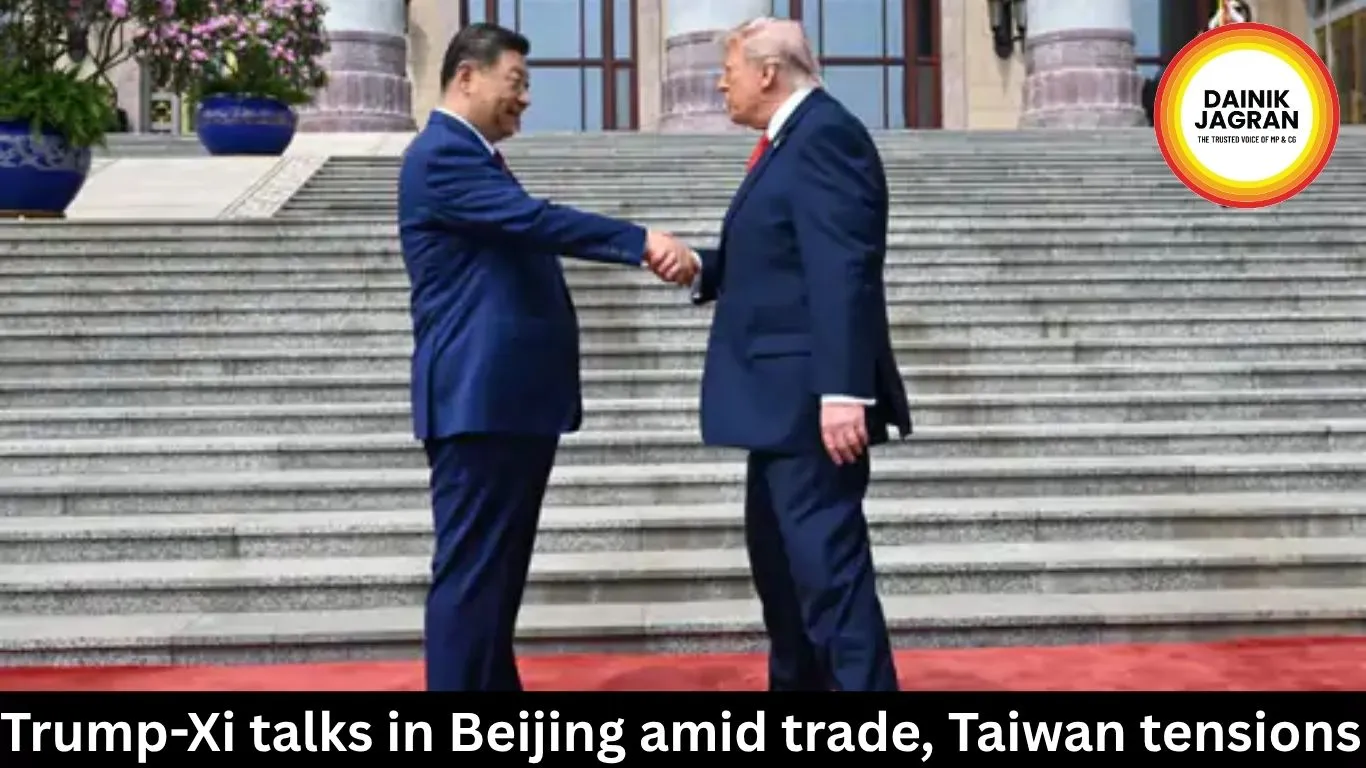
The highly watched Trump-Xi talks began in Beijing on Thursday, with Chinese President Xi Jinping calling for a “new era” in bilateral relations even as he warned that mishandling the Taiwan issue could push the two countries into a dangerous confrontation.

US President Donald Trump’s visit marks his seventh meeting with Xi Jinping and comes at a sensitive moment in ties between Washington and Beijing. The two powers remain locked in disputes over tariffs, technology controls, Taiwan and wider strategic rivalry, even as both sides signal interest in keeping dialogue alive.

At the Great Hall of the People, Trump struck a conciliatory note and described Xi as a friend. “It’s an honor to be with you. It’s an honor to be your friend, and the relationship between China and the US is going to be better than ever before,” he said, according to a statement cited from the meeting.

Trade tension persists

The visit comes after a sharp trade confrontation between the world’s two largest economies. Last year, the US imposed tariffs of around 145%145\%145% on Chinese goods, prompting Beijing to respond with retaliatory tariffs of about 125%125\%125%. The tit-for-tat measures strained supply chains and deepened uncertainty for businesses on both sides.

While the tariffs have become one of the most visible flashpoints, officials and analysts say the bigger challenge is the broader strategic competition underneath them. Both countries are trying to protect economic interests while avoiding a complete breakdown in ties.

Iran war on agenda

One of the major issues expected to come up in the talks is the ongoing war in West Asia and the pressure around the Strait of Hormuz. The waterway is a critical route for global crude shipments, including a large share of China’s oil imports, making stability there important for both countries.

Washington is likely to press Beijing to use its influence with Iran and encourage talks, according to diplomatic observers. China has repeatedly called for restraint, condemned military escalation in the past and backed peace-oriented initiatives. That makes Beijing a potentially important player if the US wants wider regional de-escalation.

Tech race deepens

Technology remains another major fault line in the US-China relationship. Artificial intelligence, semiconductors, cybersecurity and advanced manufacturing are all areas where the rivalry has intensified in recent years.

The US has tightened export controls and sanctions in an effort to slow China’s progress in high-end chips and related equipment. Beijing, meanwhile, has accelerated efforts to build domestic capability and reduce dependence on foreign suppliers. Companies such as Nvidia, Huawei and ASML have become central names in this wider contest.

For both sides, the issue is not just commercial. It is increasingly linked to national security, industrial policy and long-term global influence.

Taiwan remains flashpoint

Taiwan continues to be the most dangerous political issue in the relationship. Beijing considers the self-governed island part of its territory and has not ruled out the use of force for reunification. The US, while officially recognising the One China policy, continues to maintain unofficial ties with Taipei and supply defensive weapons.

Tensions have risen repeatedly through military drills, air incursions and naval exercises near Taiwan, often in response to US arms sales or political contacts with Taipei. Xi reportedly told Trump on Thursday that if the Taiwan issue is not handled properly, the two countries could clash or even enter conflict, according to Chinese state media Xinhua.

That warning underlines how fragile the relationship remains despite the optics of warmer personal exchanges.

Upper hand uncertain

Whether Trump or Xi holds the upper hand is not easy to judge, but the balance appears shaped by leverage rather than rhetoric. Washington can still use tariffs, export restrictions and alliance pressure, while China retains influence through critical minerals and industrial supply chains that remain vital to semiconductor production.

At the same time, Trump faces political scrutiny over his handling of the Iran crisis, which may limit his room to push Beijing too hard on West Asia. Xi, by contrast, is seen as taking a more measured and strategic approach, one that relies on patience and long-term positioning.

For now, the Trump-Xi talks have opened with public warmth and private pressure. The real test will be whether either side can move beyond familiar talking points and produce even a limited breakthrough on trade, technology or regional security.


--------

๐Ÿšจ Beat the News Rush โ€“ Join Now!

Get breaking alerts, hot exclusives, and game-changing stories instantly on your phone. No delays, no fluff โ€“ just the edge you need. โšก

Tap to join:ย 

๐ŸŸข WhatsApp Channel: Dainik Jagran MP CG

Crave more?

๐Ÿ…• Facebook: Dainik Jagran MP CG English

๐Ÿ…ง Twitter (X): Dainik Jagran MP CG

๐Ÿ…˜ Instagram: Dainik Jagran MP CG

Share the fire โ€“ keep your crew ahead! ๐Ÿ—ž๏ธ๐Ÿ”ฅ

english.dainikjagranmpcg.com
14 May 2026 By Abhishek Joshi

Trump-Xi talks in Beijing amid trade, Taiwan tensions

Digital Desk

Trump-Xi talks begin in Beijing amid trade and Taiwan tensions

Trump-Xi talks have opened in Beijing as both sides weigh tariffs, Taiwan and wider geopolitical tensions.

The highly watched Trump-Xi talks began in Beijing on Thursday, with Chinese President Xi Jinping calling for a “new era” in bilateral relations even as he warned that mishandling the Taiwan issue could push the two countries into a dangerous confrontation.

US President Donald Trump’s visit marks his seventh meeting with Xi Jinping and comes at a sensitive moment in ties between Washington and Beijing. The two powers remain locked in disputes over tariffs, technology controls, Taiwan and wider strategic rivalry, even as both sides signal interest in keeping dialogue alive.

At the Great Hall of the People, Trump struck a conciliatory note and described Xi as a friend. “It’s an honor to be with you. It’s an honor to be your friend, and the relationship between China and the US is going to be better than ever before,” he said, according to a statement cited from the meeting.

Trade tension persists

The visit comes after a sharp trade confrontation between the world’s two largest economies. Last year, the US imposed tariffs of around 145%145\%145% on Chinese goods, prompting Beijing to respond with retaliatory tariffs of about 125%125\%125%. The tit-for-tat measures strained supply chains and deepened uncertainty for businesses on both sides.

While the tariffs have become one of the most visible flashpoints, officials and analysts say the bigger challenge is the broader strategic competition underneath them. Both countries are trying to protect economic interests while avoiding a complete breakdown in ties.

Iran war on agenda

One of the major issues expected to come up in the talks is the ongoing war in West Asia and the pressure around the Strait of Hormuz. The waterway is a critical route for global crude shipments, including a large share of China’s oil imports, making stability there important for both countries.

Washington is likely to press Beijing to use its influence with Iran and encourage talks, according to diplomatic observers. China has repeatedly called for restraint, condemned military escalation in the past and backed peace-oriented initiatives. That makes Beijing a potentially important player if the US wants wider regional de-escalation.

Tech race deepens

Technology remains another major fault line in the US-China relationship. Artificial intelligence, semiconductors, cybersecurity and advanced manufacturing are all areas where the rivalry has intensified in recent years.

The US has tightened export controls and sanctions in an effort to slow China’s progress in high-end chips and related equipment. Beijing, meanwhile, has accelerated efforts to build domestic capability and reduce dependence on foreign suppliers. Companies such as Nvidia, Huawei and ASML have become central names in this wider contest.

For both sides, the issue is not just commercial. It is increasingly linked to national security, industrial policy and long-term global influence.

Taiwan remains flashpoint

Taiwan continues to be the most dangerous political issue in the relationship. Beijing considers the self-governed island part of its territory and has not ruled out the use of force for reunification. The US, while officially recognising the One China policy, continues to maintain unofficial ties with Taipei and supply defensive weapons.

Tensions have risen repeatedly through military drills, air incursions and naval exercises near Taiwan, often in response to US arms sales or political contacts with Taipei. Xi reportedly told Trump on Thursday that if the Taiwan issue is not handled properly, the two countries could clash or even enter conflict, according to Chinese state media Xinhua.

That warning underlines how fragile the relationship remains despite the optics of warmer personal exchanges.

Upper hand uncertain

Whether Trump or Xi holds the upper hand is not easy to judge, but the balance appears shaped by leverage rather than rhetoric. Washington can still use tariffs, export restrictions and alliance pressure, while China retains influence through critical minerals and industrial supply chains that remain vital to semiconductor production.

At the same time, Trump faces political scrutiny over his handling of the Iran crisis, which may limit his room to push Beijing too hard on West Asia. Xi, by contrast, is seen as taking a more measured and strategic approach, one that relies on patience and long-term positioning.

For now, the Trump-Xi talks have opened with public warmth and private pressure. The real test will be whether either side can move beyond familiar talking points and produce even a limited breakthrough on trade, technology or regional security.


https://english.dainikjagranmpcg.com/international/trump-xi-talks-in-beijing-amid-trade-taiwan-tensions/article-18322

Related Posts

Latest News

New Book Claims Brigitte Slapped Macron Over Actress Messages New Book Claims Brigitte Slapped Macron Over Actress Messages
A new French book alleges Brigitte Macron slapped President Emmanuel Macron after seeing messages from Iranian actress Golshifteh Farahani during...
Iran's Araghchi in Delhi for BRICS talks on Hormuz safe passage
Trump-Xi talks in Beijing amid trade, Taiwan tensions
Trump and Xi agree on trade reset; White House visit scheduled
Iran Accuses US, Israel as India Condemns Oman Ship Attack
Trump's China Visit: โ‚น9 Lakh Crore Boeing Deal Expected
Jaishankar Urges BRICS Cooperation, Reforms at Delhi Meeting


