Jaishankar Urges BRICS Cooperation, Reforms at Delhi Meeting
Digital Desk
External Affairs Minister S Jaishankar called for practical BRICS cooperation to tackle global conflicts, trade disruptions and economic challenges as India advances institutional reforms during its chairmanship.
Jaishankar Urges BRICS to Deepen Cooperation, Push Reforms
External Affairs Minister S Jaishankar on Thursday called upon BRICS nations to find practical ways to deal with the fallout of ongoing global conflicts, economic volatility, and trade disruptions, even as India advances institutional reforms to accommodate the grouping’s expanded membership.
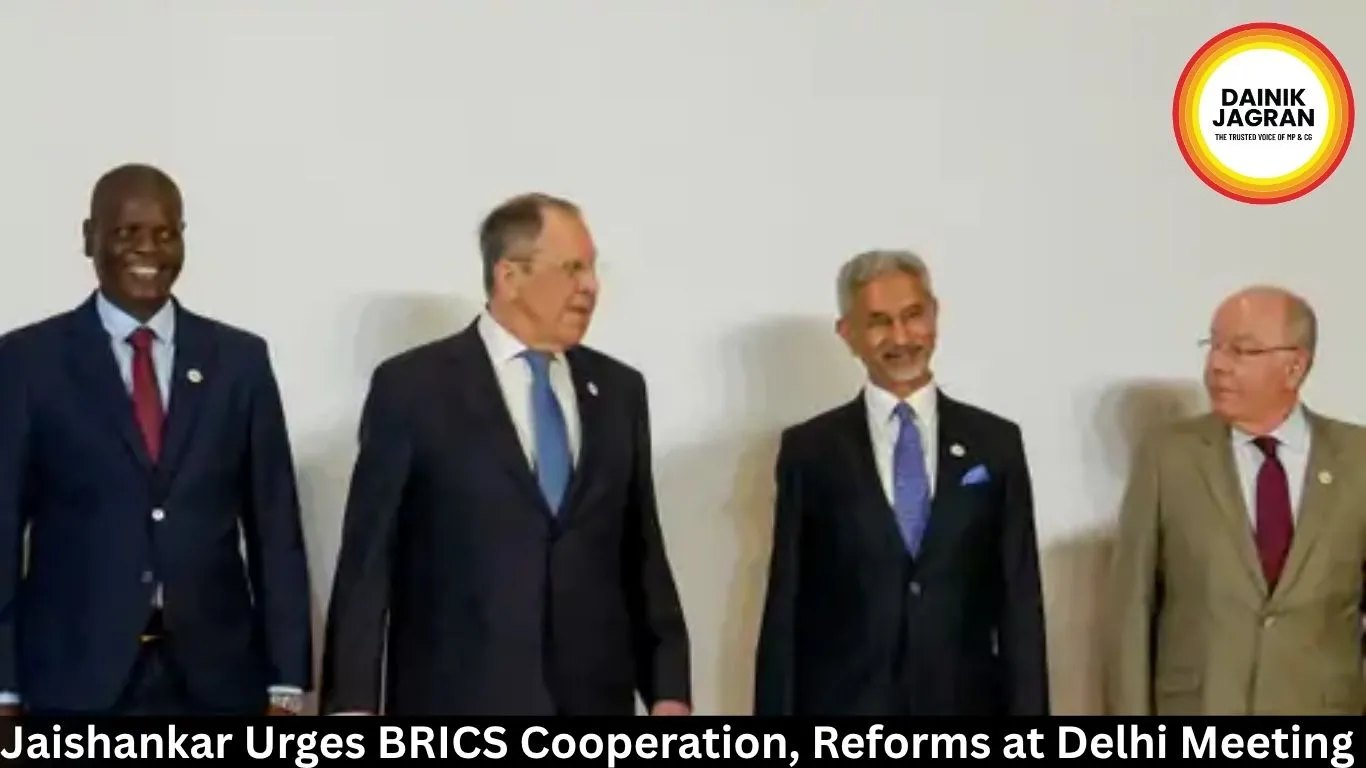
Opening the two-day BRICS Foreign Ministers’ Meeting here, Jaishankar emphasised that the bloc must play a constructive and stabilising role amid growing uncertainty in international relations. The meeting at Bharat Mandapam brought together foreign ministers from core members including Russia, Brazil, and Iran, along with partner countries.
Time of considerable flux
“We meet at a time of considerable flux in international relations,” Jaishankar said in his opening remarks. “Ongoing conflicts, economic uncertainties, and challenges in trade, technology, and climate are shaping the global landscape.”
He noted that developing nations and emerging markets are increasingly looking to BRICS for stability and workable solutions. The minister stressed the need to reflect on global and regional developments and explore concrete steps to strengthen cooperation.
Institutional reforms under Indian chair
As the current chair, India has prioritised building a more inclusive and effective framework. Jaishankar highlighted progress in discussions on institutional development, including updating mechanisms to better integrate new members.
“It is essential for the smooth advancement of BRICS that later members fully appreciate and subscribe to BRICS’ consensus on various important issues,” he said.
Officials indicated that India’s chairmanship has already facilitated over 80 BRICS meetings involving all member states since January. This is India’s fourth stint at the helm, following previous summits in 2012, 2016, and 2021.
Development challenges in focus
Ministers are expected to address pressing issues affecting many countries, particularly in energy, food, fertiliser, and health security, as well as access to finance. Jaishankar said BRICS can help members respond more effectively to these challenges.
He also underlined the importance of reliable supply chains and diversified markets for building economic resilience in the face of global disruptions.
Climate, tech and equitable growth
Climate change figured prominently in the discussions. The minister called for sustainable development efforts guided by principles of equity and common but differentiated responsibilities.
On technology, Jaishankar pointed to the rapid pace of change and the need to harness innovations for inclusive growth and better governance.
Peace, security and counterterrorism
Peace and security issues remained central to the conversations. Recent conflicts have reinforced the importance of dialogue and diplomacy, Jaishankar noted. There was also strong emphasis on strengthening cooperation against terrorism, an area of shared interest among members.
The presence of Iran’s Foreign Minister Abbas Araqchi and Russia’s Sergey Lavrov added weight to discussions on geopolitical challenges.
Looking ahead
The two-day meeting, scheduled for May 14 and 15, forms part of broader consultations on global economic governance, development priorities, and current geopolitical realities. Outcomes are expected to feed into further BRICS processes under India’s presidency.
Analysts see the gathering as an opportunity for the expanded bloc to demonstrate its relevance in a fragmented world order. With multiple partner countries participating, the focus remains on practical coordination rather than grand declarations.
Local diplomatic circles in New Delhi described the meeting as business-like, with delegations working through detailed agendas on multilateral reform and economic cooperation. Many observers believe successful institutional adjustments will determine how effectively BRICS can deliver on expectations of emerging economies.
As global attention remains fixed on multiple conflict zones and economic headwinds, India’s push for pragmatic cooperation reflects its longstanding approach of seeking inclusive solutions through platforms like BRICS.
--------
๐จ Beat the News Rush โ Join Now!
Get breaking alerts, hot exclusives, and game-changing stories instantly on your phone. No delays, no fluff โ just the edge you need. โก
Tap to join:ย
๐ข WhatsApp Channel: Dainik Jagran MP CG
Crave more?
๐ Facebook: Dainik Jagran MP CG English
๐ ง Twitter (X): Dainik Jagran MP CG
๐ Instagram: Dainik Jagran MP CG
Share the fire โ keep your crew ahead! ๐๏ธ๐ฅ
Jaishankar Urges BRICS Cooperation, Reforms at Delhi Meeting
Digital Desk
Jaishankar Urges BRICS to Deepen Cooperation, Push Reforms
External Affairs Minister S Jaishankar on Thursday called upon BRICS nations to find practical ways to deal with the fallout of ongoing global conflicts, economic volatility, and trade disruptions, even as India advances institutional reforms to accommodate the grouping’s expanded membership.
Opening the two-day BRICS Foreign Ministers’ Meeting here, Jaishankar emphasised that the bloc must play a constructive and stabilising role amid growing uncertainty in international relations. The meeting at Bharat Mandapam brought together foreign ministers from core members including Russia, Brazil, and Iran, along with partner countries.
Time of considerable flux
“We meet at a time of considerable flux in international relations,” Jaishankar said in his opening remarks. “Ongoing conflicts, economic uncertainties, and challenges in trade, technology, and climate are shaping the global landscape.”
He noted that developing nations and emerging markets are increasingly looking to BRICS for stability and workable solutions. The minister stressed the need to reflect on global and regional developments and explore concrete steps to strengthen cooperation.
Institutional reforms under Indian chair
As the current chair, India has prioritised building a more inclusive and effective framework. Jaishankar highlighted progress in discussions on institutional development, including updating mechanisms to better integrate new members.
“It is essential for the smooth advancement of BRICS that later members fully appreciate and subscribe to BRICS’ consensus on various important issues,” he said.
Officials indicated that India’s chairmanship has already facilitated over 80 BRICS meetings involving all member states since January. This is India’s fourth stint at the helm, following previous summits in 2012, 2016, and 2021.
Development challenges in focus
Ministers are expected to address pressing issues affecting many countries, particularly in energy, food, fertiliser, and health security, as well as access to finance. Jaishankar said BRICS can help members respond more effectively to these challenges.
He also underlined the importance of reliable supply chains and diversified markets for building economic resilience in the face of global disruptions.
Climate, tech and equitable growth
Climate change figured prominently in the discussions. The minister called for sustainable development efforts guided by principles of equity and common but differentiated responsibilities.
On technology, Jaishankar pointed to the rapid pace of change and the need to harness innovations for inclusive growth and better governance.
Peace, security and counterterrorism
Peace and security issues remained central to the conversations. Recent conflicts have reinforced the importance of dialogue and diplomacy, Jaishankar noted. There was also strong emphasis on strengthening cooperation against terrorism, an area of shared interest among members.
The presence of Iran’s Foreign Minister Abbas Araqchi and Russia’s Sergey Lavrov added weight to discussions on geopolitical challenges.
Looking ahead
The two-day meeting, scheduled for May 14 and 15, forms part of broader consultations on global economic governance, development priorities, and current geopolitical realities. Outcomes are expected to feed into further BRICS processes under India’s presidency.
Analysts see the gathering as an opportunity for the expanded bloc to demonstrate its relevance in a fragmented world order. With multiple partner countries participating, the focus remains on practical coordination rather than grand declarations.
Local diplomatic circles in New Delhi described the meeting as business-like, with delegations working through detailed agendas on multilateral reform and economic cooperation. Many observers believe successful institutional adjustments will determine how effectively BRICS can deliver on expectations of emerging economies.
As global attention remains fixed on multiple conflict zones and economic headwinds, India’s push for pragmatic cooperation reflects its longstanding approach of seeking inclusive solutions through platforms like BRICS.