US-Iran Conflict Deepens Over Strait of Hormuz as Ceasefire Deal Sparks Dispute

Digital Desk

US-Iran Conflict Deepens Over Strait of Hormuz as Ceasefire Deal Sparks Dispute

The United States and Iran have renewed military exchanges over differing interpretations of a ceasefire agreement governing the Strait of Hormuz, raising concerns over global shipping and oil supplies.


The renewed conflict between the United States and Iran has shifted beyond the nuclear issue, with the two countries now clashing over the administration of the strategically important Strait of Hormuz. The dispute centres on differing interpretations of a ceasefire Memorandum of Understanding (MoU) signed earlier this year, which both sides claim supports their position.

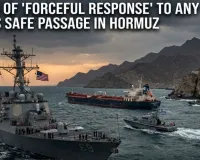
The latest military exchanges began after Iran targeted commercial vessels in the Strait of Hormuz, alleging they had failed to follow navigation rules issued by Tehran. The United States responded with strikes on Iranian military positions, accusing Iran of threatening international shipping and freedom of navigation.

The Strait of Hormuz is one of the world's busiest maritime trade routes, carrying nearly one-fifth of global oil supplies. Any disruption in the waterway has immediate implications for global energy markets and international trade.

Disagreement Over MoU Clause

According to Iranian officials, Clause 5 of the ceasefire MoU authorises Iran to consult with Oman and other Gulf countries on the future administration and maritime services in the Strait while exercising the sovereign rights of coastal states under international law.

Iran maintains that this provision gives it the authority to regulate vessel movement through the Strait, including directing ships to use designated routes.

The United States, however, has opposed Iran's interpretation, arguing that international shipping cannot be subjected to unilateral restrictions that affect global maritime commerce.

Commercial Shipping Caught in the Middle

Reports indicate that several commercial vessels continued using routes that Iran had instructed ships to avoid. Tehran subsequently launched attacks on some of those vessels, claiming they had violated its navigation directives.

The incidents prompted the United States to launch military operations against Iranian command centres, air defence systems and coastal military infrastructure, further escalating tensions in the region.

Both countries have since exchanged multiple rounds of strikes, raising concerns over regional stability.

Strategic Importance of the Strait

The Strait of Hormuz connects the Persian Gulf with the Gulf of Oman and the Arabian Sea, making it a critical passage for global oil and liquefied natural gas exports.

Any prolonged disruption in shipping through the waterway has the potential to increase crude oil prices, raise shipping costs and impact energy-importing countries across Asia and Europe.

Global Concern Grows

The renewed hostilities have drawn international attention as governments and shipping companies closely monitor security conditions in the Gulf region.

Several maritime authorities have issued advisories asking vessels to remain on high alert while transiting the area, amid fears of further attacks on commercial shipping.

Despite the military escalation, both Washington and Tehran have indicated that diplomatic channels remain open, although no immediate breakthrough has been announced.
 

--------

🚨 Beat the News Rush – Join Now!

Get breaking alerts, hot exclusives, and game-changing stories instantly on your phone. No delays, no fluff – just the edge you need. ⚡

Tap to join: 

🟢 WhatsApp Channel: Dainik Jagran MP CG

Crave more?

🅕 Facebook: Dainik Jagran MP CG English

🅧 Twitter (X): Dainik Jagran MP CG

🅘 Instagram: Dainik Jagran MP CG

Share the fire – keep your crew ahead! 🗞️🔥

english.dainikjagranmpcg.com
17 Jul 2026 By Abhishek Joshi

US-Iran Conflict Deepens Over Strait of Hormuz as Ceasefire Deal Sparks Dispute

Digital Desk

The renewed conflict between the United States and Iran has shifted beyond the nuclear issue, with the two countries now clashing over the administration of the strategically important Strait of Hormuz. The dispute centres on differing interpretations of a ceasefire Memorandum of Understanding (MoU) signed earlier this year, which both sides claim supports their position.

The latest military exchanges began after Iran targeted commercial vessels in the Strait of Hormuz, alleging they had failed to follow navigation rules issued by Tehran. The United States responded with strikes on Iranian military positions, accusing Iran of threatening international shipping and freedom of navigation.

The Strait of Hormuz is one of the world's busiest maritime trade routes, carrying nearly one-fifth of global oil supplies. Any disruption in the waterway has immediate implications for global energy markets and international trade.

Disagreement Over MoU Clause

According to Iranian officials, Clause 5 of the ceasefire MoU authorises Iran to consult with Oman and other Gulf countries on the future administration and maritime services in the Strait while exercising the sovereign rights of coastal states under international law.

Iran maintains that this provision gives it the authority to regulate vessel movement through the Strait, including directing ships to use designated routes.

The United States, however, has opposed Iran's interpretation, arguing that international shipping cannot be subjected to unilateral restrictions that affect global maritime commerce.

Commercial Shipping Caught in the Middle

Reports indicate that several commercial vessels continued using routes that Iran had instructed ships to avoid. Tehran subsequently launched attacks on some of those vessels, claiming they had violated its navigation directives.

The incidents prompted the United States to launch military operations against Iranian command centres, air defence systems and coastal military infrastructure, further escalating tensions in the region.

Both countries have since exchanged multiple rounds of strikes, raising concerns over regional stability.

Strategic Importance of the Strait

The Strait of Hormuz connects the Persian Gulf with the Gulf of Oman and the Arabian Sea, making it a critical passage for global oil and liquefied natural gas exports.

Any prolonged disruption in shipping through the waterway has the potential to increase crude oil prices, raise shipping costs and impact energy-importing countries across Asia and Europe.

Global Concern Grows

The renewed hostilities have drawn international attention as governments and shipping companies closely monitor security conditions in the Gulf region.

Several maritime authorities have issued advisories asking vessels to remain on high alert while transiting the area, amid fears of further attacks on commercial shipping.

Despite the military escalation, both Washington and Tehran have indicated that diplomatic channels remain open, although no immediate breakthrough has been announced.
 

https://english.dainikjagranmpcg.com/special-news/us-iran-conflict-deepens-over-strait-of-hormuz-as-ceasefire-deal/article-22582

Trending News