

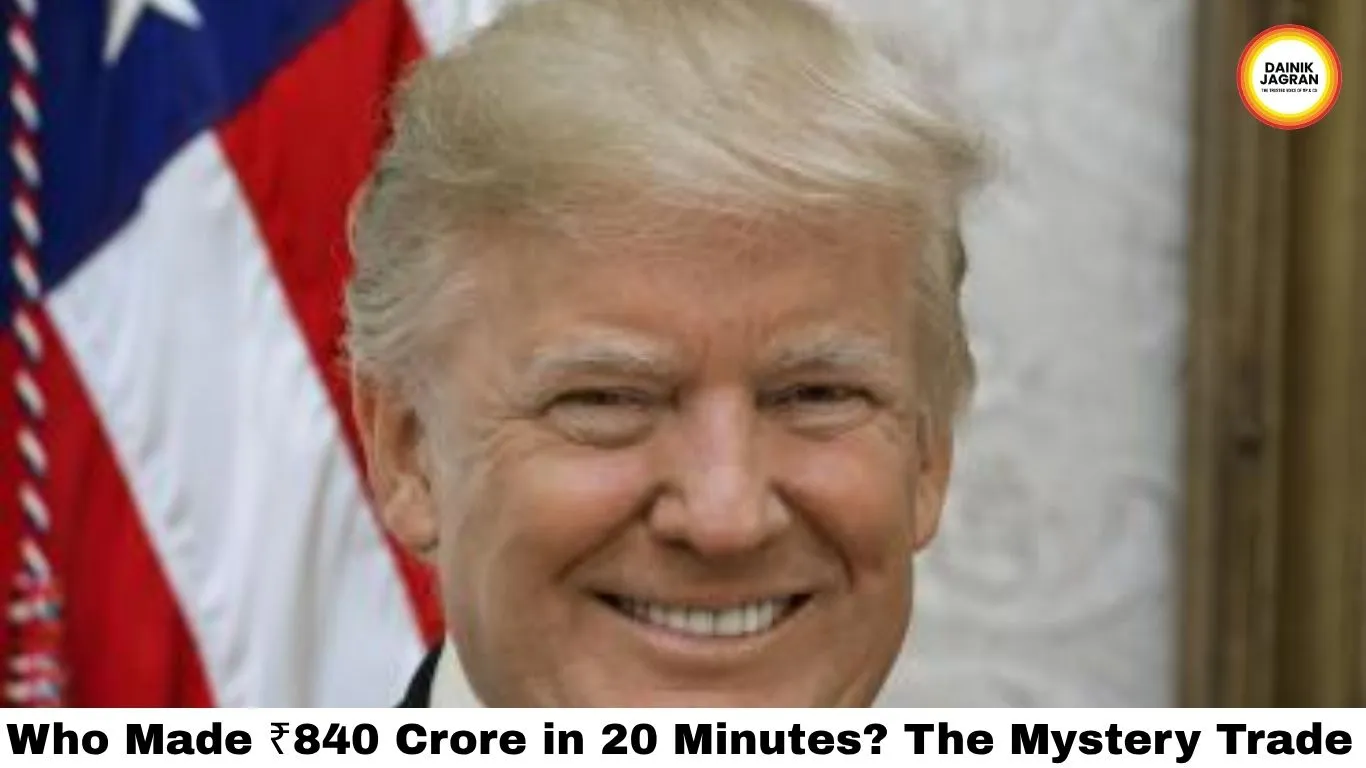
Who Made ₹840 Crore in 20 Minutes? The Mystery Trade Before Trump's Iran U-Turn Raises Serious Insider Trading Fears
Digital Desk
Mystery trades worth ₹5,373 crore were placed just 15 minutes before Trump's Iran ceasefire post. Did someone with insider knowledge profit from war?
Who Made ₹840 Crore in 20 Minutes? Mystery Trades Before Trump's Iran U-Turn Raise Alarming Questions
War, it turns out, can be very good for business — if you know what's coming before everyone else does.
On Monday morning, just fifteen minutes before US President Donald Trump posted on Truth Social about "productive" talks with Iran, someone placed enormous, eerily well-timed bets on global financial markets. The trades moved exactly as Trump's announcement predicted they would. And now, the world is asking one very uncomfortable question: did someone profit from insider knowledge of a wartime policy decision?
The Trades That Raised Red Flags
The timeline is stark. Between 6:49 am and 6:50 am New York time, financial data analysed by the Financial Times shows that around 6,200 Brent crude and WTI oil futures contracts changed hands — worth approximately $580 million (₹5,373 crore) — in barely 60 seconds. Just 27 seconds before 6:50 am, trading volumes for both oil benchmarks spiked suddenly.
At the same time, according to trading platform Unusual Whales, two massive parallel bets were placed:
- S&P 500 futures worth $1.5 billion (₹12,600 crore) — betting markets would rally
- Oil futures worth $192 million (₹1,615 crore) sold short — betting crude prices would fall
At 7:04 am, Trump posted his statement. Markets moved exactly as the trades had anticipated. S&P 500 futures jumped over 2.5%. Oil prices crashed. By some estimates, the oil position alone generated over $100 million (₹840 crore) in profits within twenty minutes, with stock market gains pushing the total far higher.
There was no public signal. No scheduled announcement. Nothing.
This Is Not the First Time
This incident doesn't exist in isolation. A disturbing pattern has been building for weeks.
When Trump launched strikes on Iran on February 28, six anonymous accounts on prediction market platform Polymarket — all newly created that same month — made around $1.2 million in combined profit by betting correctly on the timing of the attack. One account, trading under the name "Magamyman", raked in over $553,000 by betting on the death of Iran's Supreme Leader Ali Khamenei, shortly before an Israeli strike confirmed his killing.
A finance professor at Georgia State University who reviewed the data put it plainly: an 83% overall win rate and a 93% win rate on trades over $10,000 is statistically implausible for legitimate trading. "It sure seems like this person either had incredible luck, or was insider trading," he said.
And before Iran, there was Venezuela — where an anonymous Polymarket bettor made over $400,000 by doubling down on a bet about Nicolás Maduro being ousted, mere hours before US forces seized him.
Who Could Be Behind It?
No one has been officially named or charged. The White House pushed back firmly, with a spokesperson stating the administration does not tolerate officials illegally profiteering from insider knowledge, calling any such suggestion "baseless and irresponsible."
But the questions won't go away. US Senator Chris Murphy declared: "People around Trump are profiting off war and death." Representative Mike Levin pointed out that Donald Trump Jr. sits on Polymarket's advisory board and that his firm had invested heavily in the platform.
Iran's own Parliament Speaker Mohammad Bagher Ghalibaf denied any negotiations even took place, alleging the Trump announcement was "fake news used to manipulate financial and oil markets."
Where Are the Regulators?
Here lies the biggest problem. The US Securities and Exchange Commission (SEC) has not yet commented. Many of these Polymarket trades happen on an overseas platform, placing them outside the immediate reach of US regulators.
The Commodity Futures Trading Commission (CFTC) — which oversees futures markets — has yet to announce any probe. Several hedge funds have noted this is just one of many "large trades" that have preceded major US government announcements in recent months, suggesting a possible pattern that regulators have yet to seriously confront.
Why This Matters
This isn't just a Wall Street story. If government officials or their associates are trading on classified information about military decisions — decisions that kill people, displace millions, and reshape the world — then war itself becomes a profit opportunity for the powerful.
That is a fundamental corruption of both democracy and markets. And until regulators act, the mystery of who made ₹840 crore in 20 minutes remains unanswered — and the next suspicious trade is only one presidential post away.
Who Made ₹840 Crore in 20 Minutes? The Mystery Trade Before Trump's Iran U-Turn Raises Serious Insider Trading Fears
Digital Desk
Who Made ₹840 Crore in 20 Minutes? Mystery Trades Before Trump's Iran U-Turn Raise Alarming Questions
War, it turns out, can be very good for business — if you know what's coming before everyone else does.
On Monday morning, just fifteen minutes before US President Donald Trump posted on Truth Social about "productive" talks with Iran, someone placed enormous, eerily well-timed bets on global financial markets. The trades moved exactly as Trump's announcement predicted they would. And now, the world is asking one very uncomfortable question: did someone profit from insider knowledge of a wartime policy decision?
The Trades That Raised Red Flags
The timeline is stark. Between 6:49 am and 6:50 am New York time, financial data analysed by the Financial Times shows that around 6,200 Brent crude and WTI oil futures contracts changed hands — worth approximately $580 million (₹5,373 crore) — in barely 60 seconds. Just 27 seconds before 6:50 am, trading volumes for both oil benchmarks spiked suddenly.
At the same time, according to trading platform Unusual Whales, two massive parallel bets were placed:
- S&P 500 futures worth $1.5 billion (₹12,600 crore) — betting markets would rally
- Oil futures worth $192 million (₹1,615 crore) sold short — betting crude prices would fall
At 7:04 am, Trump posted his statement. Markets moved exactly as the trades had anticipated. S&P 500 futures jumped over 2.5%. Oil prices crashed. By some estimates, the oil position alone generated over $100 million (₹840 crore) in profits within twenty minutes, with stock market gains pushing the total far higher.
There was no public signal. No scheduled announcement. Nothing.
This Is Not the First Time
This incident doesn't exist in isolation. A disturbing pattern has been building for weeks.
When Trump launched strikes on Iran on February 28, six anonymous accounts on prediction market platform Polymarket — all newly created that same month — made around $1.2 million in combined profit by betting correctly on the timing of the attack. One account, trading under the name "Magamyman", raked in over $553,000 by betting on the death of Iran's Supreme Leader Ali Khamenei, shortly before an Israeli strike confirmed his killing.
A finance professor at Georgia State University who reviewed the data put it plainly: an 83% overall win rate and a 93% win rate on trades over $10,000 is statistically implausible for legitimate trading. "It sure seems like this person either had incredible luck, or was insider trading," he said.
And before Iran, there was Venezuela — where an anonymous Polymarket bettor made over $400,000 by doubling down on a bet about Nicolás Maduro being ousted, mere hours before US forces seized him.
Who Could Be Behind It?
No one has been officially named or charged. The White House pushed back firmly, with a spokesperson stating the administration does not tolerate officials illegally profiteering from insider knowledge, calling any such suggestion "baseless and irresponsible."
But the questions won't go away. US Senator Chris Murphy declared: "People around Trump are profiting off war and death." Representative Mike Levin pointed out that Donald Trump Jr. sits on Polymarket's advisory board and that his firm had invested heavily in the platform.
Iran's own Parliament Speaker Mohammad Bagher Ghalibaf denied any negotiations even took place, alleging the Trump announcement was "fake news used to manipulate financial and oil markets."
Where Are the Regulators?
Here lies the biggest problem. The US Securities and Exchange Commission (SEC) has not yet commented. Many of these Polymarket trades happen on an overseas platform, placing them outside the immediate reach of US regulators.
The Commodity Futures Trading Commission (CFTC) — which oversees futures markets — has yet to announce any probe. Several hedge funds have noted this is just one of many "large trades" that have preceded major US government announcements in recent months, suggesting a possible pattern that regulators have yet to seriously confront.
Why This Matters
This isn't just a Wall Street story. If government officials or their associates are trading on classified information about military decisions — decisions that kill people, displace millions, and reshape the world — then war itself becomes a profit opportunity for the powerful.
That is a fundamental corruption of both democracy and markets. And until regulators act, the mystery of who made ₹840 crore in 20 minutes remains unanswered — and the next suspicious trade is only one presidential post away.


