


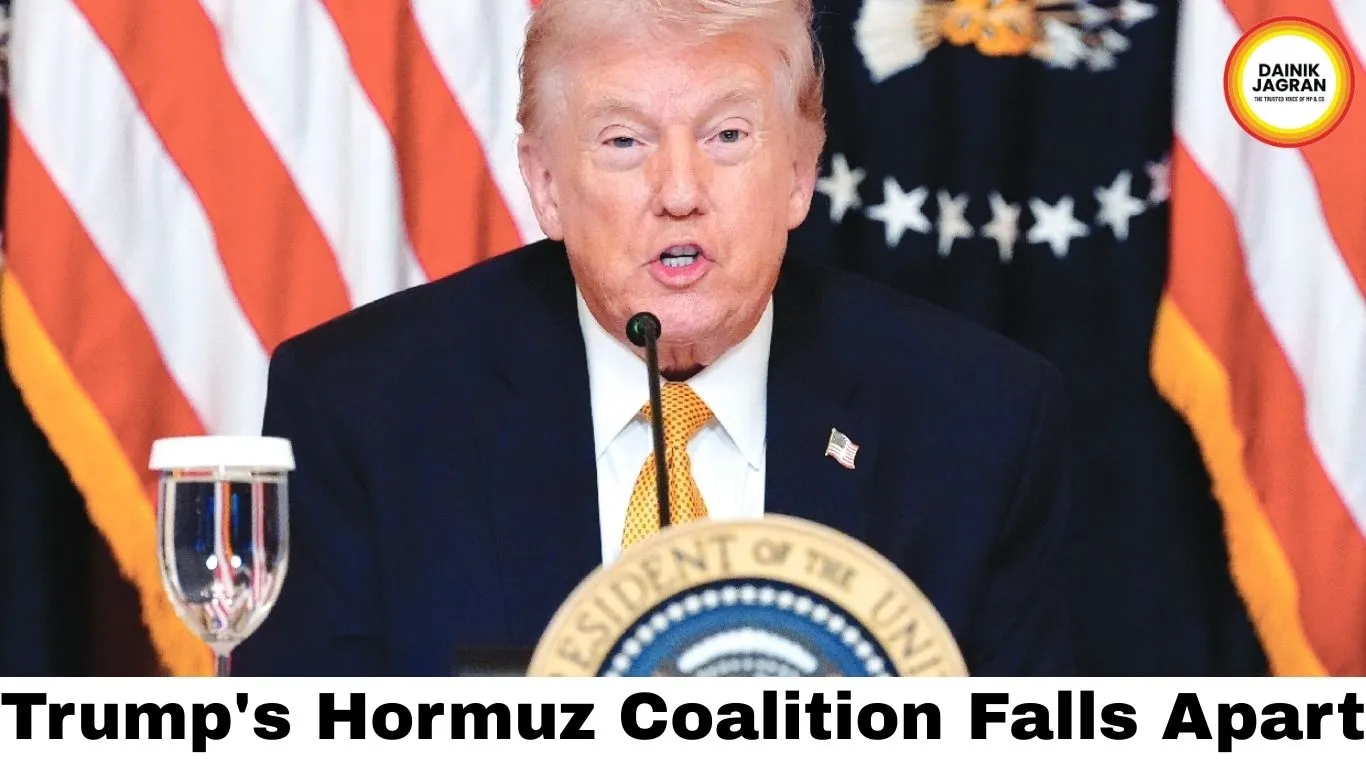
Trump's Hormuz Coalition Falls Apart: Why US Allies Are Saying No to a War They Didn't Start
Digital Desk
Donald Trump wanted a show of global solidarity. What he got instead was a polite — and sometimes not-so-polite — collective no.
Following the US-Israel military assault on Iran that began on February 28, Iran retaliated by effectively slamming shut the Strait of Hormuz — the critical waterway through which roughly 20 to 30 percent of global oil consumption flows. Oil prices have since surged past $100 a barrel, sending shockwaves across global markets. Trump's answer? Demand that allies send warships to reopen it. The world's answer? A resounding rejection.
"Not Our War" — Europe Draws a Clear Line
The response from European capitals has been blunt and unified in a way that is rare for NATO. German Defence Minister Boris Pistorius asked what Trump expected "a handful or two handfuls of European frigates to do in the Strait of Hormuz that the powerful US Navy cannot do," adding plainly: "This is not our war; we have not started it."
German Chancellor Friedrich Merz went further, saying Berlin would not participate in any mission in the Strait so long as the war continues, stating the alliance had no viable concept for how such an operation could even succeed.
Luxembourg's Foreign Minister Xavier Bettel didn't mince words either, calling Trump's demand "blackmail" and reminding the alliance that Article 5 — NATO's collective defence clause — only applies when a member state is attacked. None of them had been.
This wasn't just Germany and Luxembourg. Greece ruled out any military operations in the Strait. Italy said it was not involved in any naval missions that could be extended to the area. And the EU's foreign policy chief confirmed that after meeting all 27 member states, there was simply no appetite to extend the bloc's existing Aspides naval mission to the Hormuz zone. "Nobody wants to go actively in this war," she said.
Asia Also Steps Back
It wasn't just Europe. Japan's Prime Minister told parliament that Tokyo had made no decisions about dispatching escort ships, noting legal constraints on overseas military deployments. Australia flatly ruled out sending ships, saying it hadn't even been formally asked.
The picture that emerges is not one of reluctant allies dragging their feet. It is one of nations that have made a deliberate, political choice to stay out of a conflict they view as Washington's own making.
The Uncomfortable Truth Behind the Rejection
There is a deeper context here that no one in Washington wants to say too loudly: trust has eroded. Trump launched military strikes on Iran alongside Israel without coordinating diplomatically with allies, then scrambled to pressure those same nations to help manage the fallout.
This comes just two months after Trump disparaged those same NATO allies for what he called their "lackluster efforts" in Afghanistan. Allies who have spent a year absorbing tariff threats, territorial taunts, and public insults from Washington are now being asked to send their sailors into a war zone — for a conflict they neither endorsed nor joined.
As one former Estonian leader put it, the irony of the situation is hard to ignore when a US president who spent years undermining NATO is suddenly invoking it to demand help.
What Trump Is Threatening — And What It Means
Trump has warned he will "remember" who helps and who doesn't. He has also hinted at delaying his planned summit with Chinese President Xi Jinping if Beijing does not assist in reopening the Strait. Given China's already slowing economy and the strain of ongoing tariff disputes, that is a gamble with serious economic consequences for both sides.
For now, the strait closure has become the central crisis of this war for the White House — because as long as the Iranian blockade holds, Trump cannot end the war and declare victory even if he wants to.
The Bottom Line
The Strait of Hormuz standoff is no longer just a military or energy crisis. It has become a mirror for the state of US alliances in 2026 — strained, transactional, and deeply uncertain. Countries that once followed Washington's lead on global security are now calculating their own interests first.
Trump's Hormuz coalition was supposed to show American leadership. Instead, it has exposed its limits. When the US calls, the world is still listening — but more and more, it is choosing not to answer.


.jpg)

.jpg)




