Why Canada's Wildfires Continue to Burn: Heat, Zombie Fires and Climate Conditions Explained
Digital Desk
Canada's wildfire crisis continues to intensify as extreme heat, remote forests, zombie fires and dry weather fuel hundreds of uncontrolled blazes, spreading smoke across North America.
Canada's 2026 wildfire season has escalated into one of the country's most severe environmental emergencies in recent years, with hundreds of active fires continuing to burn across multiple provinces despite large-scale firefighting efforts. The crisis has expanded beyond Canada's borders, sending dense smoke across the United States, disrupting daily life, worsening air quality and raising fresh concerns about climate resilience.
Authorities say the combination of prolonged heat, dry conditions, lightning strikes and the unique characteristics of Canada's boreal forests has created conditions that make many fires extremely difficult to control.
Hundreds of Fires Remain Active
By mid-July, Canada was battling nearly 900 active wildfires, with a significant number classified as out of control. Major fire activity has been reported in Ontario, British Columbia, Alberta, Saskatchewan, Manitoba, Quebec, Yukon, Northwest Territories and several Atlantic provinces.
Ontario has emerged as one of the worst-hit regions, where dozens of fires continue to threaten remote communities, forests and critical infrastructure. Firefighters, helicopters, water bombers and emergency response teams remain deployed across affected areas, but many blazes continue to spread.
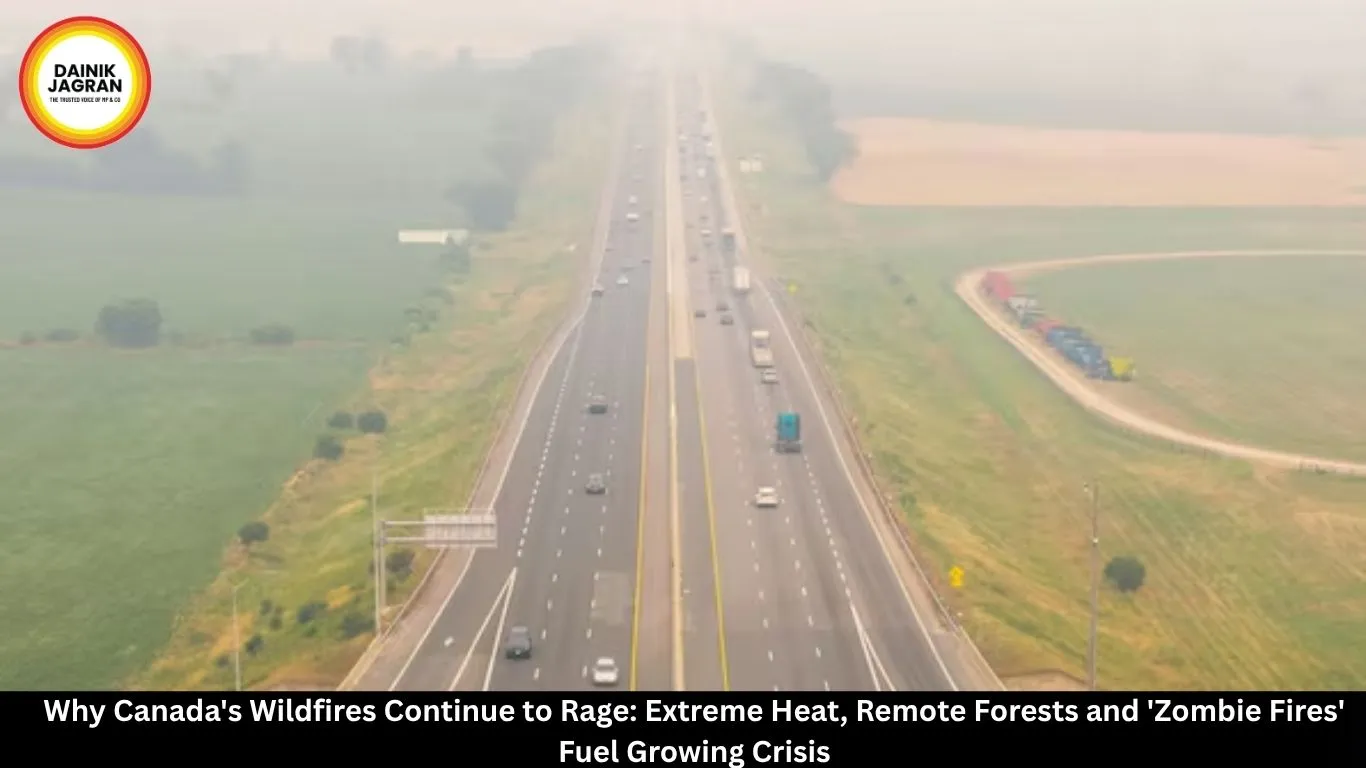
The smoke generated by these fires has travelled thousands of kilometres, triggering air quality alerts in major cities including Toronto, Chicago, Detroit, New York and Washington, D.C.
Extreme Weather Accelerating Fire Spread
Wildfires occur every summer in Canada, but experts say this year's season intensified rapidly after weeks of unusually high temperatures and below-normal rainfall.
Large parts of northern Canada experienced persistent heatwaves, drying forests, peatlands and grasslands. The lack of moisture has turned vegetation into highly combustible fuel, allowing even small ignitions to grow into massive wildfires.
Meteorologists also point to a prolonged heat dome—a high-pressure weather system that traps hot air over a region—as one of the key drivers behind the crisis. The system has suppressed rainfall while maintaining unusually high temperatures across large areas.
Lightning and Strong Winds Add to the Challenge
Lightning remains one of the biggest natural causes of Canadian wildfires.
During dry conditions, thunderstorms often generate lightning without significant rainfall, igniting multiple fires simultaneously across remote landscapes.
Strong winds further complicate firefighting efforts by pushing flames into new areas and carrying burning embers kilometres ahead of the main fire front, creating additional spot fires.
Remote Forests Make Firefighting Difficult
Canada's vast boreal forests present one of the greatest challenges for emergency responders.
Many active fires are burning hundreds of kilometres away from roads, towns or water infrastructure, making conventional firefighting operations impossible. Emergency crews often rely on helicopters, aircraft and specially trained smokejumpers, who parachute directly into isolated fire zones.
Because resources are limited, authorities prioritise protecting communities, highways, power infrastructure and critical facilities rather than attempting to extinguish every wildfire burning in remote wilderness.
'Zombie Fires' Continue Burning Underground
Another factor making Canada's wildfire season especially difficult is the presence of so-called "zombie fires."
Much of Canada's boreal forest sits above deep peat layers that can continue smouldering underground long after surface flames disappear. These underground fires may burn for weeks or even survive beneath winter snow before reigniting the following year.
Even extensive aerial water drops cannot always extinguish these hidden hotspots, allowing fires to re-emerge unexpectedly.
Wildfires Creating Their Own Weather
Scientists say some of Canada's largest fires have become powerful enough to influence local weather conditions.
Intense heat generated by massive fires can produce towering pyrocumulonimbus clouds—fire-generated thunderstorms capable of creating unpredictable winds and dry lightning.
These storms can rapidly change the direction of a wildfire while simultaneously igniting entirely new fires several kilometres away, making suppression efforts even more challenging.
Smoke Impacting Millions Across North America
Smoke from the Canadian wildfires has spread across much of North America, reducing visibility and pushing air pollution to hazardous levels.
Several major cities temporarily recorded among the world's worst air quality readings as fine particulate matter (PM2.5) increased sharply. Health officials have advised residents to stay indoors, avoid strenuous outdoor activity and wear N95 or KN95 masks when outside.
Medical experts warn that prolonged exposure to wildfire smoke can aggravate asthma, heart disease and respiratory illnesses, with children, older adults and people with chronic health conditions facing the greatest risks.
Relief May Not Come Soon
Environment and Climate Change Canada expects above-average temperatures and continued dry weather across several regions through August.
Without widespread rainfall, officials believe wildfire activity could remain elevated for the remainder of the summer. While temporary improvements in air quality may occur as wind patterns shift, authorities caution that smoke will likely continue affecting large parts of Canada and the United States as long as hundreds of fires remain active.
The ongoing wildfire emergency highlights not only the growing challenges posed by extreme weather but also the increasing complexity of managing large-scale forest fires in a warming climate.

--------
🚨 Beat the News Rush – Join Now!
Get breaking alerts, hot exclusives, and game-changing stories instantly on your phone. No delays, no fluff – just the edge you need. ⚡
Tap to join:
🟢 WhatsApp Channel: Dainik Jagran MP CG
Crave more?
🅕 Facebook: Dainik Jagran MP CG English
🅧 Twitter (X): Dainik Jagran MP CG
🅘 Instagram: Dainik Jagran MP CG
Share the fire – keep your crew ahead! 🗞️🔥
Why Canada's Wildfires Continue to Burn: Heat, Zombie Fires and Climate Conditions Explained
Digital Desk
Canada's 2026 wildfire season has escalated into one of the country's most severe environmental emergencies in recent years, with hundreds of active fires continuing to burn across multiple provinces despite large-scale firefighting efforts. The crisis has expanded beyond Canada's borders, sending dense smoke across the United States, disrupting daily life, worsening air quality and raising fresh concerns about climate resilience.
Authorities say the combination of prolonged heat, dry conditions, lightning strikes and the unique characteristics of Canada's boreal forests has created conditions that make many fires extremely difficult to control.
Hundreds of Fires Remain Active
By mid-July, Canada was battling nearly 900 active wildfires, with a significant number classified as out of control. Major fire activity has been reported in Ontario, British Columbia, Alberta, Saskatchewan, Manitoba, Quebec, Yukon, Northwest Territories and several Atlantic provinces.
Ontario has emerged as one of the worst-hit regions, where dozens of fires continue to threaten remote communities, forests and critical infrastructure. Firefighters, helicopters, water bombers and emergency response teams remain deployed across affected areas, but many blazes continue to spread.
The smoke generated by these fires has travelled thousands of kilometres, triggering air quality alerts in major cities including Toronto, Chicago, Detroit, New York and Washington, D.C.
Extreme Weather Accelerating Fire Spread
Wildfires occur every summer in Canada, but experts say this year's season intensified rapidly after weeks of unusually high temperatures and below-normal rainfall.
Large parts of northern Canada experienced persistent heatwaves, drying forests, peatlands and grasslands. The lack of moisture has turned vegetation into highly combustible fuel, allowing even small ignitions to grow into massive wildfires.
Meteorologists also point to a prolonged heat dome—a high-pressure weather system that traps hot air over a region—as one of the key drivers behind the crisis. The system has suppressed rainfall while maintaining unusually high temperatures across large areas.
Lightning and Strong Winds Add to the Challenge
Lightning remains one of the biggest natural causes of Canadian wildfires.
During dry conditions, thunderstorms often generate lightning without significant rainfall, igniting multiple fires simultaneously across remote landscapes.
Strong winds further complicate firefighting efforts by pushing flames into new areas and carrying burning embers kilometres ahead of the main fire front, creating additional spot fires.
Remote Forests Make Firefighting Difficult
Canada's vast boreal forests present one of the greatest challenges for emergency responders.
Many active fires are burning hundreds of kilometres away from roads, towns or water infrastructure, making conventional firefighting operations impossible. Emergency crews often rely on helicopters, aircraft and specially trained smokejumpers, who parachute directly into isolated fire zones.
Because resources are limited, authorities prioritise protecting communities, highways, power infrastructure and critical facilities rather than attempting to extinguish every wildfire burning in remote wilderness.
'Zombie Fires' Continue Burning Underground
Another factor making Canada's wildfire season especially difficult is the presence of so-called "zombie fires."
Much of Canada's boreal forest sits above deep peat layers that can continue smouldering underground long after surface flames disappear. These underground fires may burn for weeks or even survive beneath winter snow before reigniting the following year.
Even extensive aerial water drops cannot always extinguish these hidden hotspots, allowing fires to re-emerge unexpectedly.
Wildfires Creating Their Own Weather
Scientists say some of Canada's largest fires have become powerful enough to influence local weather conditions.
Intense heat generated by massive fires can produce towering pyrocumulonimbus clouds—fire-generated thunderstorms capable of creating unpredictable winds and dry lightning.
These storms can rapidly change the direction of a wildfire while simultaneously igniting entirely new fires several kilometres away, making suppression efforts even more challenging.
Smoke Impacting Millions Across North America
Smoke from the Canadian wildfires has spread across much of North America, reducing visibility and pushing air pollution to hazardous levels.
Several major cities temporarily recorded among the world's worst air quality readings as fine particulate matter (PM2.5) increased sharply. Health officials have advised residents to stay indoors, avoid strenuous outdoor activity and wear N95 or KN95 masks when outside.
Medical experts warn that prolonged exposure to wildfire smoke can aggravate asthma, heart disease and respiratory illnesses, with children, older adults and people with chronic health conditions facing the greatest risks.
Relief May Not Come Soon
Environment and Climate Change Canada expects above-average temperatures and continued dry weather across several regions through August.
Without widespread rainfall, officials believe wildfire activity could remain elevated for the remainder of the summer. While temporary improvements in air quality may occur as wind patterns shift, authorities caution that smoke will likely continue affecting large parts of Canada and the United States as long as hundreds of fires remain active.
The ongoing wildfire emergency highlights not only the growing challenges posed by extreme weather but also the increasing complexity of managing large-scale forest fires in a warming climate.