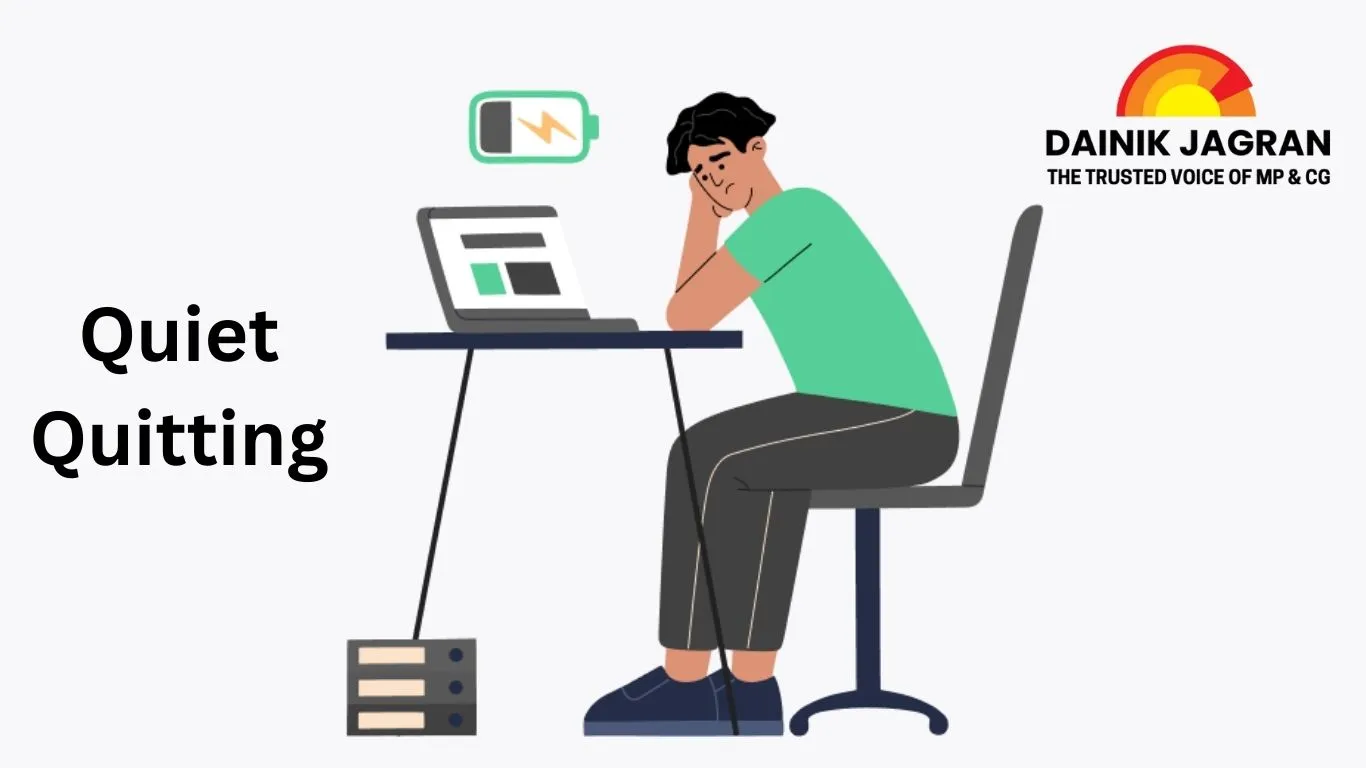
Quiet Quitting: A Growing Workplace Phenomenon Reshaping Work Culture
Digital desk
Originally gaining traction on social media during the pandemic, the term has resurfaced in recent years as global workforces confront burnout, disengagement and concerns over work-life balance. A report by staffing firm Genius Consultants highlights that a significant proportion of young workers — especially Gen Z — attribute quiet quitting to toxic work culture and excessive pressure, with nearly half of respondents citing a poor work environment as the main driving factor.
According to experts, quiet quitting does not necessarily indicate poor performance; instead, it often reflects a realignment of priorities. Workers who would once go “above and beyond” now choose to adhere strictly to core job responsibilities, focusing on personal time, wellness and work-life boundaries. Industry surveys also reveal the rise of related workplace behaviours — such as “Bare Minimum Mondays,” where employees intentionally put in the least possible effort at the start of the week — further illustrating how quiet quitting influences daily work dynamics.
Research into the psychological roots of quiet quitting suggests deeper factors at play. A 2025 study by human resource researchers at Stevens Institute of Technology indicates that employees who feel a lack of control over their work or disconnected from organisational goals are more likely to disengage in this way, highlighting the importance of autonomy and meaningful engagement in reducing the phenomenon.
The impact of quiet quitting isn’t limited to individual motivation; it also affects workplaces more broadly. Human resource professionals warn that sustained quiet quitting can lead to lower productivity, reduced innovation and strained team morale if left unaddressed.
At the same time, some analysts argue that generational shifts in attitudes toward work are reshaping traditional career narratives. Recent commentary notes that younger employees may be redefining career success, emphasizing flexibility, autonomy, and side projects alongside employment, rather than adhering to conventional corporate ambition.
Organisations are increasingly responding with cultural interventions aimed at enhancing employee recognition, career growth opportunities and workplace engagement to counteract quiet quitting’s effects. As work culture continues to evolve post-pandemic, the conversation surrounding quiet quitting highlights the complex intersection of employee well-being, organisational expectations and the future of work itself.