


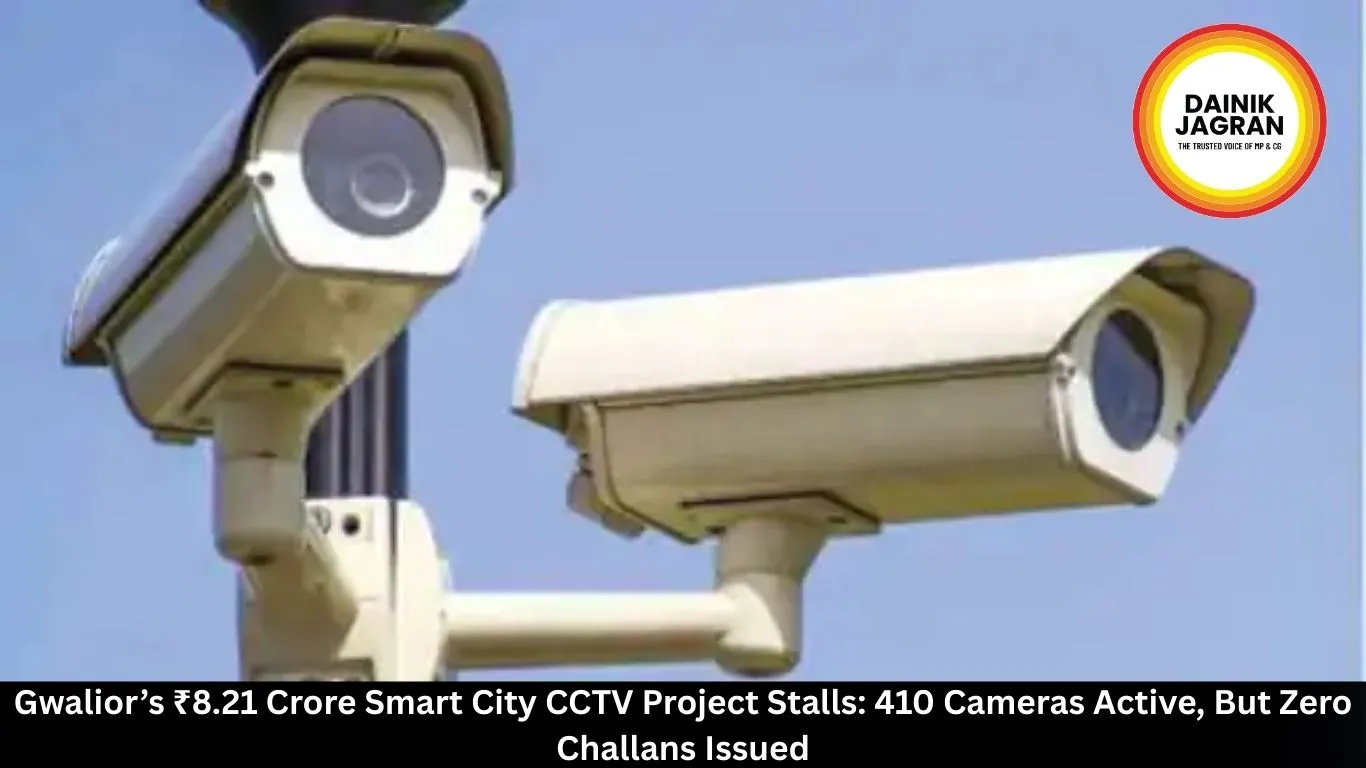
Gwalior’s ₹8.21 Crore Smart City CCTV Project Stalls: 410 Cameras Active, But Zero Challans Issued
Digital Desk
In a classic case of high-tech hardware meeting low-tech hurdles, Gwalior’s ambitious attempt to modernize its streets has hit a bureaucratic roadblock. Four months after the installation of 410 high-tech cameras under the Gwalior Smart City CCTV project, the system remains a "silent spectator" to thousands of traffic violations.
Despite an investment of ₹8.21 crore, the city's automated traffic management system is currently unable to issue a single challan. The reason? A glaring lack of basic road signage and painted markings.
High-Tech Vision, Low-Tech Execution
In October, 107 strategic locations across Gwalior were equipped with a mix of Bullet and PTZ (Pan-Tilt-Zoom) cameras. These devices were designed to be the backbone of the city’s new traffic management system, specifically targeting wrong-side driving and illegal parking.
While the internet connectivity is live and data feeding is complete, the legal process of penalizing offenders cannot begin. Under traffic regulations, a driver cannot be penalized for "wrong-side" driving if there is no visible signage or road marking indicating the restriction.
The Inter-Departmental Gap
The delay highlights a significant coordination lapse between three key bodies:
-
Smart City Development Corp: Completed the camera installation but failed to integrate infrastructure requirements into the initial rollout.
-
Municipal Corporation: Responsible for road markings and signs. A tender worth ₹1.80 crore was only recently finalized—four months after the cameras went live.
-
Traffic Police: While they identified 58 hotspots, they are currently unable to enforce rules without the legal "ground proof" of signage.
A Silver Lining in Crime Control
While the Smart City surveillance cameras have failed to curb traffic chaos, they are proving their worth in public safety. Recently, footage from the Kampu area provided critical clues in a high-profile robbery involving a hawala collection agent.
"The cameras are fully functional and already assisting the police in criminal investigations," says Nagendra Saxena, E-Governance Manager for the Smart City Project. "The transition to traffic enforcement is only pending the Municipal Corporation’s installation of road indicators."
What This Means for Gwalior Residents
For the average commuter, the "grace period" is coming to an end. Once the ₹1.80 crore signage project begins, the following changes are expected:
-
Automated Penalties: Cameras will automatically trigger Gwalior traffic challans for wrong-side driving.
-
Strict One-Way Enforcement: 58 specific locations will become "zero-tolerance" zones.
-
Parking Regulation: New parking lines will be drawn, and cameras will monitor for obstructions.
Expert Perspective: The "Hardware First" Trap
Urban planning experts suggest that Gwalior’s situation is a common pitfall in "Smart City" initiatives. Implementing digital solutions before physical infrastructure is ready leads to "tech-dormancy," where expensive equipment depreciates before it ever serves its primary purpose.
The Gwalior Smart City CCTV project is a powerful tool currently waiting for a paintbrush. While the technical infrastructure is impressive, the city’s safety and order remain on hold until the signs catch up with the sensors. Residents should use this delay to correct their driving habits before the "eye in the sky" officially starts hitting their wallets.




.jpg)




