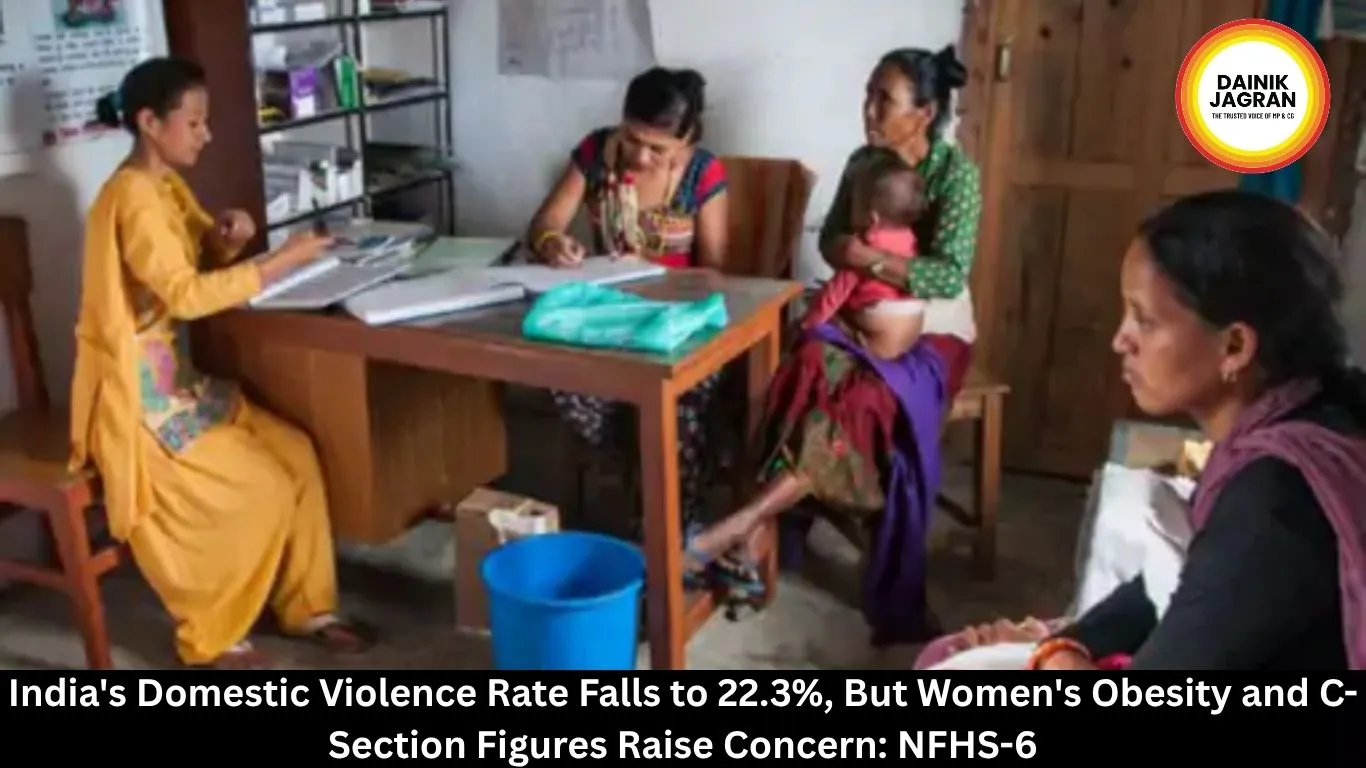
NFHS-6 2024: Domestic Violence Falls to 22.3%, Obesity and C-Sections Rise

Digital Desk

 NFHS-6 2024: Domestic Violence Falls to 22.3%, Obesity and C-Sections Rise

India's NFHS-6 report shows domestic violence down to 22.3% and stunting improving, but women's obesity up 7% and C-sections at record 54.1% in private hospitals.


The sixth National Family Health Survey shows measurable gains in safety indicators and infrastructure, but flags rising health risks among women and persistent nutrition gaps in children

A Wide-Ranging Health Census

The Union Health Ministry released the report of the National Family Health Survey 2023–24 (NFHS-6) on Friday, drawing data from roughly 6.79 lakh households spread across 715 districts. The survey, the most comprehensive of its kind in India, tracks population, health, nutrition, and family welfare indicators — and this round signals both progress and fresh warnings.

Violence Against Women Declines

One of the more striking numbers in the report: the rate of domestic violence has dropped from 29.2% to 22.3% compared to the NFHS-5 conducted between 2019 and 2021. Child marriage has also seen a decline, falling from 23.3% to 20.1% nationally. The share of working women has risen to 30.8%, up from 25.4% in the previous survey — a modest but meaningful gain in economic participation.

State-level gaps, however, remain stark. Bihar records the highest rate of marital violence at 36.1%, while Himachal Pradesh is at the other end at just 4.3%. On child marriage, West Bengal (36.4%) and Bihar (34.6%) top the list, and Kerala — with a rate of only 2.9% — remains the safest state on that indicator.

Obesity Rising, Breastfeeding Down

Women's obesity has increased by roughly 7 percentage points since the last survey. Andhra Pradesh, Sikkim, and Kerala each report obesity rates of around 46–48% among women, while Meghalaya and Jharkhand remain at the lower end at 13.8% and 16.9% respectively.

Exclusive breastfeeding for the first six months — a critical early childhood nutrition marker — has actually declined, slipping from 63.7% to 55.8%. According to the survey, only 15.3% of children between six months and two years are receiving adequate, balanced nutrition. That means close to 85% of children in that age group are not meeting their basic dietary needs.

On a more positive note, stunting among children has come down from 35.5% to 29.3%, a drop of 6.2 percentage points that officials have described as a significant improvement in child growth outcomes.

C-Section Rates at Record High

Caesarean deliveries in private hospitals have reached 54.1%, a record level that public health experts have long flagged as a concern. The survey does not directly address whether this reflects medical necessity or over-medicalisation, but the figure is likely to invite scrutiny from health bodies.

Infrastructure Gains Are Substantial

Electricity has reached 98.3% of households, and access to clean drinking water now stands at 96.5% of homes — both figures representing substantial improvement in living standards. Internet access among women has more than doubled, climbing to 64.3%.

Women's property ownership has also grown. Currently 18.8% of families have a woman owning a house or land — up from 14% in the previous survey. Rural ownership (19.1%) is slightly ahead of urban (18.2%), which runs counter to expectations.

Family Planning Use Has Dipped

The survey flags a decline in the use of modern family planning methods, including contraceptive pills, condoms, and sterilisation procedures. The overall rate has fallen to 52.7% from 56.4% earlier — a development that, alongside the rise in obesity and fall in breastfeeding rates, points to gaps in the reach of public health messaging at the community level.

WHO Data Adds Context

World Health Organisation data cited in the survey notes that around 30% of women in India have experienced some form of intimate partner violence — encompassing mental, economic, and sexual abuse. Globally, around 840 million women have faced sexual abuse from a partner at some point in their lives, and the situation has improved only marginally since 2000.

In India, about 4% of women aged 15 and above have faced sexual violence from someone other than a partner — a figure that, while lower than many peer countries, remains a cause for intervention.


 

--------

🚨 Beat the News Rush – Join Now!

Get breaking alerts, hot exclusives, and game-changing stories instantly on your phone. No delays, no fluff – just the edge you need. ⚡

Tap to join: 

🟢 WhatsApp Channel: Dainik Jagran MP CG

Crave more?

🅕 Facebook: Dainik Jagran MP CG English

🅧 Twitter (X): Dainik Jagran MP CG

🅘 Instagram: Dainik Jagran MP CG

Share the fire – keep your crew ahead! 🗞️🔥

english.dainikjagranmpcg.com
30 May 2026 By Abhishek Joshi

NFHS-6 2024: Domestic Violence Falls to 22.3%, Obesity and C-Sections Rise

Digital Desk

The sixth National Family Health Survey shows measurable gains in safety indicators and infrastructure, but flags rising health risks among women and persistent nutrition gaps in children

A Wide-Ranging Health Census

The Union Health Ministry released the report of the National Family Health Survey 2023–24 (NFHS-6) on Friday, drawing data from roughly 6.79 lakh households spread across 715 districts. The survey, the most comprehensive of its kind in India, tracks population, health, nutrition, and family welfare indicators — and this round signals both progress and fresh warnings.

Violence Against Women Declines

One of the more striking numbers in the report: the rate of domestic violence has dropped from 29.2% to 22.3% compared to the NFHS-5 conducted between 2019 and 2021. Child marriage has also seen a decline, falling from 23.3% to 20.1% nationally. The share of working women has risen to 30.8%, up from 25.4% in the previous survey — a modest but meaningful gain in economic participation.

State-level gaps, however, remain stark. Bihar records the highest rate of marital violence at 36.1%, while Himachal Pradesh is at the other end at just 4.3%. On child marriage, West Bengal (36.4%) and Bihar (34.6%) top the list, and Kerala — with a rate of only 2.9% — remains the safest state on that indicator.

Obesity Rising, Breastfeeding Down

Women's obesity has increased by roughly 7 percentage points since the last survey. Andhra Pradesh, Sikkim, and Kerala each report obesity rates of around 46–48% among women, while Meghalaya and Jharkhand remain at the lower end at 13.8% and 16.9% respectively.

Exclusive breastfeeding for the first six months — a critical early childhood nutrition marker — has actually declined, slipping from 63.7% to 55.8%. According to the survey, only 15.3% of children between six months and two years are receiving adequate, balanced nutrition. That means close to 85% of children in that age group are not meeting their basic dietary needs.

On a more positive note, stunting among children has come down from 35.5% to 29.3%, a drop of 6.2 percentage points that officials have described as a significant improvement in child growth outcomes.

C-Section Rates at Record High

Caesarean deliveries in private hospitals have reached 54.1%, a record level that public health experts have long flagged as a concern. The survey does not directly address whether this reflects medical necessity or over-medicalisation, but the figure is likely to invite scrutiny from health bodies.

Infrastructure Gains Are Substantial

Electricity has reached 98.3% of households, and access to clean drinking water now stands at 96.5% of homes — both figures representing substantial improvement in living standards. Internet access among women has more than doubled, climbing to 64.3%.

Women's property ownership has also grown. Currently 18.8% of families have a woman owning a house or land — up from 14% in the previous survey. Rural ownership (19.1%) is slightly ahead of urban (18.2%), which runs counter to expectations.

Family Planning Use Has Dipped

The survey flags a decline in the use of modern family planning methods, including contraceptive pills, condoms, and sterilisation procedures. The overall rate has fallen to 52.7% from 56.4% earlier — a development that, alongside the rise in obesity and fall in breastfeeding rates, points to gaps in the reach of public health messaging at the community level.

WHO Data Adds Context

World Health Organisation data cited in the survey notes that around 30% of women in India have experienced some form of intimate partner violence — encompassing mental, economic, and sexual abuse. Globally, around 840 million women have faced sexual abuse from a partner at some point in their lives, and the situation has improved only marginally since 2000.

In India, about 4% of women aged 15 and above have faced sexual violence from someone other than a partner — a figure that, while lower than many peer countries, remains a cause for intervention.

 

https://english.dainikjagranmpcg.com/national/-nfhs-6-2024-domestic-violence-falls-to-223-obesity-and/article-19451

Latest News

No-Confidence Motion Against Gudh Council President No-Confidence Motion Against Gudh Council President
13 councillors in Rewa’s Gudh Nagar Parishad have filed a no-confidence motion against President Archana Singh, citing corruption, fake appointments,...
Rewa MGNREGA Scam: RTI Activist's Name in Fake Muster Rolls | Officials Guilty
India military modernisation praised at Shangri‑La
Shivakumar meets Governor ahead of Karnataka CLP meeting
Storm and Rain Fury Claims 48 Lives in UP, Bihar
NFHS-6 2024: Domestic Violence Falls to 22.3%, Obesity and C-Sections Rise
Iran to Get ₹25 Lakh Crore Fund in US Ceasefire Deal: Report