External Affairs Minister S Jaishankar has said India’s relationship with Bangladesh can move forward only when it serves the interests of both countries, as bilateral ties remain under strain over several issues, including Dhaka’s demand for the extradition of former Prime Minister Sheikh Hasina.
Speaking at the Economic Times World Leaders Forum on Saturday, Jaishankar said India takes a realistic approach to its neighbourhood and does not expect other countries to always act according to New Delhi’s interests. He stressed that both sides must recognise each other’s concerns and find common ground to move the relationship forward.
Jaishankar stresses mutual interest
Asked about Bangladesh’s demand for Hasina’s extradition, Jaishankar did not comment on the details of the ongoing discussions. Instead, he emphasised the broader principle governing India’s relations with its neighbours.
“For any relationship to work, it has to meet the test of mutual interest. It has to work for them, it has to work for us,” he said.
Jaishankar added that India understands that neighbouring countries have their own priorities and interests. According to him, sustainable bilateral relations require both sides to respect those concerns before reaching a workable “landing point”.
Tarique Rahman visit in focus
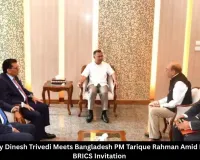
Jaishankar’s remarks come as India and Bangladesh are also discussing a possible visit by Tarique Rahman to New Delhi.
India has invited Rahman for a bilateral visit and for the upcoming BRICS Summit in his capacity as chair of the Bay of Bengal Initiative for Multi-Sectoral Technical and Economic Cooperation (BIMSTEC).
A proposed visit next week was reportedly postponed, with the two sides now discussing possible dates later this month or in early September.
Rahman’s possible visit is being viewed as an opportunity for New Delhi and Dhaka to reset ties after months of tensions.
Sheikh Hasina remains key issue
The presence of former Bangladesh Prime Minister Sheikh Hasina in India remains one of the major points of friction between the two countries.
Dhaka has sought her extradition, while New Delhi has continued to engage with Bangladesh on the wider bilateral relationship.
Jaishankar’s comments suggest that India is seeking to keep the broader relationship focused on mutual interests while discussions on individual contentious issues continue through diplomatic channels.
Jaishankar targets Pakistan over terrorism
During the interaction, Jaishankar also spoke about India’s relations with Pakistan and said New Delhi could not ignore public sentiment, particularly on terrorism.
He described Pakistan as “unique” among India’s neighbours, alleging that no other country uses terrorism “so systematically and in such a sustained manner” against a neighbouring country.
Jaishankar also played down suggestions that improving Pakistan-US relations would significantly alter India’s assessment of Islamabad, noting that the United States and Pakistan have maintained relations for decades.
India watching Pakistan-Saudi-Turkey pact
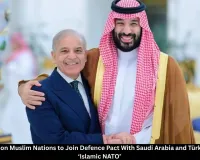
The External Affairs Minister also discussed the Mecca Joint Defence Agreement involving Pakistan, Saudi Arabia and Turkey.
Jaishankar said India would take the agreement into account as part of its broader strategic and security assessment. He stressed that developments involving countries that are not well disposed towards India would form part of New Delhi’s calculations.
“In my calculus, everything counts, everything will have a weight,” he said.
Peace with China remains priority
On China, Jaishankar said peace and stability along the India-China border would remain essential for improving bilateral relations.
He noted that both countries are major economies with significant economic ties and participation in global supply chains and markets. However, relations went through a particularly difficult period between 2020 and 2024, largely because of developments along the border.
Jaishankar said peace and tranquillity in border areas remain a prerequisite for better relations.
He also acknowledged reports of Indian businesspeople facing difficulties in obtaining Chinese visas and said India had raised the matter with Beijing.