Census 2027 Begins: Caste Question Included in India Population Census
Digital desk
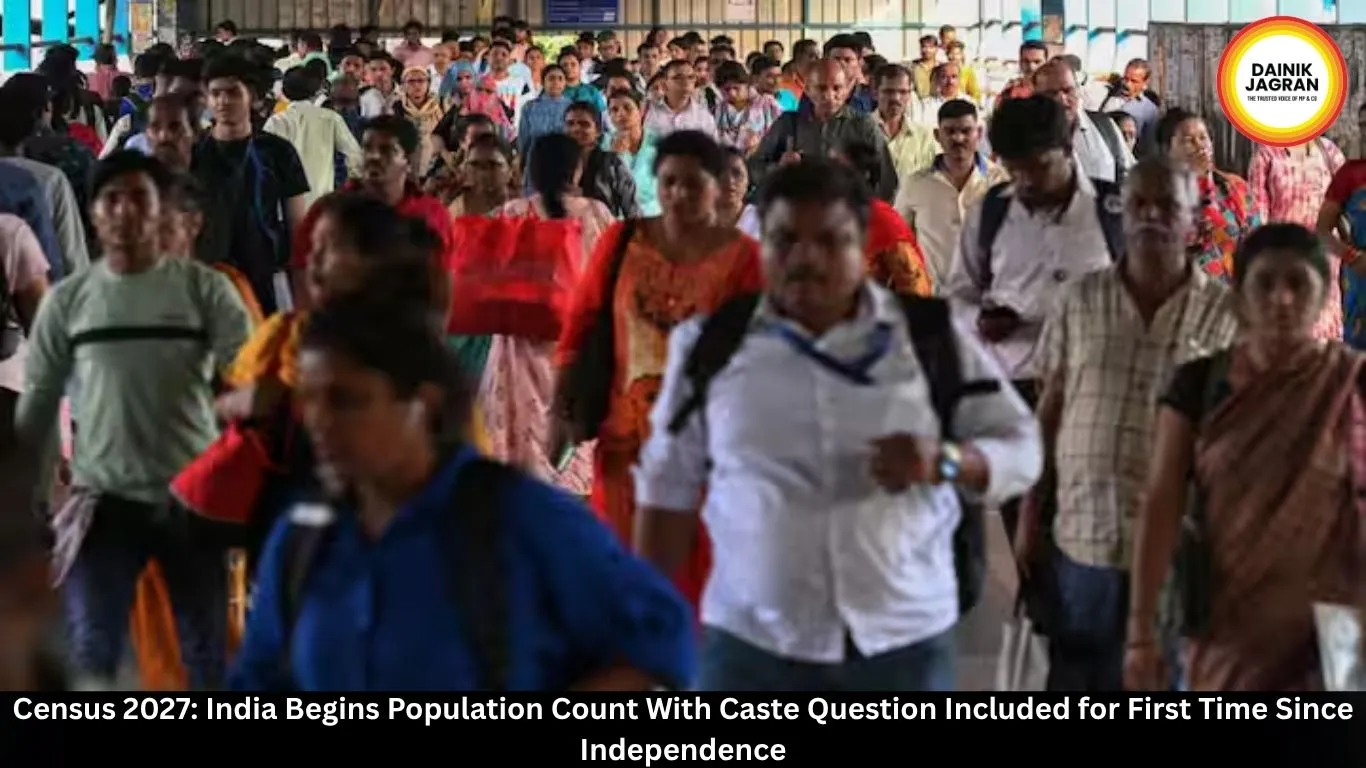
India begins Census 2027 with a ₹11,718-crore digital population count. The exercise includes a caste question for the first time since Independence and covers 40 questions.
India on Monday officially began the population enumeration process for Census 2027, marking the start of the second and final phase of the country's decennial census exercise. The ₹11,718-crore operation introduces several changes to the way demographic information will be collected, including the inclusion of a specific caste question.
The exercise will combine online self-enumeration with a mobile-based door-to-door survey. The government has notified a 40-question schedule covering population, social, economic, educational, employment, migration and digital details.
Census Begins in Snow-Bound Areas
The first phase of population enumeration has begun in Ladakh and snow-bound areas of Jammu and Kashmir, Himachal Pradesh and Uttarakhand.
Residents in these areas can use the self-enumeration facility between August 17 and August 31. Government officials will subsequently carry out door-to-door verification from September 1 to September 30.
The early schedule has been designed to ensure that enumeration in high-altitude and snow-bound areas is completed before severe winter conditions make access difficult.
For the rest of the country, house-to-house population enumeration is scheduled to begin in February 2027, following the completion of the ongoing house-listing and housing operations.
Caste Question Returns to Census
The most significant change in Census 2027 is the inclusion of a caste question in the population enumeration schedule.
Listed as Question 10, the question seeks information under the categories of Scheduled Caste, Scheduled Tribe and caste.
While SC and ST populations have been recorded in post-Independence censuses, a comprehensive enumeration of other castes has not been conducted as part of the national census since 1931.
Unlike a system based on a predefined list, enumerators will record the caste name provided by the respondent rather than selecting it from a fixed drop-down menu.
The caste data is expected to provide the government with a broader picture of India's social composition and could become an important source of demographic information for future policy planning.
What Will 40 Questions Cover?
The Census 2027 questionnaire has been expanded from the 29 questions used during the 2011 Census.
The new schedule includes questions related to digital literacy, COVID-19 vaccination, operational bank accounts and possession of documents such as Aadhaar, voter ID, passport and driving licence.
Household information will also cover family structures, parents, spouses and permanent addresses.
The census will collect information on education and employment, including literacy, whether an individual is currently attending an educational institution, field of study, occupation and the mode of transport used to travel to work.
Migration and Fertility Data
The exercise will also collect information related to fertility and migration.
Questions will cover surviving children, recent births among married or separated women, reasons for migration and the length of time individuals have lived at their current location.
Such information is expected to help authorities understand demographic changes, population movement and differences in household structures across states and regions.
India Moves to Digital Census
Census 2027 will be India's first fully digital census, with technology playing a central role in both data collection and enumeration.
Citizens will have the option of submitting information through an online self-enumeration facility. Enumerators conducting physical surveys will use a dedicated mobile application to collect and record information.
The digital approach is intended to make data collection more efficient while reducing dependence on paper-based processes.
The scale of the exercise remains considerable, with officials required to cover households across India's diverse geographical and demographic landscape.
Why Census 2027 Matters
The census provides the government with updated population and demographic information needed for planning public services, infrastructure and welfare programmes.
The inclusion of caste data could make the 2027 exercise particularly significant because India has not had comprehensive national caste enumeration data for nearly a century.
The information collected will also cover changing patterns in education, employment, migration, digital access and household characteristics.
With the process beginning in phases, the government is now moving towards one of India's largest nationwide data-collection exercises. The final dataset is expected to provide an updated demographic picture of the country and serve as a reference for policy decisions and development planning in the years ahead.
Census 2027 Begins: Caste Question Included in India Population Census
Digital desk
India on Monday officially began the population enumeration process for Census 2027, marking the start of the second and final phase of the country's decennial census exercise. The ₹11,718-crore operation introduces several changes to the way demographic information will be collected, including the inclusion of a specific caste question.
The exercise will combine online self-enumeration with a mobile-based door-to-door survey. The government has notified a 40-question schedule covering population, social, economic, educational, employment, migration and digital details.
Census Begins in Snow-Bound Areas
The first phase of population enumeration has begun in Ladakh and snow-bound areas of Jammu and Kashmir, Himachal Pradesh and Uttarakhand.
Residents in these areas can use the self-enumeration facility between August 17 and August 31. Government officials will subsequently carry out door-to-door verification from September 1 to September 30.
The early schedule has been designed to ensure that enumeration in high-altitude and snow-bound areas is completed before severe winter conditions make access difficult.
For the rest of the country, house-to-house population enumeration is scheduled to begin in February 2027, following the completion of the ongoing house-listing and housing operations.
Caste Question Returns to Census
The most significant change in Census 2027 is the inclusion of a caste question in the population enumeration schedule.
Listed as Question 10, the question seeks information under the categories of Scheduled Caste, Scheduled Tribe and caste.
While SC and ST populations have been recorded in post-Independence censuses, a comprehensive enumeration of other castes has not been conducted as part of the national census since 1931.
Unlike a system based on a predefined list, enumerators will record the caste name provided by the respondent rather than selecting it from a fixed drop-down menu.
The caste data is expected to provide the government with a broader picture of India's social composition and could become an important source of demographic information for future policy planning.
What Will 40 Questions Cover?
The Census 2027 questionnaire has been expanded from the 29 questions used during the 2011 Census.
The new schedule includes questions related to digital literacy, COVID-19 vaccination, operational bank accounts and possession of documents such as Aadhaar, voter ID, passport and driving licence.
Household information will also cover family structures, parents, spouses and permanent addresses.
The census will collect information on education and employment, including literacy, whether an individual is currently attending an educational institution, field of study, occupation and the mode of transport used to travel to work.
Migration and Fertility Data
The exercise will also collect information related to fertility and migration.
Questions will cover surviving children, recent births among married or separated women, reasons for migration and the length of time individuals have lived at their current location.
Such information is expected to help authorities understand demographic changes, population movement and differences in household structures across states and regions.
India Moves to Digital Census
Census 2027 will be India's first fully digital census, with technology playing a central role in both data collection and enumeration.
Citizens will have the option of submitting information through an online self-enumeration facility. Enumerators conducting physical surveys will use a dedicated mobile application to collect and record information.
The digital approach is intended to make data collection more efficient while reducing dependence on paper-based processes.
The scale of the exercise remains considerable, with officials required to cover households across India's diverse geographical and demographic landscape.
Why Census 2027 Matters
The census provides the government with updated population and demographic information needed for planning public services, infrastructure and welfare programmes.
The inclusion of caste data could make the 2027 exercise particularly significant because India has not had comprehensive national caste enumeration data for nearly a century.
The information collected will also cover changing patterns in education, employment, migration, digital access and household characteristics.
With the process beginning in phases, the government is now moving towards one of India's largest nationwide data-collection exercises. The final dataset is expected to provide an updated demographic picture of the country and serve as a reference for policy decisions and development planning in the years ahead.

Recommended For You
--------
🚨 Beat the News Rush – Join Now!
Get breaking alerts, hot exclusives, and game-changing stories instantly on your phone. No delays, no fluff – just the edge you need. ⚡
Tap to join:
🟢 WhatsApp Channel: Dainik Jagran MP CG
Crave more?
🅕 Facebook: Dainik Jagran MP CG English
🅧 Twitter (X): Dainik Jagran MP CG
🅘 Instagram: Dainik Jagran MP CG
Share the fire – keep your crew ahead! 🗞️🔥