CRPF Probe Finds RAF Jawan Fired Seven Pellet Rounds During Parliament Protest

Digital Desk

CRPF Probe Finds RAF Jawan Fired Seven Pellet Rounds During Parliament Protest

A preliminary CRPF inquiry has found that an RAF jawan fired seven pellet rounds during the July 20 Parliament march, with five hitting protesters. The force is reviewing crowd-control procedures.

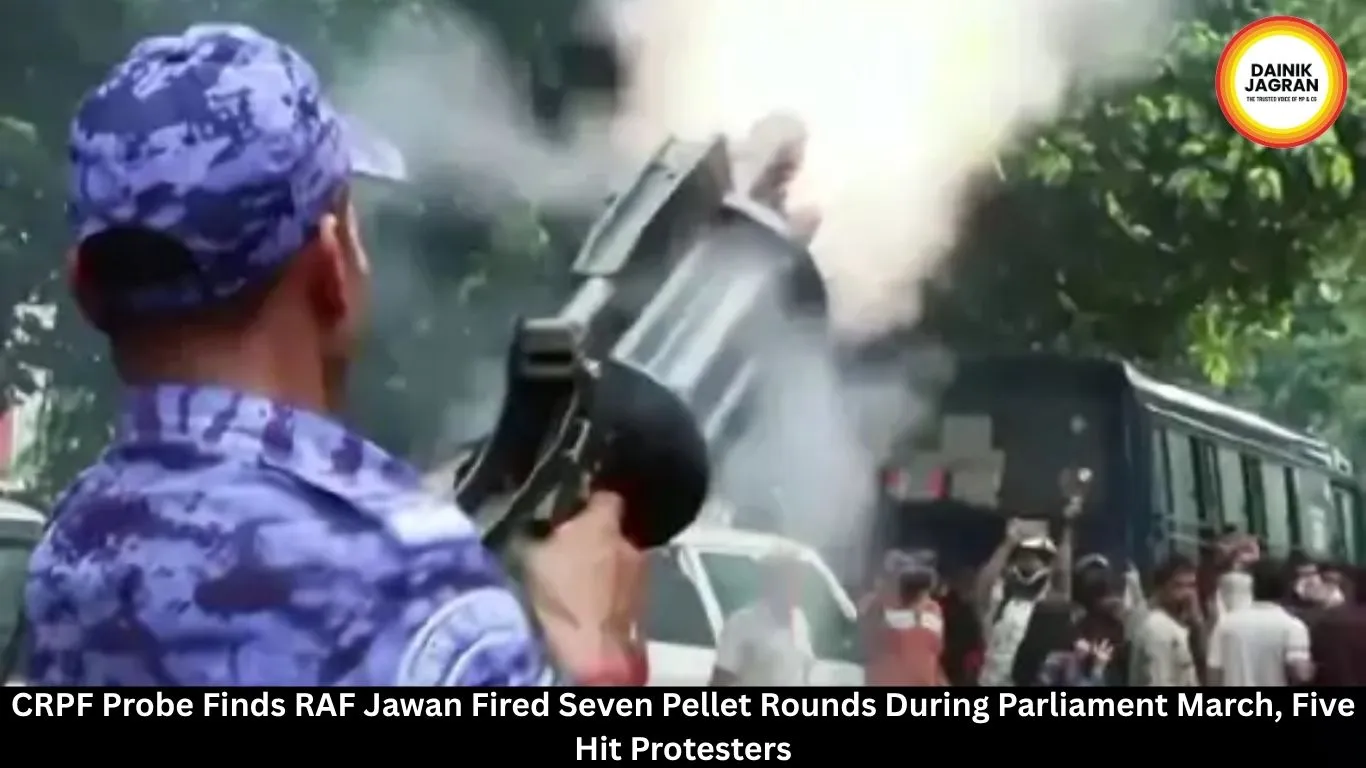
A preliminary inquiry by the Central Reserve Police Force (CRPF) has found that a Rapid Action Force (RAF) jawan fired seven pellet gun rounds during the July 20 'Sansad Chalo' march in the national capital, with five pellets striking protesters and two hitting the ground, according to sources familiar with the investigation.

The findings relate to the protest organised over the alleged examination paper leak issue, during which clashes broke out between demonstrators and security personnel near Parliament.

According to the preliminary probe, the RAF personnel was deployed in the Connaught Place area when the incident occurred. Sources said the pellet gun was used after protesters allegedly attacked security personnel and resorted to stone-pelting.

The internal inquiry was initiated after questions were raised over whether RAF personnel had used pellet guns during the crowd-control operation.

Three Injured in Pellet Firing

The investigation has identified at least three people who sustained pellet injuries during the protest.

Those injured include 25-year-old Irshad Sheikh, who works in Gurugram, 19-year-old Delhi University student Sahil Lochab, and a 28-year-old magazine journalist. All three reportedly received medical treatment following the incident.

Sources said examination of operational records maintained by the deployed RAF personnel confirmed that seven pellet rounds were discharged, with five hitting protesters and the remaining two striking the ground.

CRPF Reviewing Use of Force

CRPF Director General Gyanendra Pratap Singh said the operation would undergo a professional review, as is standard practice after major law-and-order deployments.

He said the protest had concluded and the situation had returned to normal, adding that headquarters would present its official findings after completion of the review process.

The preliminary findings have come amid increasing scrutiny of the police response to the July 20 Parliament march.

Internal Review Flags Operational Concerns

Earlier reports indicated that RAF Inspector General (Operations) M.A. Dhundhia informed senior officers that the "force gradient" adopted during the operation did not fully conform to prescribed operational standards and RAF training protocols.

In policing, the term force gradient refers to the principle of using the minimum level of force necessary, with escalation depending on the nature and intensity of the threat.

The observations reportedly emerged during an internal review conducted after the protest.

Fresh Operational Guidelines Issued

On July 22, the RAF conducted a video conference with company commanders and commandants deployed in Delhi to assess the handling of the protest.

According to sources, officials reviewed the deployment strategy, the role played by RAF personnel and the crowd-control measures adopted during the demonstration at Jantar Mantar and the subsequent Parliament march.

Following the review, officers were instructed to exercise restraint and ensure that force is used only when absolutely necessary.

The guidelines also emphasised issuing clear warnings before using force and adopting a graded response, including lathicharge, tear gas and other approved crowd-control methods, depending on the situation.

Wider Legal Scrutiny Continues

The July 20 Parliament march has also become the subject of judicial scrutiny.

The Supreme Court is hearing petitions alleging excessive police force against students protesting examination paper leaks, while the Delhi High Court has directed authorities to preserve CCTV footage and all records relating to the police action.

The protests, which centred on alleged irregularities in national entrance examinations, have intensified political debate over examination reforms and police handling of public demonstrations.


Meta Title: 

Meta Description: 

Focus Keywords: 

Tags: 

--------

๐Ÿšจ Beat the News Rush โ€“ Join Now!

Get breaking alerts, hot exclusives, and game-changing stories instantly on your phone. No delays, no fluff โ€“ just the edge you need. โšก

Tap to join:ย 

๐ŸŸข WhatsApp Channel: Dainik Jagran MP CG

Crave more?

๐Ÿ…• Facebook: Dainik Jagran MP CG English

๐Ÿ…ง Twitter (X): Dainik Jagran MP CG

๐Ÿ…˜ Instagram: Dainik Jagran MP CG

Share the fire โ€“ keep your crew ahead! ๐Ÿ—ž๏ธ๐Ÿ”ฅ

english.dainikjagranmpcg.com
27 Jul 2026 By Abhishek Joshi

CRPF Probe Finds RAF Jawan Fired Seven Pellet Rounds During Parliament Protest

Digital Desk

A preliminary inquiry by the Central Reserve Police Force (CRPF) has found that a Rapid Action Force (RAF) jawan fired seven pellet gun rounds during the July 20 'Sansad Chalo' march in the national capital, with five pellets striking protesters and two hitting the ground, according to sources familiar with the investigation.

The findings relate to the protest organised over the alleged examination paper leak issue, during which clashes broke out between demonstrators and security personnel near Parliament.

According to the preliminary probe, the RAF personnel was deployed in the Connaught Place area when the incident occurred. Sources said the pellet gun was used after protesters allegedly attacked security personnel and resorted to stone-pelting.

The internal inquiry was initiated after questions were raised over whether RAF personnel had used pellet guns during the crowd-control operation.

Three Injured in Pellet Firing

The investigation has identified at least three people who sustained pellet injuries during the protest.

Those injured include 25-year-old Irshad Sheikh, who works in Gurugram, 19-year-old Delhi University student Sahil Lochab, and a 28-year-old magazine journalist. All three reportedly received medical treatment following the incident.

Sources said examination of operational records maintained by the deployed RAF personnel confirmed that seven pellet rounds were discharged, with five hitting protesters and the remaining two striking the ground.

CRPF Reviewing Use of Force

CRPF Director General Gyanendra Pratap Singh said the operation would undergo a professional review, as is standard practice after major law-and-order deployments.

He said the protest had concluded and the situation had returned to normal, adding that headquarters would present its official findings after completion of the review process.

The preliminary findings have come amid increasing scrutiny of the police response to the July 20 Parliament march.

Internal Review Flags Operational Concerns

Earlier reports indicated that RAF Inspector General (Operations) M.A. Dhundhia informed senior officers that the "force gradient" adopted during the operation did not fully conform to prescribed operational standards and RAF training protocols.

In policing, the term force gradient refers to the principle of using the minimum level of force necessary, with escalation depending on the nature and intensity of the threat.

The observations reportedly emerged during an internal review conducted after the protest.

Fresh Operational Guidelines Issued

On July 22, the RAF conducted a video conference with company commanders and commandants deployed in Delhi to assess the handling of the protest.

According to sources, officials reviewed the deployment strategy, the role played by RAF personnel and the crowd-control measures adopted during the demonstration at Jantar Mantar and the subsequent Parliament march.

Following the review, officers were instructed to exercise restraint and ensure that force is used only when absolutely necessary.

The guidelines also emphasised issuing clear warnings before using force and adopting a graded response, including lathicharge, tear gas and other approved crowd-control methods, depending on the situation.

Wider Legal Scrutiny Continues

The July 20 Parliament march has also become the subject of judicial scrutiny.

The Supreme Court is hearing petitions alleging excessive police force against students protesting examination paper leaks, while the Delhi High Court has directed authorities to preserve CCTV footage and all records relating to the police action.

The protests, which centred on alleged irregularities in national entrance examinations, have intensified political debate over examination reforms and police handling of public demonstrations.


Meta Title: 

Meta Description: 

Focus Keywords: 

Tags: 

https://english.dainikjagranmpcg.com/national/crpf-probe-finds-raf-jawan-fired-seven-pellet-rounds-during/article-23811

Trending News