
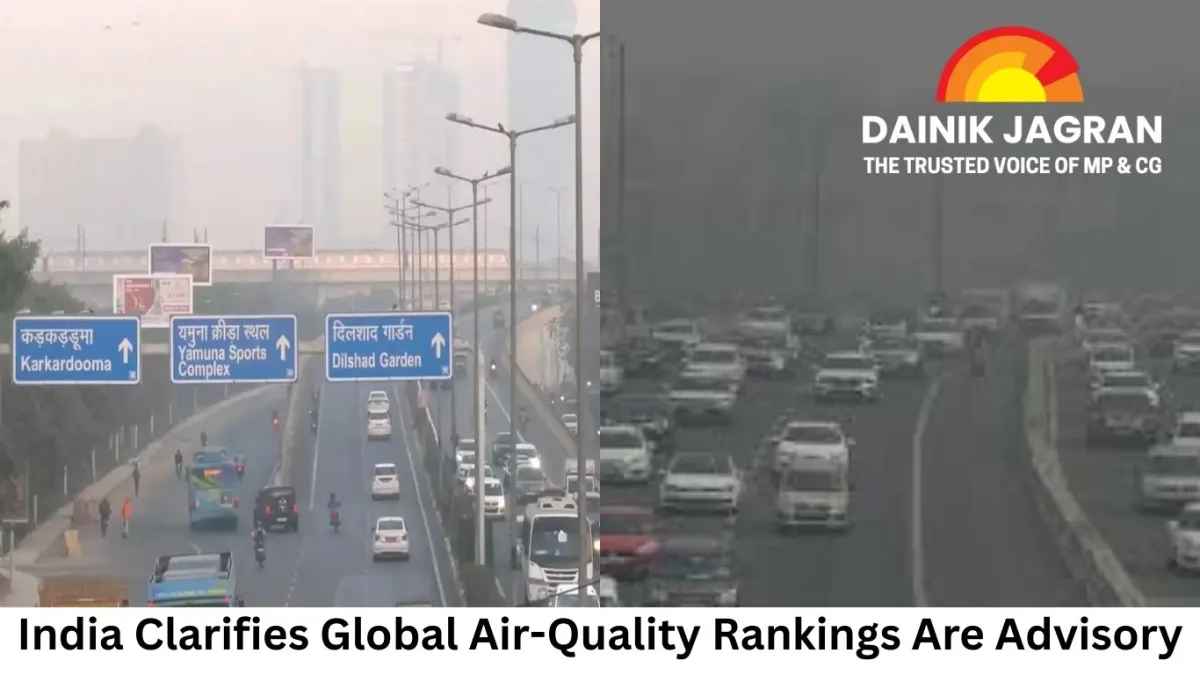

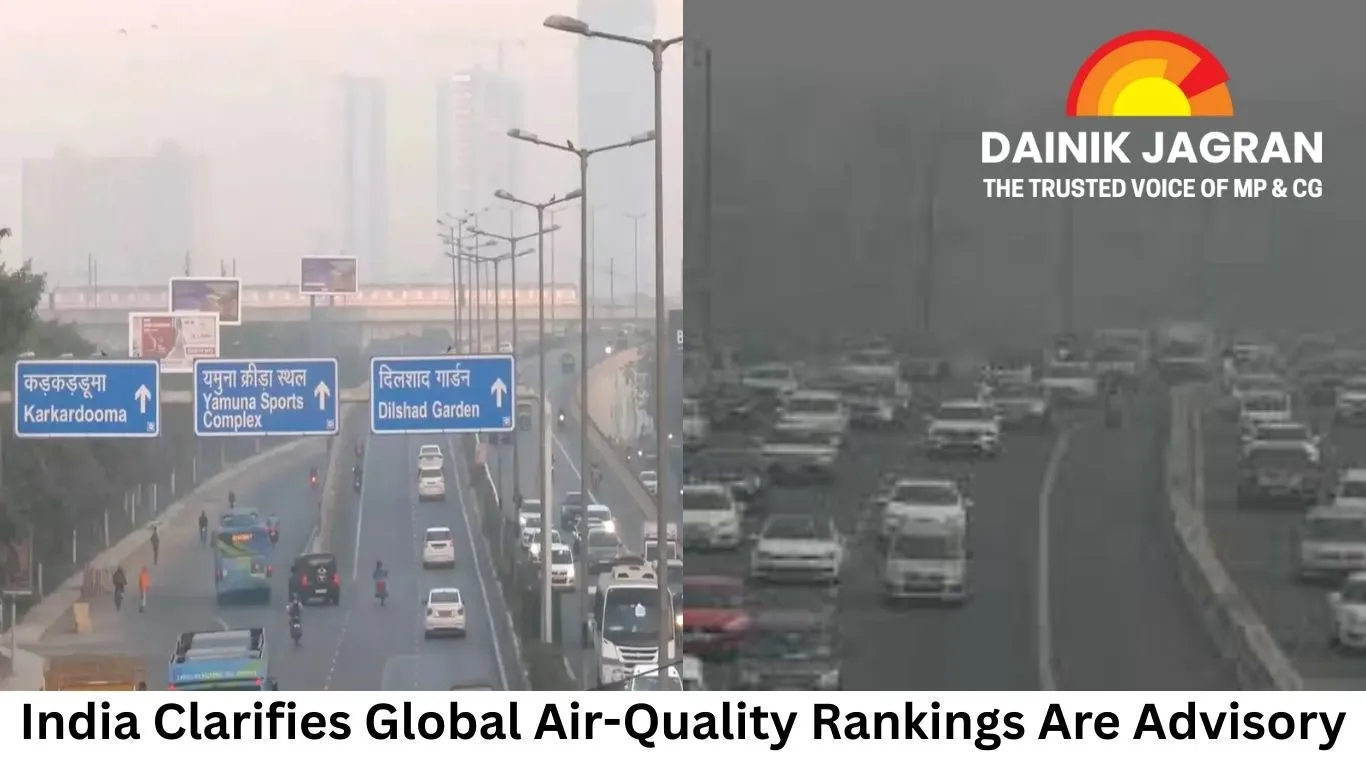
India Clarifies Global Air-Quality Rankings Are Advisory, Policies Guided by Domestic Standards
Digital Desk
Singh emphasized that WHO’s Air Quality Guidelines serve only as advisory references. “Each country must set its own standards based on its geography, environmental conditions, and national circumstances,” he said, adding that India does not frame policies based on external reports or rankings.
The statement comes amid growing public concern over India’s declining position in global pollution and climate-related indices. The minister noted that India has its own independent mechanisms, including the National Ambient Air Quality Standards (NAAQS), which monitor 12 key parameters to safeguard public health and environmental quality.
Under the National Clean Air Program (NCAP), the government assesses the performance of 130 cities in improving air quality. Cities demonstrating the best results are recognised annually on September 7, observed as National Clean Air Day.
Addressing climate risk, Singh highlighted that India’s ninth-place ranking in the Global Climate Risk Index (CRI) does not influence domestic policymaking. The CRI evaluates human and economic losses from extreme weather events, reporting that India suffered over 80,000 deaths across roughly 430 disasters in the past three decades. Singh noted that economic damage estimates vary widely and cannot serve as a sole basis for national planning.
He pointed out that India manages climate-related impacts through the National Policy on Disaster Management, which sets frameworks for prevention, preparedness, response, relief, rehabilitation, and reconstruction.
Singh’s remarks underline India’s approach of relying on domestic scientific assessments and regulatory frameworks rather than external advisories, while continuing efforts to improve air quality and climate resilience across the country.




.jpg)




