


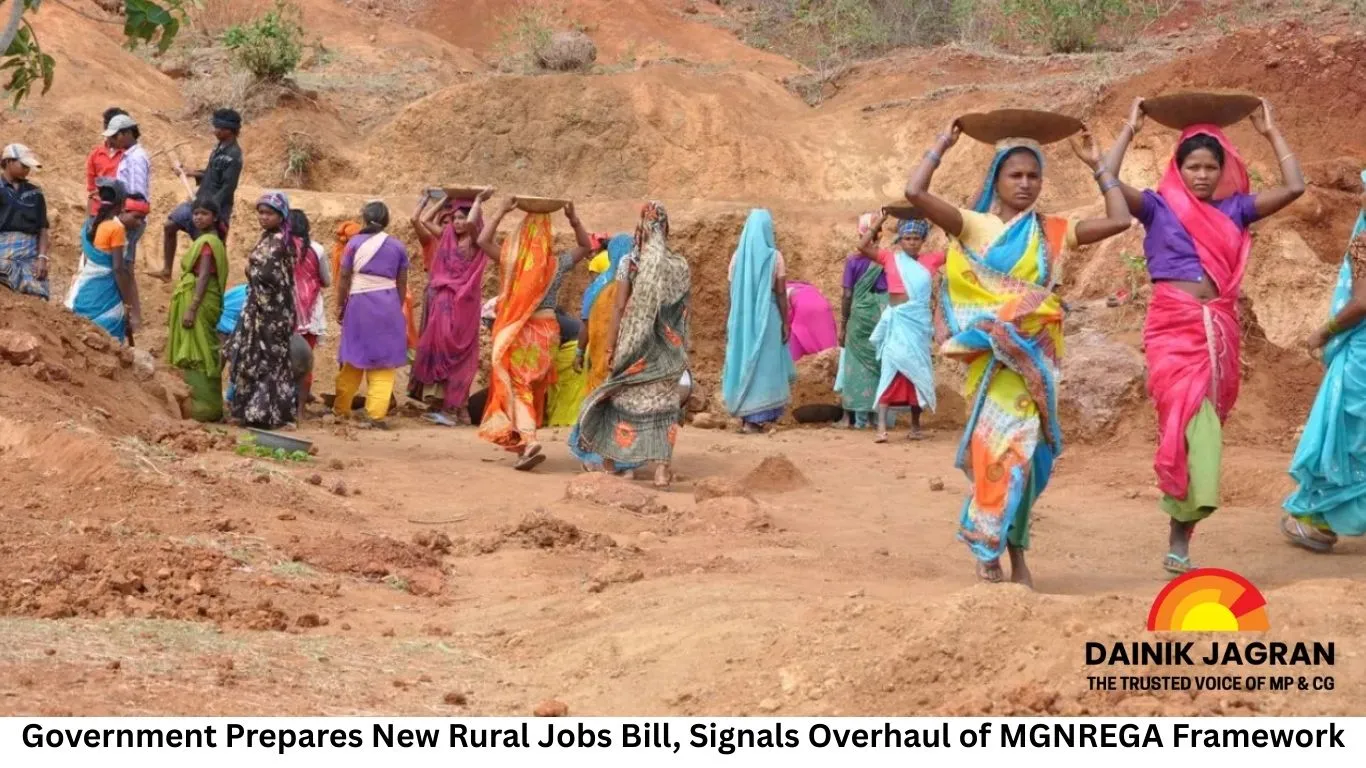
Government Prepares New Rural Jobs Bill, Signals Overhaul of MGNREGA Framework
Digital Desk
According to information shared with Parliamentarians, the Bill may be introduced during the ongoing Winter Session. The proposed law seeks to align rural employment and livelihood support with the government’s long-term vision of “Viksit Bharat 2047.” One of the key changes outlined in the draft is an increase in guaranteed employment from the current 100 days to 125 days per household annually.
MGNREGA, enacted in 2005, provides a legal guarantee of wage employment to rural households and has been a critical safety net during periods of agrarian distress, economic slowdown and migration. Wages under the scheme vary by state and are linked to minimum wage norms. Any move to repeal or replace the Act is expected to have wide social and political implications.
The development comes amid reports earlier this week that the Union Cabinet had discussed renaming MGNREGA as the “Pujya Bapu Gramin Rozgar Yojana,” though the government has not issued an official notification on this. Opposition parties have questioned both the reported renaming exercise and the broader restructuring of the programme.
Congress MP Priyanka Gandhi Vadra said changing the name or structure of MGNREGA would lead to unnecessary expenditure, pointing to costs involved in rebranding official records and infrastructure. Congress leaders have also accused the Modi government of systematically renaming schemes launched during the UPA era for political branding.
The government has not yet formally clarified whether MGNREGA will be repealed or subsumed under the new Bill. However, officials indicate the proposed legislation aims to integrate employment generation with broader rural development and livelihood missions.
If introduced, the Bill is likely to trigger a sharp debate in Parliament, with questions over funding, implementation, legal guarantees and the future of rural employment support in the country.


.jpg)




