Gandhi said the deal appeared to require India to increase imports significantly while offering limited reciprocal advantages. He questioned provisions related to expanded purchases of American oil and other goods, as well as proposals to boost imports by as much as $100 billion annually. He also raised concerns about data-sharing arrangements, warning that such clauses could compromise national digital sovereignty.
Using a sporting analogy, Gandhi said he had earlier cited jiu-jitsu in Parliament to illustrate how pressure can be applied subtly but effectively. In politics, he argued, similar pressures may influence decisions behind closed doors. He claimed the agreement reflected external strategic constraints, including geopolitical tensions and economic dependencies.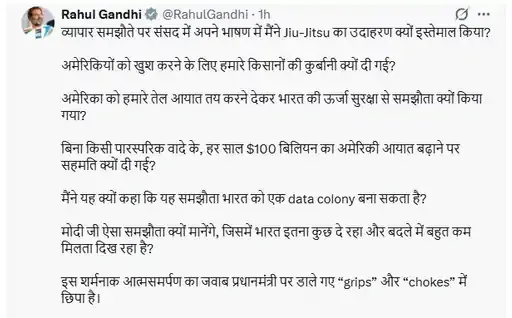
The Congress party echoed his criticism, stating that any international trade arrangement must safeguard domestic sectors. Party leaders argued that farmers, textile manufacturers, and small industries could face competitive disadvantages if import conditions favour foreign producers. They maintained that trade policy should prioritise employment generation, market access for Indian goods, and long-term economic resilience.
Government representatives have not yet issued a detailed response to Gandhi’s latest remarks. Officials previously indicated that trade discussions with Washington aim to expand market opportunities, strengthen supply chains, and deepen technological cooperation. They have also emphasised that negotiations are ongoing and subject to review before finalisation.
Trade analysts note that bilateral agreements often involve complex concessions on tariffs, procurement, and regulatory standards. They caution that evaluating such deals requires examining full draft terms, sector-wise impact assessments, and enforcement safeguards. Without those details, they say, public debate tends to focus on political messaging rather than technical substance.
The latest exchange underscores how trade diplomacy has become a central political issue ahead of upcoming electoral cycles. As negotiations progress, both government and opposition leaders are expected to sharpen their positions, signalling that international economic policy will remain a prominent point of contention in domestic politics.

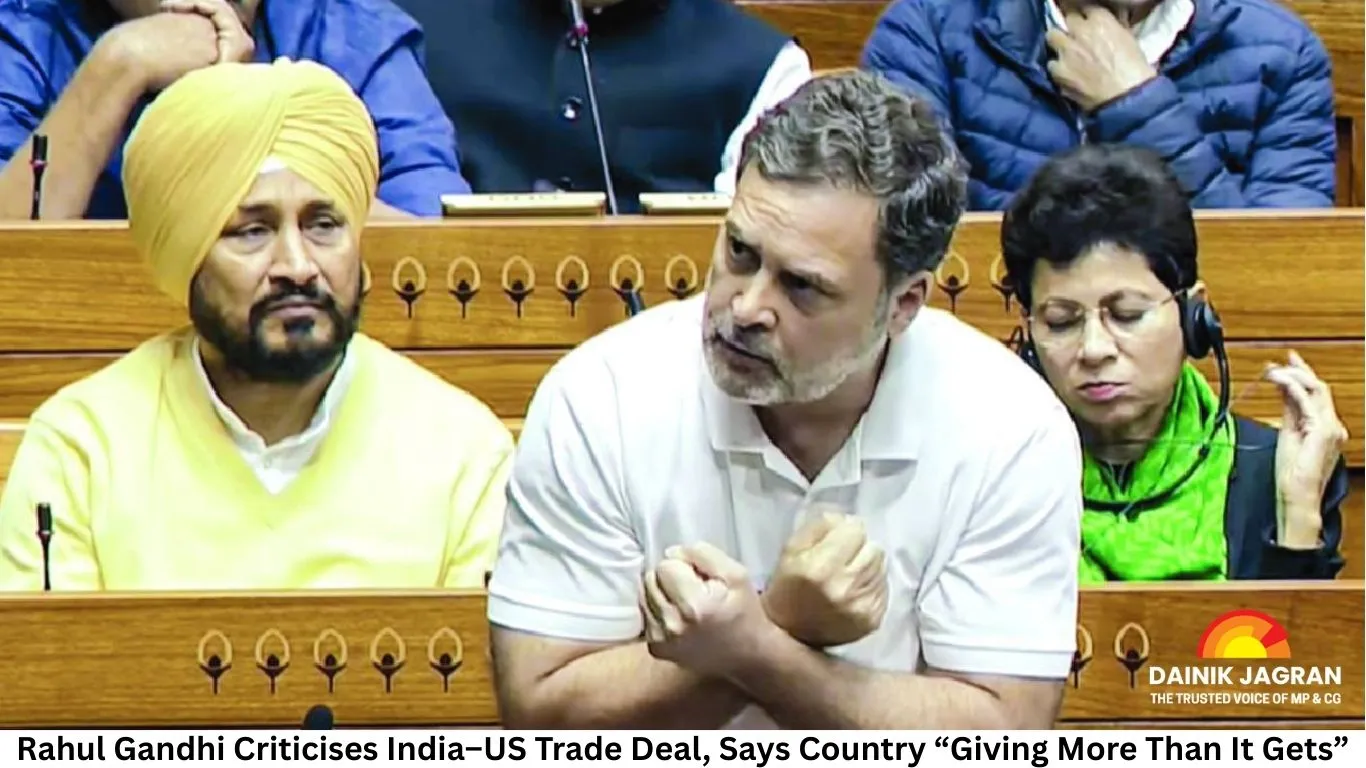
Rahul Gandhi Criticises India–US Trade Deal, Says Country “Giving More Than It Gets”
Digital Desk
Gandhi said the deal appeared to require India to increase imports significantly while offering limited reciprocal advantages. He questioned provisions related to expanded purchases of American oil and other goods, as well as proposals to boost imports by as much as $100 billion annually. He also raised concerns about data-sharing arrangements, warning that such clauses could compromise national digital sovereignty.
Using a sporting analogy, Gandhi said he had earlier cited jiu-jitsu in Parliament to illustrate how pressure can be applied subtly but effectively. In politics, he argued, similar pressures may influence decisions behind closed doors. He claimed the agreement reflected external strategic constraints, including geopolitical tensions and economic dependencies.
The Congress party echoed his criticism, stating that any international trade arrangement must safeguard domestic sectors. Party leaders argued that farmers, textile manufacturers, and small industries could face competitive disadvantages if import conditions favour foreign producers. They maintained that trade policy should prioritise employment generation, market access for Indian goods, and long-term economic resilience.
Government representatives have not yet issued a detailed response to Gandhi’s latest remarks. Officials previously indicated that trade discussions with Washington aim to expand market opportunities, strengthen supply chains, and deepen technological cooperation. They have also emphasised that negotiations are ongoing and subject to review before finalisation.
Trade analysts note that bilateral agreements often involve complex concessions on tariffs, procurement, and regulatory standards. They caution that evaluating such deals requires examining full draft terms, sector-wise impact assessments, and enforcement safeguards. Without those details, they say, public debate tends to focus on political messaging rather than technical substance.
The latest exchange underscores how trade diplomacy has become a central political issue ahead of upcoming electoral cycles. As negotiations progress, both government and opposition leaders are expected to sharpen their positions, signalling that international economic policy will remain a prominent point of contention in domestic politics.