


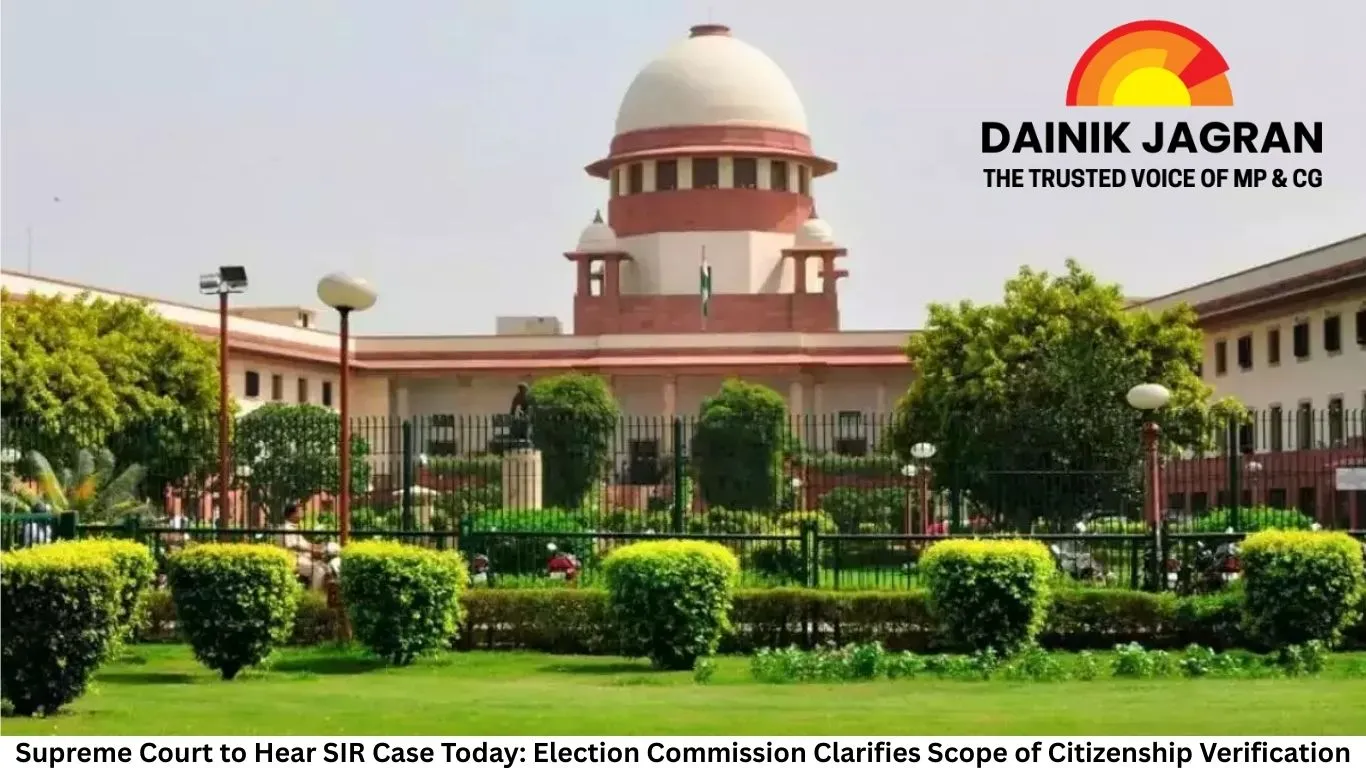
Supreme Court to Hear SIR Case Today: Election Commission Clarifies Scope of Citizenship Verification
Digital Desk
During the last hearing on January 13, senior advocate Rakesh Dwivedi, representing the Election Commission, clarified that the SIR process only verifies citizenship and determines whether a person is eligible to remain on the voter list. He emphasized that the process does not lead to deportation, which remains the exclusive prerogative of the central government. Dwivedi cited the Constituent Assembly debates and the Sarbananda Sonowal case, asserting that verifying citizenship is a constitutional duty essential for maintaining the integrity of elections.
Previous hearings highlight SIR concerns
The Supreme Court has addressed the SIR process in three key hearings over the past two months:
-
January 6: The EC informed the court that it has full authority to conduct the SIR of voter lists. The Commission stressed that being an Indian citizen is a prerequisite for holding key positions, including President, Vice President, Prime Minister, or Judge, and that SIR ensures no non-citizens are included in the electoral rolls.
-
December 4: The court instructed states and union territories to consider hiring additional staff to reduce the workload of Booth Level Officers (BLOs) involved in SIR. This came after a petition from Tamilaga Vetri Kazhagam (TVK), which highlighted challenges faced by BLOs in completing revisions on time.
-
November 26: The EC stated that certain political parties were spreading fear and misinformation about the SIR process, creating unnecessary public anxiety.
Opposition concerns and political context
Opposition parties argue that SIR may affect citizens’ right to vote and could potentially be misused, especially in sensitive states with large migrant populations. The Supreme Court’s intervention seeks to clarify the legal framework and ensure that SIR is conducted fairly, transparently, and within constitutional limits.
Legal experts say the Monday hearing could provide guidance on the procedural aspects of SIR, balancing the EC’s duty to verify citizenship with the protection of voters’ rights.
With growing scrutiny, the SIR process remains a key issue ahead of upcoming state and national elections, making the Supreme Court’s ruling highly significant.
.jpg)




