


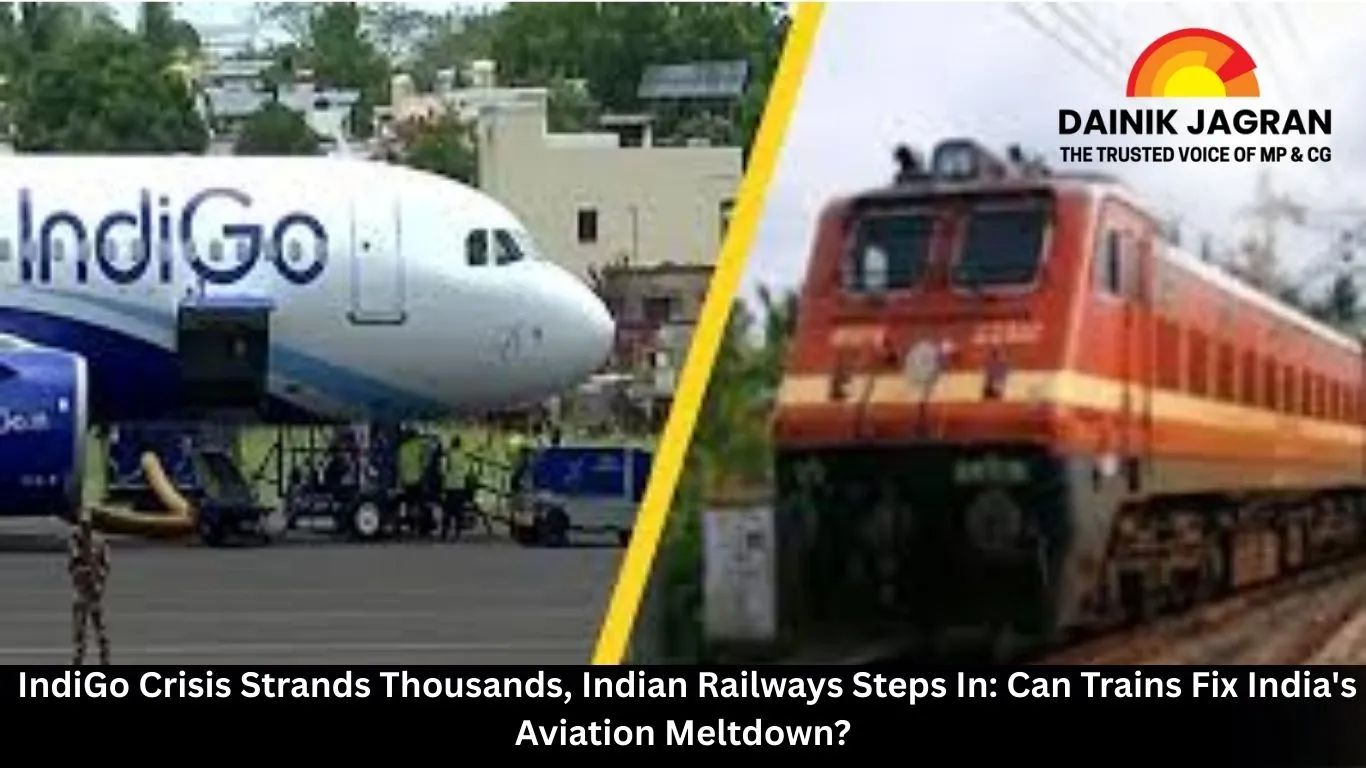
IndiGo Crisis Strands Thousands, Indian Railways Steps In: Can Trains Fix India's Aviation Meltdown?
Digital Desk
IndiGo's Operational Crisis Leaves Passengers Stranded, Railways Mobilizes Rescue
India is currently witnessing its largest aviation disruption, with thousands of passengers stranded at major airports like Delhi, Mumbai, and Bengaluru. The crisis, centered on the country's largest carrier IndiGo, which commands a 60% market share, has revealed deep systemic vulnerabilities in the sector.
What Triggered the Meltdown?
The immediate cause stems from new Flight Duty Time Limitation (FDTL) rules implemented by aviation regulator DGCA from November 1st. Designed to ensure adequate rest for pilots and cabin crew, the rules inadvertently exposed IndiGo's reliance on a tightly stretched operational schedule. While other airlines adapted, IndiGo faced a severe crew shortage, leading to massive cancellations—over 1,000 flights in just the first few days of December, with daily cancellations ranging between 400-500.
Airports have descended into chaos, with long queues, stranded luggage, and frustrated passengers struggling with last-minute rebookings and refunds. In response, the DGCA has offered temporary relaxations in the new rules to provide relief, but questions remain about preparedness and passenger compensation.
Indian Railways: The "Mobility Stabilizer" Steps Up
With the aviation sector under immense pressure, Indian Railways has intervened as a national mobility buffer. To absorb the diverted passenger traffic, Railways has launched a capacity enhancement plan:
Adding 166 extra coaches to 37 existing trains, creating 114 additional trips.
Targeting high-demand corridors like Delhi-Mumbai, Delhi-Lucknow, and Delhi-Jammu.
Preparing to run special trains and "Trains on Demand" based on real-time passenger surge.
Officials estimate these measures could provide relief for nearly 4.9 lakh passengers, offering a critical alternative.
Broader Implications: A Wake-Up Call
This crisis underscores the risks of high market concentration, where trouble at a single dominant player can cripple the network. It has also validated the indispensable role of Indian Railways as a resilient public transport backbone during national emergencies.
However, it simultaneously highlights a long-term gap. Analysts point out that if India had a robust, semi-high-speed rail network, the alternative for distressed air travelers would be even more effective. The incident serves as a moment for introspection—for airlines on sustainable operations and for railways on accelerating infrastructure modernization to truly complement air travel.
For now, affected passengers are advised to keep all cancellation receipts and communication for refunds, while the country watches how its aviation giant navigates one of its toughest periods.




.jpg)




