


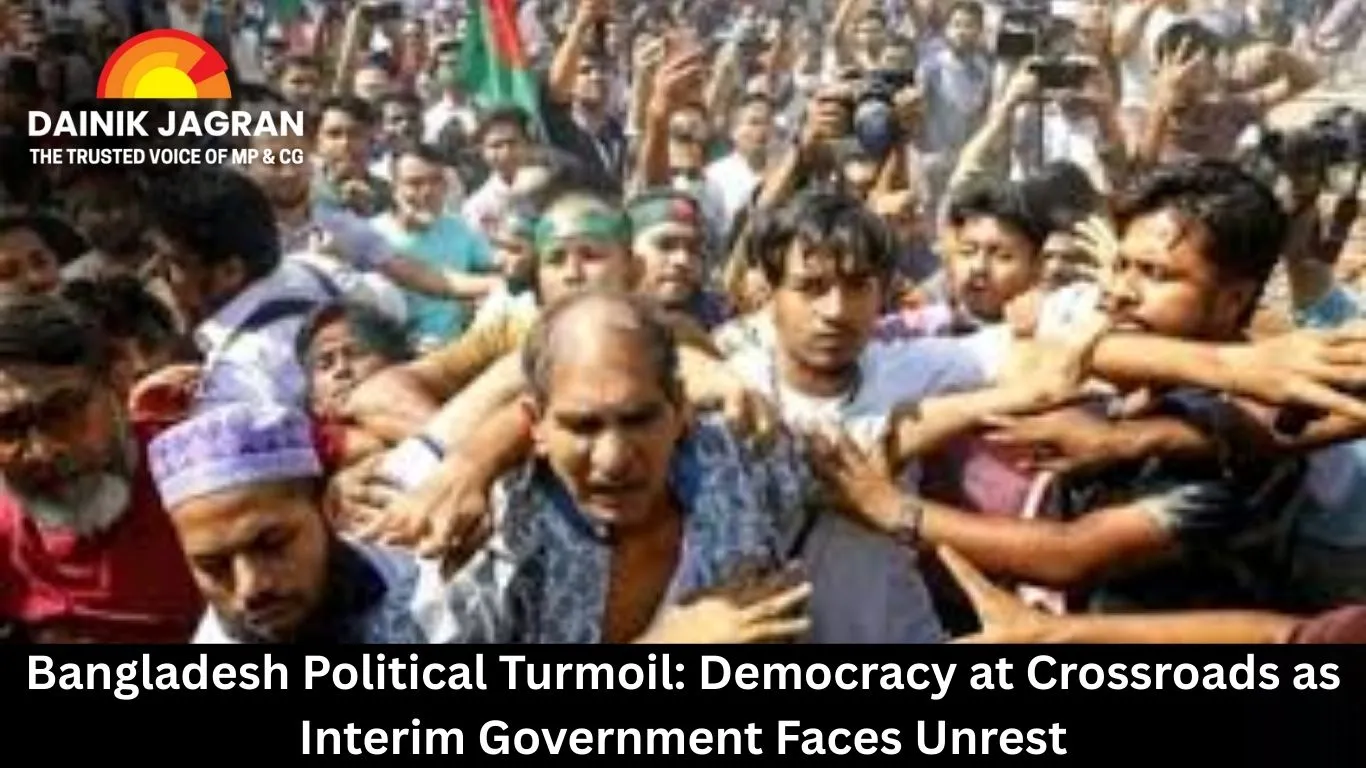
Bangladesh Political Crisis Deepens After Sharif Usman Hadi’s Killing, Raising Regional Security Concerns
Digital Desk
Bangladesh Political Crisis: Why the Situation Matters Now
The Bangladesh political crisis has taken a serious turn following the death of youth leader Sharif Usman Hadi, triggering widespread violence, targeted attacks on media houses, and growing concerns across South Asia. The unrest comes at a crucial time when Bangladesh is being governed by an interim government led by Nobel laureate Muhammad Yunus, ahead of planned elections in February 2026.
This crisis is not just an internal matter for Bangladesh—it has direct implications for India-Bangladesh relations, border security, and regional stability.
Who Was Sharif Usman Hadi?
Sharif Usman Hadi, 32, emerged as the most prominent face of the July 2024 student-led protests against the Bangladeshi government’s decision to reserve 30% of government jobs for descendants of 1971 freedom fighters.
While the policy aimed to honor history, many young Bangladeshis saw it as unfair amid rising unemployment. Hadi became the spokesperson of the protest platform Inqilab Mancha, gaining mass support—especially among urban youth.
Political analysts believed he could have played a decisive role in the 2026 elections.
Gun Attack, Death, and Sudden Violence
On December 12, 2025, Hadi was shot during a political campaign. He was flown to Singapore for treatment but died on December 18. Even before the official confirmation reached the public, violence erupted across Bangladesh.
Key developments include:
Attacks on media houses like Prothom Alo and The Daily Star
Arson, street clashes, and targeted violence
Protests against symbols linked to the former Sheikh Hasina regime
The Sharif Usman Hadi death is now being seen as an attack on an entire political movement rather than just one individual.
Interim Government Under Pressure
The unrest has placed the Bangladesh interim government under intense scrutiny. Muhammad Yunus has declared a national day of mourning and ruled out contesting elections. However, critics question whether the caretaker setup can:
Control escalating violence
Ensure free and fair elections
Prevent military intervention amid chaos
Bangladesh’s history of military coups makes this concern especially serious.
India’s Stakes in the Bangladesh Political Crisis
For India, instability in Bangladesh poses multiple risks:
Illegal migration into Assam, West Bengal, and the Northeast
Border security challenges
Disruption of trade and connectivity projects
Despite speculation on social media, experts widely dismiss claims of Indian intelligence involvement. Analysts argue that India prefers a stable, democratic Bangladesh, regardless of who comes to power.
As one regional affairs expert puts it,
“Political narratives change after elections, but instability benefits no one—especially neighbors.”
What Lies Ahead?
The Bangladesh political crisis has cast serious doubts on the credibility of the February 2026 elections. Restoring law and order, ensuring transparent investigations, and protecting press freedom will be crucial in the coming weeks.
Whether Bangladesh moves toward stability or deeper turmoil will shape not just its future—but the security landscape of South Asia.
For now, all eyes remain on Dhaka.
.jpg)




