Can India’s Gen Z Break the Cycle of Corruption?

Saumya Gupta

Can India’s Gen Z Break the Cycle of Corruption?

India’s Gen Z forced action over examination leaks. Can it resist political capture and end corruption through accountability and value-based education?


India’s Gen Z Has Won a Battle. Can It Break the Cycle of Corruption?

Young Indians have forced the government to listen. Their greater challenge is to keep this awakening from becoming another political weapon—and to build a society in which conscience matters as much as competence.

Their name began as a joke. Their grievance was deadly serious.

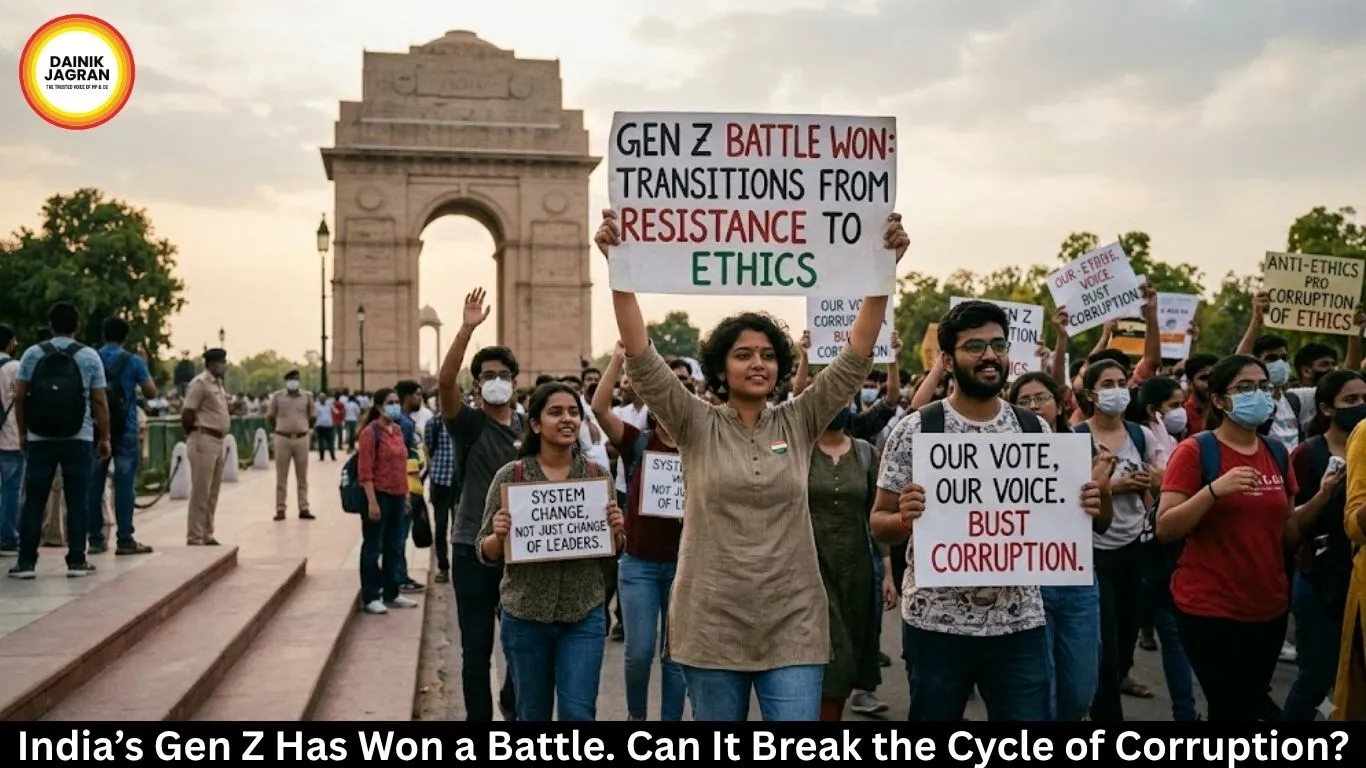
Young Indians calling themselves “cockroaches” took to the streets after examination paper leaks forced around two million students to sit for a medical entrance test again. Behind that immediate injustice lay years of accumulated frustration: leaked papers, scarce jobs, opaque recruitment systems and the feeling that merit matters only until money or influence enters the room.

What followed was not merely an online trend. The anger moved from phones to streets, from memes to marches and from individual helplessness to collective power.

On July 25, Education Minister Dharmendra Pradhan resigned. The government said it had accepted the protesters’ demands, including examination reforms, withdrawal of police cases and compensation for the families of students who had died by suicide following the paper leak. The movement then called off its agitation and asked supporters to return home peacefully. Reuters reported the moment as a rare victory for youth-led public pressure.

The young protesters had asked questions, persisted and obtained an answer. They were right to demand accountability. Democracy does not become weaker when citizens question those in power. It becomes weaker when citizens stop believing that questions can produce change.

For a moment, India’s political air felt different.

But winning one battle is not the same as changing the system.

The Movement Must Not Become a Political Football

The next stage of the youth uprising is already visible in Jharkhand. Students and unemployed young people are protesting alleged irregularities and paper leaks in civil-service recruitment examinations.

Their demands include cancellation of disputed tests, an overhaul of the examination system and a federal investigation. Police have responded with tear gas, water cannon and batons during clashes near the state legislature. The Jharkhand government says it has accepted most demands and remains open to talks. The protests were continuing this week.

Here lies an important truth: Jharkhand is governed by a party opposed to the government at the Centre.

Corruption is not the permanent identity of one political party. Power can reproduce it in any party.

The ruling side will be tempted to portray every protest as an opposition conspiracy. The opposition will be tempted to embrace the protesters at the Centre while defending its own governments in the states. If Gen Z allows either side to take ownership of its anger, a citizens’ movement may be reduced to another instrument in an electoral contest.

A leaked examination paper does not ask a student’s ideology before destroying years of work. Unemployment does not check which party a family voted for. Corruption in education steals something more precious than money: it steals time, dignity and hope.

The movement must therefore remain loyal to the issue—not to a party.

India Has Seen This Cycle Before

In 2011, the India Against Corruption movement channelled widespread anger against the Congress-led government. Millions believed that a change of government would also change the culture of governance. That uprising transformed Indian politics and helped create the conditions in which the present establishment rose as the answer to the old system.

Now, after more than a decade, young Indians are once again protesting corruption, institutional failure and the absence of accountability.

The opposition that was once in power now presents itself as the protector of protest. The party that once benefited from anti-corruption anger now finds itself answering a new generation’s questions.

This is democracy doing its work—but it is also a warning.

If public anger merely replaces one set of rulers with another, while the incentives beneath politics remain unchanged, revolution becomes a revolving door.

The faces change; the habits return.

How Does an Ordinary Person Become a Corrupt Politician?

Politicians do not arrive from another planet. They emerge from our families, schools, professions and communities. Many enter public life with genuine ideals. So where does conscience disappear?

Usually, it does not vanish in one dramatic moment. It is surrendered through a series of small justifications.

One compromise is made to fund an election. One dishonest person is protected because the party needs loyalty. One contract is influenced to reward a supporter. One investigation is slowed for “political stability”.

Gradually, every wrong act acquires a noble explanation: the party must survive, the government must remain strong, the rival is worse, the next election must be won.

Corruption begins when a person learns to rename self-interest as public interest.

But personal morality alone cannot clean politics. Even good people can be bent by a system built on opaque funding, patronage and weak accountability.

We need transparent recruitment, independent investigations, time-bound trials, protected whistleblowers and public access to information. Conscience matters, but institutions must make it difficult to profit from losing one’s conscience.

Education Must Create Humans, Not Merely Successful Machines

Institutions can punish corruption after it appears. Education must work much earlier.

Our schools are highly skilled at preparing children to find the correct answer on an examination paper. But do we teach them what to do when the paper itself has been purchased? Do we teach them to refuse an unfair advantage, even when nobody is watching? Do we teach that success obtained by destroying another person’s fair chance is failure?

We call it education, but too often it is only literacy, information and competition. It produces capable professionals, efficient administrators and clever political strategists. It does not necessarily produce wise human beings.

Value-based education cannot be another chapter to memorise for marks. It must be practised through honest evaluation, community responsibility, debate, service and consequences for cheating—whether the offender is a student, teacher, official or minister.

Children learn integrity less from moral slogans than from watching whether adults are rewarded or punished for their conduct.

A child who repeatedly sees influence defeat merit is receiving an education in corruption.

From Gen Z to Gen Gamma

Gen Z has shown courage. It has used humour, technology and collective action to make an unresponsive system listen. But its greatest contribution may not be the resignation of one minister.

Its greatest contribution could be refusing political ownership, demanding reforms that survive changes of government and raising future generations differently.

Call that future generation Gen Gamma or give it any other name. What matters is that we do not raise another generation that can crack the most difficult examinations but remains indifferent to how examination papers are leaked; that understands artificial intelligence but not human responsibility; that demands rights but forgets the duties that protect everyone else’s rights.

We need future leaders who do not have to discover conscience after acquiring power because it was nurtured in them long before power arrived.

India’s Gen Z has proved that the street can force a resignation. Now it must help build a country in which honest institutions and educated consciences make such resignations less necessary.

That would not merely change a government.

It would finally break the cycle.

english.dainikjagranmpcg.com
13 Aug 2026 By Danik Jagran English

Can India’s Gen Z Break the Cycle of Corruption?

Saumya Gupta

India’s Gen Z Has Won a Battle. Can It Break the Cycle of Corruption?

Young Indians have forced the government to listen. Their greater challenge is to keep this awakening from becoming another political weapon—and to build a society in which conscience matters as much as competence.

Their name began as a joke. Their grievance was deadly serious.

Young Indians calling themselves “cockroaches” took to the streets after examination paper leaks forced around two million students to sit for a medical entrance test again. Behind that immediate injustice lay years of accumulated frustration: leaked papers, scarce jobs, opaque recruitment systems and the feeling that merit matters only until money or influence enters the room.

What followed was not merely an online trend. The anger moved from phones to streets, from memes to marches and from individual helplessness to collective power.

On July 25, Education Minister Dharmendra Pradhan resigned. The government said it had accepted the protesters’ demands, including examination reforms, withdrawal of police cases and compensation for the families of students who had died by suicide following the paper leak. The movement then called off its agitation and asked supporters to return home peacefully. Reuters reported the moment as a rare victory for youth-led public pressure.

The young protesters had asked questions, persisted and obtained an answer. They were right to demand accountability. Democracy does not become weaker when citizens question those in power. It becomes weaker when citizens stop believing that questions can produce change.

For a moment, India’s political air felt different.

But winning one battle is not the same as changing the system.

The Movement Must Not Become a Political Football

The next stage of the youth uprising is already visible in Jharkhand. Students and unemployed young people are protesting alleged irregularities and paper leaks in civil-service recruitment examinations.

Their demands include cancellation of disputed tests, an overhaul of the examination system and a federal investigation. Police have responded with tear gas, water cannon and batons during clashes near the state legislature. The Jharkhand government says it has accepted most demands and remains open to talks. The protests were continuing this week.

Here lies an important truth: Jharkhand is governed by a party opposed to the government at the Centre.

Corruption is not the permanent identity of one political party. Power can reproduce it in any party.

The ruling side will be tempted to portray every protest as an opposition conspiracy. The opposition will be tempted to embrace the protesters at the Centre while defending its own governments in the states. If Gen Z allows either side to take ownership of its anger, a citizens’ movement may be reduced to another instrument in an electoral contest.

A leaked examination paper does not ask a student’s ideology before destroying years of work. Unemployment does not check which party a family voted for. Corruption in education steals something more precious than money: it steals time, dignity and hope.

The movement must therefore remain loyal to the issue—not to a party.

India Has Seen This Cycle Before

In 2011, the India Against Corruption movement channelled widespread anger against the Congress-led government. Millions believed that a change of government would also change the culture of governance. That uprising transformed Indian politics and helped create the conditions in which the present establishment rose as the answer to the old system.

Now, after more than a decade, young Indians are once again protesting corruption, institutional failure and the absence of accountability.

The opposition that was once in power now presents itself as the protector of protest. The party that once benefited from anti-corruption anger now finds itself answering a new generation’s questions.

This is democracy doing its work—but it is also a warning.

If public anger merely replaces one set of rulers with another, while the incentives beneath politics remain unchanged, revolution becomes a revolving door.

The faces change; the habits return.

How Does an Ordinary Person Become a Corrupt Politician?

Politicians do not arrive from another planet. They emerge from our families, schools, professions and communities. Many enter public life with genuine ideals. So where does conscience disappear?

Usually, it does not vanish in one dramatic moment. It is surrendered through a series of small justifications.

One compromise is made to fund an election. One dishonest person is protected because the party needs loyalty. One contract is influenced to reward a supporter. One investigation is slowed for “political stability”.

Gradually, every wrong act acquires a noble explanation: the party must survive, the government must remain strong, the rival is worse, the next election must be won.

Corruption begins when a person learns to rename self-interest as public interest.

But personal morality alone cannot clean politics. Even good people can be bent by a system built on opaque funding, patronage and weak accountability.

We need transparent recruitment, independent investigations, time-bound trials, protected whistleblowers and public access to information. Conscience matters, but institutions must make it difficult to profit from losing one’s conscience.

Education Must Create Humans, Not Merely Successful Machines

Institutions can punish corruption after it appears. Education must work much earlier.

Our schools are highly skilled at preparing children to find the correct answer on an examination paper. But do we teach them what to do when the paper itself has been purchased? Do we teach them to refuse an unfair advantage, even when nobody is watching? Do we teach that success obtained by destroying another person’s fair chance is failure?

We call it education, but too often it is only literacy, information and competition. It produces capable professionals, efficient administrators and clever political strategists. It does not necessarily produce wise human beings.

Value-based education cannot be another chapter to memorise for marks. It must be practised through honest evaluation, community responsibility, debate, service and consequences for cheating—whether the offender is a student, teacher, official or minister.

Children learn integrity less from moral slogans than from watching whether adults are rewarded or punished for their conduct.

A child who repeatedly sees influence defeat merit is receiving an education in corruption.

From Gen Z to Gen Gamma

Gen Z has shown courage. It has used humour, technology and collective action to make an unresponsive system listen. But its greatest contribution may not be the resignation of one minister.

Its greatest contribution could be refusing political ownership, demanding reforms that survive changes of government and raising future generations differently.

Call that future generation Gen Gamma or give it any other name. What matters is that we do not raise another generation that can crack the most difficult examinations but remains indifferent to how examination papers are leaked; that understands artificial intelligence but not human responsibility; that demands rights but forgets the duties that protect everyone else’s rights.

We need future leaders who do not have to discover conscience after acquiring power because it was nurtured in them long before power arrived.

India’s Gen Z has proved that the street can force a resignation. Now it must help build a country in which honest institutions and educated consciences make such resignations less necessary.

That would not merely change a government.

It would finally break the cycle.

https://english.dainikjagranmpcg.com/opinion/can-india%E2%80%99s-gen-z-break-the-cycle-of-corruption/article-25910

--------

🚨 Beat the News Rush – Join Now!

Get breaking alerts, hot exclusives, and game-changing stories instantly on your phone. No delays, no fluff – just the edge you need. ⚡

Tap to join: 

🟢 WhatsApp Channel: Dainik Jagran MP CG

Crave more?

🅕 Facebook: Dainik Jagran MP CG English

🅧 Twitter (X): Dainik Jagran MP CG

🅘 Instagram: Dainik Jagran MP CG

Share the fire – keep your crew ahead! 🗞️🔥

Trending News