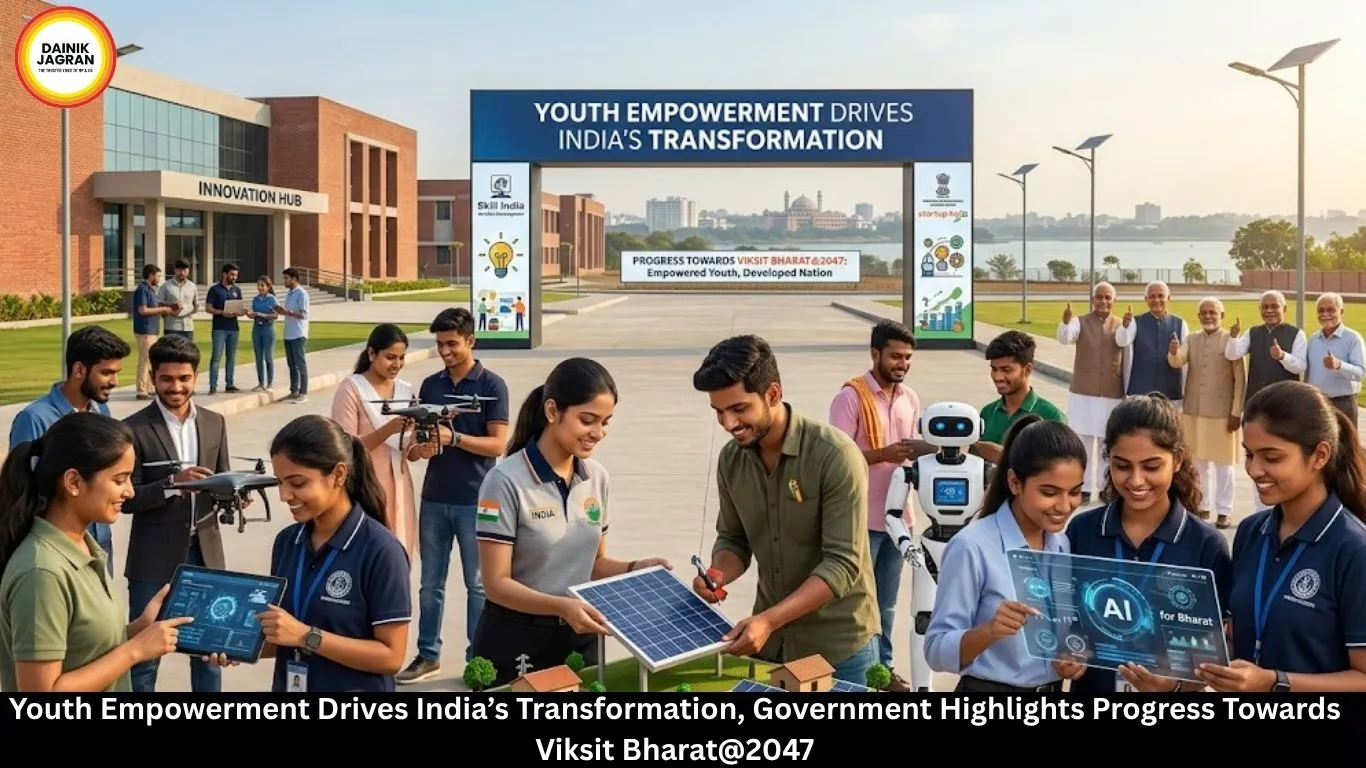
Youth Empowerment in India: Education, Skills, Jobs and Startups Drive Viksit Bharat@2047

Digital desk

Youth Empowerment in India: Education, Skills, Jobs and Startups Drive Viksit Bharat@2047

The government highlights progress in youth empowerment through education, skill development, startups, sports, healthcare and civic participation as India works towards Viksit Bharat@2047.

 With nearly 65 per cent of India's population below the age of 35, the government has placed youth empowerment at the centre of its long-term development strategy, focusing on education, skills, employment, entrepreneurship, sports, health and civic participation.

The government said these initiatives are aimed at turning India's demographic advantage into a development dividend and enabling the country's young population, described as the “Amrit Peedhi,” to contribute to the vision of Viksit Bharat@2047.

MY Bharat Expands Youth Participation

At the centre of the youth-focused approach is Mera Yuva Bharat (MY Bharat), a technology-driven platform launched in October 2023 for young people aged 15 to 29.

Also Read... Cockroach Janta Party Day 2 Meeting: Abhijeet Dipke to Announce Future Roadmap

The platform brings volunteering, experiential learning, leadership development, skill-building, career support and civic participation under a nationwide ecosystem.

Also Read... Mohan Bhagwat to Interact with Over 2,000 Gen Z and Gen Alpha Students at Mumbai Event

As of July 2026, more than 2.22 crore young people had registered on the platform. More than 1.52 lakh volunteering opportunities have been made available, covering community service, environmental activities, cultural initiatives and public programmes.

Also Read... Mission Mausam: India Strengthens Weather Forecasting with AI and Advanced Technology

The platform has also facilitated more than 24,900 experiential learning programmes, connecting young people with sectors including governance, healthcare, media, technology and public service.

Education Gains Digital Push

The government highlighted improvements across India's education system, with the National Education Policy (NEP) 2020 placing learners at the centre and seeking closer links between school education, higher education, skills and employment.

India has around 14.67 lakh schools, serving 24.72 crore students and employing more than 1.02 crore teachers.

The secondary-level dropout rate declined from 14.54 per cent in 2013-14 to 7 per cent in 2025-26, according to the government.

Digital infrastructure has also expanded. More than 1.49 lakh schools had been covered under ICT and digital initiatives by 2025-26, while over 1.76 lakh smart classrooms and 1.79 lakh ICT laboratories had been approved by March 2026.

The government also said more than 10,000 Atal Tinkering Labs have engaged over 1.1 crore students and supported more than 16 lakh projects.

Higher Education and Innovation

Higher education enrolment increased from 3.4 crore students in 2014-15 to 4.5 crore in 2023-24. Female enrolment rose by 42.2 per cent over the 2014-15 level to reach around 2.2 crore in 2023-24.

Innovation infrastructure has expanded as well. The government said 85 Atal Incubation Centres have supported more than 2,900 startups and helped generate over 32,000 jobs.

More than 700 universities and 7,500 affiliated colleges have adopted the National Credit Framework.

The Academic Bank of Credits has connected 3,123 institutions, while more than 35.27 crore APAAR IDs had been issued by August 12, 2026.

The SWAYAM platform offered more than 20,370 courses and recorded over 6.5 crore enrolments as of August 12.

Skills, Jobs and Startups

The government said its skill-development programmes have empowered more than 6 crore people.

Under the Pradhan Mantri Kaushal Vikas Yojana, more than 1.64 crore young people have received training across four phases since 2015, including programmes related to artificial intelligence, robotics, drones, electronics and green energy.

The National Apprenticeship Promotion Scheme had enrolled more than 54.41 lakh apprentices by March 2026.

India's startup ecosystem has also expanded sharply. The number of recognised startups rose from around 350 before 2014 to more than 2.47 lakh by August 2026, making India the world's third-largest startup ecosystem, according to the government.

The Prime Minister's Internship Scheme had offered 1,64,902 internship opportunities across 31 sectors as of August 12.

Sports Infrastructure Expands

Youth development has also been linked with sports and fitness.

Under the Khelo India programme, 349 sports infrastructure projects worth ₹3,176 crore have been approved, alongside 1,067 Khelo India Centres and 267 academies.

The programme currently supports 2,745 athletes, while more than 63,000 athletes have participated in Khelo India Games across youth, university, winter, para, beach, water sports and tribal categories since 2018.

The Target Olympic Podium Scheme supports 51 core athletes, 52 para-core athletes and 130 development athletes.

For the period from 2026-27 to 2030-31, a total outlay of ₹36,441 crore has been earmarked for the revised Khelo India scheme and enhanced assistance to national sports federations.

Focus on Health and Wellbeing

The government has also highlighted adolescent health, mental healthcare and substance-abuse prevention as key components of youth empowerment.

The number of Adolescent Friendly Health Clinics increased from 6,619 in 2014-15 to 7,203 in 2021-22. Registrations at these facilities have also increased substantially.

Tele-MANAS had handled more than 43.70 lakh calls through 53 cells as of August 12, 2026, with support from mentoring institutions and regional coordination centres.

The government said the Nasha Mukt Bharat Abhiyaan had reached more than 30.05 crore people, including 11.86 crore young people, by August 12. More than 28.56 lakh activities had been conducted in educational institutions, while over 28.29 lakh people had received treatment and rehabilitation support.

Building the Amrit Peedhi

The government said the expansion of education, skills, employment, entrepreneurship, civic participation, sports and healthcare is contributing to a broader transformation in India's youth demographic.

The focus is increasingly shifting from young people being beneficiaries of government programmes to becoming participants and co-creators in development.

According to the government, digital platforms, institutional reforms and targeted programmes are creating the foundation for a generation capable of contributing to India's long-term development goals.

The initiatives are being positioned as part of the broader effort to enable India's Amrit Peedhi to play a central role in shaping Viksit Bharat@2047.

 

english.dainikjagranmpcg.com
13 Aug 2026 By Abhishek Joshi

Youth Empowerment in India: Education, Skills, Jobs and Startups Drive Viksit Bharat@2047

Digital desk

 With nearly 65 per cent of India's population below the age of 35, the government has placed youth empowerment at the centre of its long-term development strategy, focusing on education, skills, employment, entrepreneurship, sports, health and civic participation.

The government said these initiatives are aimed at turning India's demographic advantage into a development dividend and enabling the country's young population, described as the “Amrit Peedhi,” to contribute to the vision of Viksit Bharat@2047.

MY Bharat Expands Youth Participation

At the centre of the youth-focused approach is Mera Yuva Bharat (MY Bharat), a technology-driven platform launched in October 2023 for young people aged 15 to 29.

The platform brings volunteering, experiential learning, leadership development, skill-building, career support and civic participation under a nationwide ecosystem.

As of July 2026, more than 2.22 crore young people had registered on the platform. More than 1.52 lakh volunteering opportunities have been made available, covering community service, environmental activities, cultural initiatives and public programmes.

The platform has also facilitated more than 24,900 experiential learning programmes, connecting young people with sectors including governance, healthcare, media, technology and public service.

Education Gains Digital Push

The government highlighted improvements across India's education system, with the National Education Policy (NEP) 2020 placing learners at the centre and seeking closer links between school education, higher education, skills and employment.

India has around 14.67 lakh schools, serving 24.72 crore students and employing more than 1.02 crore teachers.

The secondary-level dropout rate declined from 14.54 per cent in 2013-14 to 7 per cent in 2025-26, according to the government.

Digital infrastructure has also expanded. More than 1.49 lakh schools had been covered under ICT and digital initiatives by 2025-26, while over 1.76 lakh smart classrooms and 1.79 lakh ICT laboratories had been approved by March 2026.

The government also said more than 10,000 Atal Tinkering Labs have engaged over 1.1 crore students and supported more than 16 lakh projects.

Higher Education and Innovation

Higher education enrolment increased from 3.4 crore students in 2014-15 to 4.5 crore in 2023-24. Female enrolment rose by 42.2 per cent over the 2014-15 level to reach around 2.2 crore in 2023-24.

Innovation infrastructure has expanded as well. The government said 85 Atal Incubation Centres have supported more than 2,900 startups and helped generate over 32,000 jobs.

More than 700 universities and 7,500 affiliated colleges have adopted the National Credit Framework.

The Academic Bank of Credits has connected 3,123 institutions, while more than 35.27 crore APAAR IDs had been issued by August 12, 2026.

The SWAYAM platform offered more than 20,370 courses and recorded over 6.5 crore enrolments as of August 12.

Skills, Jobs and Startups

The government said its skill-development programmes have empowered more than 6 crore people.

Under the Pradhan Mantri Kaushal Vikas Yojana, more than 1.64 crore young people have received training across four phases since 2015, including programmes related to artificial intelligence, robotics, drones, electronics and green energy.

The National Apprenticeship Promotion Scheme had enrolled more than 54.41 lakh apprentices by March 2026.

India's startup ecosystem has also expanded sharply. The number of recognised startups rose from around 350 before 2014 to more than 2.47 lakh by August 2026, making India the world's third-largest startup ecosystem, according to the government.

The Prime Minister's Internship Scheme had offered 1,64,902 internship opportunities across 31 sectors as of August 12.

Sports Infrastructure Expands

Youth development has also been linked with sports and fitness.

Under the Khelo India programme, 349 sports infrastructure projects worth ₹3,176 crore have been approved, alongside 1,067 Khelo India Centres and 267 academies.

The programme currently supports 2,745 athletes, while more than 63,000 athletes have participated in Khelo India Games across youth, university, winter, para, beach, water sports and tribal categories since 2018.

The Target Olympic Podium Scheme supports 51 core athletes, 52 para-core athletes and 130 development athletes.

For the period from 2026-27 to 2030-31, a total outlay of ₹36,441 crore has been earmarked for the revised Khelo India scheme and enhanced assistance to national sports federations.

Focus on Health and Wellbeing

The government has also highlighted adolescent health, mental healthcare and substance-abuse prevention as key components of youth empowerment.

The number of Adolescent Friendly Health Clinics increased from 6,619 in 2014-15 to 7,203 in 2021-22. Registrations at these facilities have also increased substantially.

Tele-MANAS had handled more than 43.70 lakh calls through 53 cells as of August 12, 2026, with support from mentoring institutions and regional coordination centres.

The government said the Nasha Mukt Bharat Abhiyaan had reached more than 30.05 crore people, including 11.86 crore young people, by August 12. More than 28.56 lakh activities had been conducted in educational institutions, while over 28.29 lakh people had received treatment and rehabilitation support.

Building the Amrit Peedhi

The government said the expansion of education, skills, employment, entrepreneurship, civic participation, sports and healthcare is contributing to a broader transformation in India's youth demographic.

The focus is increasingly shifting from young people being beneficiaries of government programmes to becoming participants and co-creators in development.

According to the government, digital platforms, institutional reforms and targeted programmes are creating the foundation for a generation capable of contributing to India's long-term development goals.

The initiatives are being positioned as part of the broader effort to enable India's Amrit Peedhi to play a central role in shaping Viksit Bharat@2047.


https://english.dainikjagranmpcg.com/national/youth-empowerment-in-india-education-skills-jobs-and-startups-drive/article-25943

--------

🚨 Beat the News Rush – Join Now!

Get breaking alerts, hot exclusives, and game-changing stories instantly on your phone. No delays, no fluff – just the edge you need. ⚡

Tap to join: 

🟢 WhatsApp Channel: Dainik Jagran MP CG

Crave more?

🅕 Facebook: Dainik Jagran MP CG English

🅧 Twitter (X): Dainik Jagran MP CG

🅘 Instagram: Dainik Jagran MP CG

Share the fire – keep your crew ahead! 🗞️🔥

Trending News