

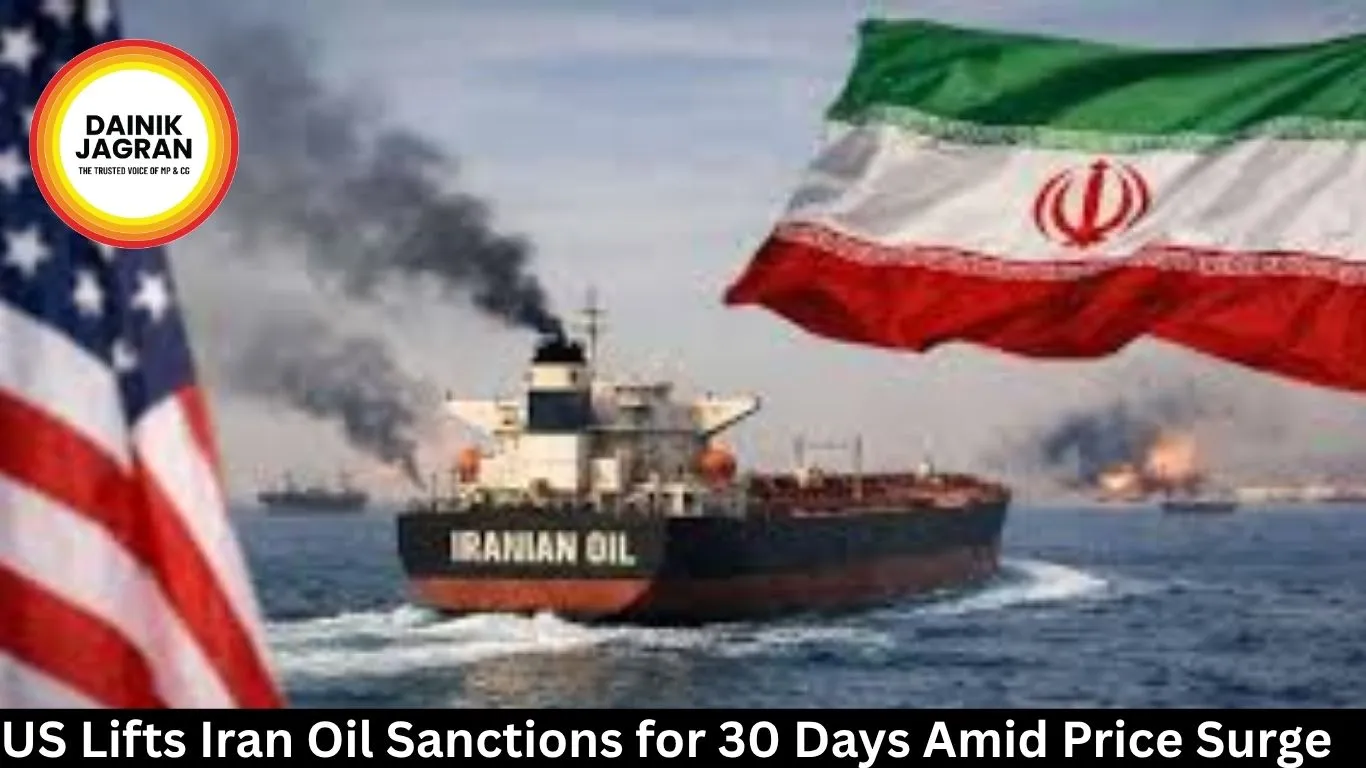
US Lifts Iran Oil Sanctions for 30 Days Amid Price Surge
Digital Desk
US lifts Iran oil sanctions temporarily to ease crude prices. The move may impact India’s oil imports and global energy markets.
US Lifts Iran Oil Sanctions Temporarily Amid Price Surge
The United States has eased Iran oil sanctions for 30 days to stabilise global crude prices, allowing limited sales from floating storage amid ongoing geopolitical tensions.
Sanctions Waiver Announced
In a significant shift, the United States has announced a temporary 30-day waiver on sanctions related to Iran’s oil exports. The decision, linked to rising global crude prices, allows the sale of approximately 140 million barrels of Iranian oil already stored in tankers at sea.
The move comes amid mounting concerns over supply disruptions due to ongoing conflict in West Asia, pushing oil prices to elevated levels and triggering fears of inflation across major economies.
Limited Scope Explained
Officials clarified that the waiver applies strictly to oil already loaded in tankers—commonly referred to as floating storage. No new contracts or long-term trade agreements with Iran are permitted under this relaxation.
Industry sources indicated that Asian buyers, including Indian refiners, are assessing the feasibility of procuring these cargoes within the limited window. However, the move does not signal a broader policy reversal on Iran sanctions.
Background of Sanctions
The sanctions regime dates back to 2018, when former US President Donald Trump withdrew from the Joint Comprehensive Plan of Action and reimposed restrictions on Iran’s oil exports, banking system, and shipping network.
Before the sanctions, India sourced nearly 10–12 per cent of its crude oil imports from Iran. The restrictions forced New Delhi to diversify imports towards Iraq, Saudi Arabia, and later Russia, particularly after 2022.
Why Waiver Now
The current decision appears driven by market pressures rather than diplomatic shifts. Crude oil prices have surged sharply amid geopolitical tensions and supply fears linked to the ongoing conflict in the region.
According to officials, releasing Iranian oil into the global market could ease supply tightness and stabilise prices in the short term. The US administration faces domestic pressure to contain fuel costs and prevent economic fallout.
Experts described the waiver as a “crisis management step” rather than a structural change in sanctions policy.
India’s Strategic Interest
India, which imports over 85 per cent of its crude oil needs, could benefit from the temporary easing. Iranian crude typically comes at discounted rates and offers logistical advantages due to proximity.
Refineries in India are also well-suited to process medium and heavy crude grades, making Iranian oil a technically compatible option.
Market estimates suggest that even a modest procurement during the 30-day window could yield cost savings for Indian refiners. Additionally, increased global supply may bring down crude prices by $5–10 per barrel, offering indirect economic relief.
Operational Challenges Remain
Despite the opportunity, several challenges persist. Payment mechanisms remain uncertain as Iran is largely excluded from the global banking system. Alternative arrangements such as barter trade or third-party intermediaries may be required.
Shipping insurance and security risks in key transit routes like the Strait of Hormuz also pose concerns. Industry players remain cautious, given the possibility of sanctions being reinstated abruptly after the waiver period.
Global Market Impact
Analysts believe the release of Iranian oil could temporarily cool global markets, which have been rattled by supply disruptions. However, the impact may be short-lived unless broader geopolitical tensions ease.
The move may also influence other major consumers such as China and South Korea, who could explore similar short-term purchases.
What Lies Ahead
The 30-day window presents a narrow but strategic opportunity for oil-importing nations. However, the lack of policy clarity beyond this period limits long-term planning.
For India, the development underscores the importance of diversifying energy sources and strengthening strategic petroleum reserves. Enhancing maritime security and supply resilience will also remain critical.
As the global energy landscape evolves, the temporary easing of Iran oil sanctions highlights the delicate balance between geopolitics and market stability—an issue that will continue to shape international energy dynamics.
US Lifts Iran Oil Sanctions for 30 Days Amid Price Surge
Digital Desk
US Lifts Iran Oil Sanctions Temporarily Amid Price Surge
The United States has eased Iran oil sanctions for 30 days to stabilise global crude prices, allowing limited sales from floating storage amid ongoing geopolitical tensions.
Sanctions Waiver Announced
In a significant shift, the United States has announced a temporary 30-day waiver on sanctions related to Iran’s oil exports. The decision, linked to rising global crude prices, allows the sale of approximately 140 million barrels of Iranian oil already stored in tankers at sea.
The move comes amid mounting concerns over supply disruptions due to ongoing conflict in West Asia, pushing oil prices to elevated levels and triggering fears of inflation across major economies.
Limited Scope Explained
Officials clarified that the waiver applies strictly to oil already loaded in tankers—commonly referred to as floating storage. No new contracts or long-term trade agreements with Iran are permitted under this relaxation.
Industry sources indicated that Asian buyers, including Indian refiners, are assessing the feasibility of procuring these cargoes within the limited window. However, the move does not signal a broader policy reversal on Iran sanctions.
Background of Sanctions
The sanctions regime dates back to 2018, when former US President Donald Trump withdrew from the Joint Comprehensive Plan of Action and reimposed restrictions on Iran’s oil exports, banking system, and shipping network.
Before the sanctions, India sourced nearly 10–12 per cent of its crude oil imports from Iran. The restrictions forced New Delhi to diversify imports towards Iraq, Saudi Arabia, and later Russia, particularly after 2022.
Why Waiver Now
The current decision appears driven by market pressures rather than diplomatic shifts. Crude oil prices have surged sharply amid geopolitical tensions and supply fears linked to the ongoing conflict in the region.
According to officials, releasing Iranian oil into the global market could ease supply tightness and stabilise prices in the short term. The US administration faces domestic pressure to contain fuel costs and prevent economic fallout.
Experts described the waiver as a “crisis management step” rather than a structural change in sanctions policy.
India’s Strategic Interest
India, which imports over 85 per cent of its crude oil needs, could benefit from the temporary easing. Iranian crude typically comes at discounted rates and offers logistical advantages due to proximity.
Refineries in India are also well-suited to process medium and heavy crude grades, making Iranian oil a technically compatible option.
Market estimates suggest that even a modest procurement during the 30-day window could yield cost savings for Indian refiners. Additionally, increased global supply may bring down crude prices by $5–10 per barrel, offering indirect economic relief.
Operational Challenges Remain
Despite the opportunity, several challenges persist. Payment mechanisms remain uncertain as Iran is largely excluded from the global banking system. Alternative arrangements such as barter trade or third-party intermediaries may be required.
Shipping insurance and security risks in key transit routes like the Strait of Hormuz also pose concerns. Industry players remain cautious, given the possibility of sanctions being reinstated abruptly after the waiver period.
Global Market Impact
Analysts believe the release of Iranian oil could temporarily cool global markets, which have been rattled by supply disruptions. However, the impact may be short-lived unless broader geopolitical tensions ease.
The move may also influence other major consumers such as China and South Korea, who could explore similar short-term purchases.
What Lies Ahead
The 30-day window presents a narrow but strategic opportunity for oil-importing nations. However, the lack of policy clarity beyond this period limits long-term planning.
For India, the development underscores the importance of diversifying energy sources and strengthening strategic petroleum reserves. Enhancing maritime security and supply resilience will also remain critical.
As the global energy landscape evolves, the temporary easing of Iran oil sanctions highlights the delicate balance between geopolitics and market stability—an issue that will continue to shape international energy dynamics.


