Shivraj Singh Chouhan Launches ‘Pragati’ Initiative to Empower Rural Youth and Small Farmers
Digital desk
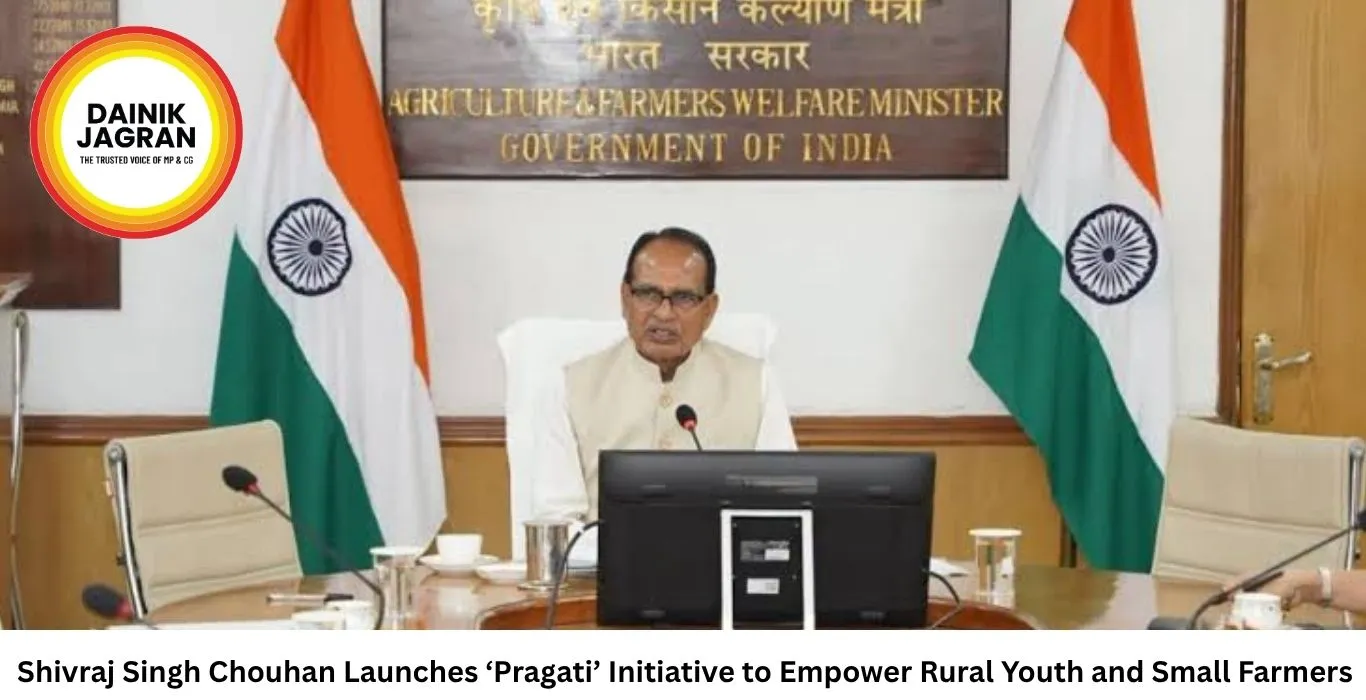
Union Agriculture and Farmers’ Welfare and Rural Development Minister Shivraj Singh Chouhan on Tuesday launched ‘Pragati’, a nationwide initiative aimed at creating 20,000 agri-entrepreneurs and improving the livelihoods of nearly 20 lakh small and marginal farmers across the country.
The programme is designed to promote inclusive, sustainable and climate-resilient agricultural development while strengthening rural economies through entrepreneurship, technology adoption and market linkages. Officials described the initiative as a significant step towards transforming agriculture at the grassroots level and creating new opportunities for rural youth.
Launching the programme, Chouhan said the vision of a developed India cannot be achieved without a strong agricultural sector and prosperous villages. He stressed that the government’s objective extends beyond increasing crop production and includes reducing cultivation costs, improving farm incomes and encouraging crop diversification.
According to the minister, small and marginal farmers face growing challenges in relying solely on traditional farming practices. He said greater emphasis is needed on value addition, food processing and agriculture-based enterprises to make farming more profitable and sustainable.
“Pragati” seeks to address these concerns by building a network of trained agri-entrepreneurs who will provide support services at the village level. These entrepreneurs are expected to assist farmers with soil testing, farm mechanisation, financial access, market connectivity and adoption of modern agricultural practices.
The initiative will initially be implemented across key agricultural states, including Madhya Pradesh, Uttar Pradesh, Bihar, Maharashtra, Rajasthan, West Bengal, Assam and Jharkhand. These states account for a significant share of India’s farming population and include a large number of small landholding farmers.
Officials said the programme will focus on enhancing productivity while helping farmers diversify their income sources. Alongside crop cultivation, emphasis will be placed on horticulture, livestock farming, fisheries and beekeeping. The government believes such diversification can provide additional revenue streams and reduce dependence on a single source of farm income.
Chouhan highlighted the growing role of technology in agriculture and said future growth would depend on scientific farming methods and digital solutions. He pointed to the increasing use of drones, precision agriculture tools and digital advisory platforms as important drivers of efficiency and productivity in the sector.
The initiative also places strong emphasis on climate-sensitive farming practices. As weather-related uncertainties continue to affect agricultural output in several regions, policymakers are looking at ways to build resilience through better planning, improved resource management and technology-driven interventions.
Women’s participation has been identified as a key component of the programme. Chouhan said a large number of women agri-entrepreneurs and “Krishi Sakhis” would be integrated into the initiative to strengthen community-level outreach and support farmers more effectively.
He noted that empowering rural women through agricultural entrepreneurship could have a multiplier effect on village economies and social development. According to programme planners, locally trained entrepreneurs can serve as a bridge between government schemes, scientific institutions and farming communities.
The minister described the initiative as more than a government scheme, calling it a mission to create self-reliant and economically vibrant villages. He said efforts are also underway to develop state-specific agricultural roadmaps and promote scientific crop planning to improve long-term sustainability and profitability in the sector.
With agriculture continuing to support a large share of India’s population, policymakers view initiatives such as “Pragati” as crucial to increasing rural incomes, generating employment and accelerating the broader goal of inclusive economic growth.
--------
🚨 Beat the News Rush – Join Now!
Get breaking alerts, hot exclusives, and game-changing stories instantly on your phone. No delays, no fluff – just the edge you need. ⚡
Tap to join:
🟢 WhatsApp Channel: Dainik Jagran MP CG
Crave more?
🅕 Facebook: Dainik Jagran MP CG English
🅧 Twitter (X): Dainik Jagran MP CG
🅘 Instagram: Dainik Jagran MP CG
Share the fire – keep your crew ahead! 🗞️🔥
Shivraj Singh Chouhan Launches ‘Pragati’ Initiative to Empower Rural Youth and Small Farmers
Digital desk
The programme is designed to promote inclusive, sustainable and climate-resilient agricultural development while strengthening rural economies through entrepreneurship, technology adoption and market linkages. Officials described the initiative as a significant step towards transforming agriculture at the grassroots level and creating new opportunities for rural youth.
Launching the programme, Chouhan said the vision of a developed India cannot be achieved without a strong agricultural sector and prosperous villages. He stressed that the government’s objective extends beyond increasing crop production and includes reducing cultivation costs, improving farm incomes and encouraging crop diversification.
According to the minister, small and marginal farmers face growing challenges in relying solely on traditional farming practices. He said greater emphasis is needed on value addition, food processing and agriculture-based enterprises to make farming more profitable and sustainable.
“Pragati” seeks to address these concerns by building a network of trained agri-entrepreneurs who will provide support services at the village level. These entrepreneurs are expected to assist farmers with soil testing, farm mechanisation, financial access, market connectivity and adoption of modern agricultural practices.
The initiative will initially be implemented across key agricultural states, including Madhya Pradesh, Uttar Pradesh, Bihar, Maharashtra, Rajasthan, West Bengal, Assam and Jharkhand. These states account for a significant share of India’s farming population and include a large number of small landholding farmers.
Officials said the programme will focus on enhancing productivity while helping farmers diversify their income sources. Alongside crop cultivation, emphasis will be placed on horticulture, livestock farming, fisheries and beekeeping. The government believes such diversification can provide additional revenue streams and reduce dependence on a single source of farm income.
Chouhan highlighted the growing role of technology in agriculture and said future growth would depend on scientific farming methods and digital solutions. He pointed to the increasing use of drones, precision agriculture tools and digital advisory platforms as important drivers of efficiency and productivity in the sector.
The initiative also places strong emphasis on climate-sensitive farming practices. As weather-related uncertainties continue to affect agricultural output in several regions, policymakers are looking at ways to build resilience through better planning, improved resource management and technology-driven interventions.
Women’s participation has been identified as a key component of the programme. Chouhan said a large number of women agri-entrepreneurs and “Krishi Sakhis” would be integrated into the initiative to strengthen community-level outreach and support farmers more effectively.
He noted that empowering rural women through agricultural entrepreneurship could have a multiplier effect on village economies and social development. According to programme planners, locally trained entrepreneurs can serve as a bridge between government schemes, scientific institutions and farming communities.
The minister described the initiative as more than a government scheme, calling it a mission to create self-reliant and economically vibrant villages. He said efforts are also underway to develop state-specific agricultural roadmaps and promote scientific crop planning to improve long-term sustainability and profitability in the sector.
With agriculture continuing to support a large share of India’s population, policymakers view initiatives such as “Pragati” as crucial to increasing rural incomes, generating employment and accelerating the broader goal of inclusive economic growth.