


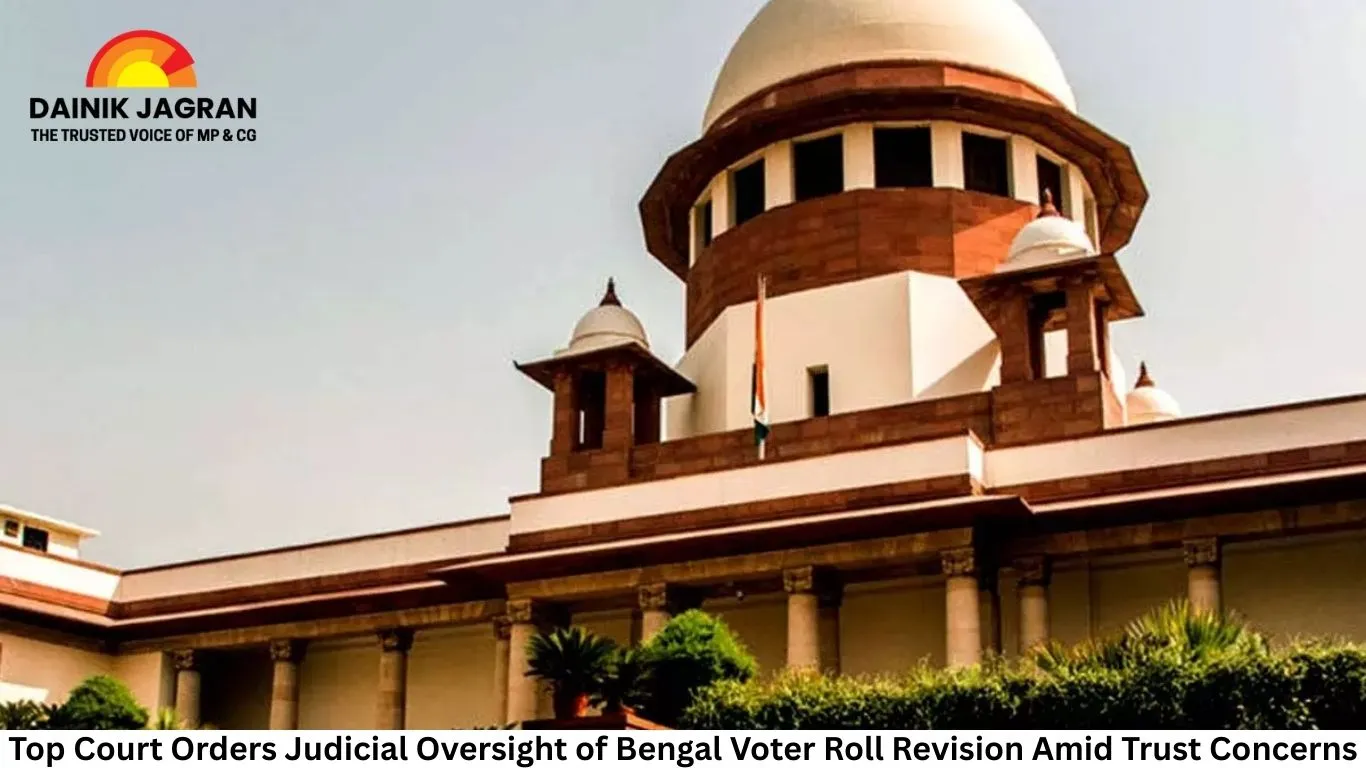
Top Court Orders Judicial Oversight of Bengal Voter Roll Revision Amid Trust Concerns
Digital Desk
The ruling came from a bench led by Chief Justice Surya Kant, which observed that independent judicial monitoring was necessary to ensure transparency and credibility. The court said decisions taken by these officers would carry the authority of court orders and must be complied with by district officials, including collectors and police superintendents.
Allowing the poll body to proceed with its schedule, the court permitted publication of the final electoral roll on February 28. It also authorised the commission to release supplementary lists later if required. Judges emphasised that administrative cooperation was essential for a fair revision exercise and criticised the state for failing to provide an adequate number of senior-rank officials to assist.
During arguments, senior advocate Kapil Sibal, appearing for the state government, said Group-B officers had been assigned and contended that deploying top-tier officials for micro-observer roles was unnecessary. Counsel representing the poll authority disputed that claim, arguing that officers with quasi-judicial powers were crucial to adjudicate objections efficiently.
The bench also instructed the state’s police chief to file a supplementary affidavit detailing measures taken after complaints that officials involved in the revision faced threats. In addition, it called for a coordination meeting among key stakeholders — including senior bureaucrats and election authorities — to streamline the process and avoid administrative friction.
The dispute stems from disagreements over staffing, monitoring mechanisms, and procedural safeguards in the voter verification drive. The court noted that credible electoral rolls form the foundation of free and fair elections and said any perception of bias or obstruction could undermine public confidence.
Legal observers say the intervention signals the judiciary’s intent to balance institutional roles while preventing procedural deadlock. By placing the revision under court-supervised monitoring, the order seeks to ensure both administrative accountability and electoral integrity as the state prepares for upcoming polls.
.jpg)




