


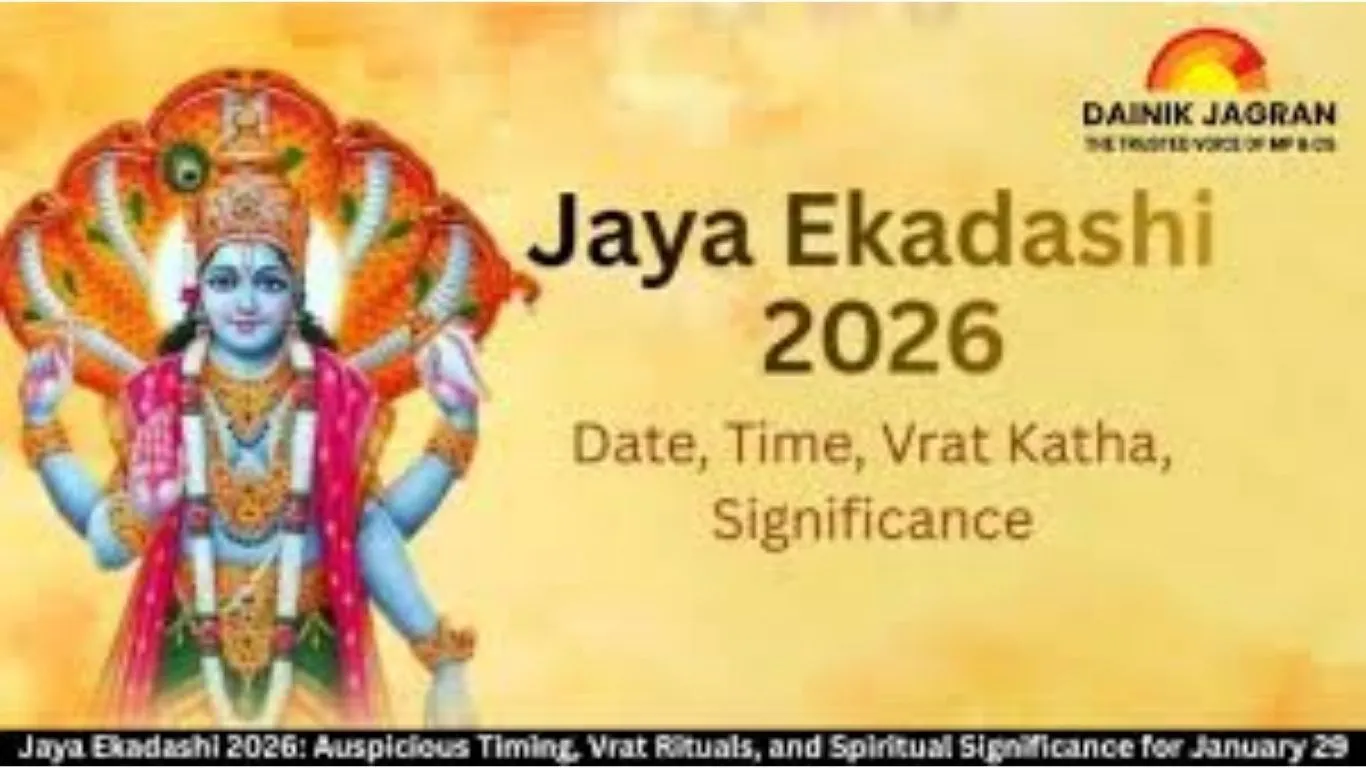
Jaya Ekadashi 2026: Auspicious Fasting Date, Vrat Timings, and Spiritual Significance
Digital Desk
Jaya Ekadashi 2026: A Sacred Fast for Spiritual Cleansing and Divine Blessings
In the heart of the spiritually charged month of Magh, Hindus worldwide are preparing to observe Jaya Ekadashi 2026 on Thursday, January 29. This auspicious day, dedicated to Lord Vishnu, is more than just a ritual fast—it is a profound spiritual exercise believed to wash away sins and pave the path to liberation (moksha). With its unique occurrence on a Thursday this year, considered doubly auspicious, the festival holds special significance for devotees seeking divine grace and a fresh spiritual start.
The Jaya Ekadashi 2026 observance begins with the Ekadashi tithi starting at 4:36 PM on January 28 and ending at 1:55 PM on January 29. The fast, a key feature of this day, is traditionally waterless and observed from sunrise on Ekadashi until sunrise on Dwadashi. However, for those unable to complete a nirjala (waterless) fast, alternatives like fruit and milk are permitted, especially for the elderly, pregnant women, or those with health conditions.
Why This Festival Matters Now
In today’s fast-paced world, ancient festivals like Jaya Ekadashi offer a meaningful pause—a chance to reconnect with cultural roots and inner peace. The festival’s emphasis on self-discipline, purification, and devotion resonates deeply in contemporary times, where mindfulness and spiritual well-being are increasingly sought after. Falling in the sacred month of Magh, which is also significant for Lord Shiva worship, this Ekadashi uniquely bridges devotion to two major deities, making it particularly relevant for a wide array of devotees.
Rituals and Observances: A Guide for Devotees
Devotees observing Jaya Ekadashi wake up early, take a ritual bath, and dedicate the day to worshipping Lord Vishnu. Key practices include:
· Fasting: Strict avoidance of grains, beans, and certain vegetables like onions and garlic. Rice is especially prohibited.
· Puja: Offering sandalwood paste, sesame seeds, flowers, and incense to an idol or image of Lord Vishnu while chanting the Vishnu Sahasranama or Narayan Stotra.
· Night Vigil (Jagran): Staying awake through the night, singing devotional bhajans, and listening to the Jaya Ekadashi Vrat Katha, which narrates the story of how the Gandharva couple Malyavan and Pushpavanti were liberated from a curse.
The fast is broken during the Parana time on January 30, between 7:11 AM and 9:22 AM, after offering food to Brahmins or the needy.
Expert Insight: The Deeper Significance
Referenced in scriptures like the Padma Purana, the Jaya Ekadashi vrat is said to possess the power to absolve even the gravest of sins, including Brahmahatya. Spiritual scholars emphasize that its observance is not merely about physical abstinence but about cultivating mental purity—letting go of anger, greed, and lust. “The true fast is a fast from negative tendencies,” explains a simulated perspective from a Hindu theologian. “Jaya Ekadashi is a divine tool for inner transformation, aligning the individual’s consciousness with divine will.”
Key Timings for Jaya Ekadashi 2026 at a Glance
· Ekadashi Tithi: Jan 28, 4:36 PM – Jan 29, 1:55 PM
· Hari Vasara End: Jan 29, 7:14 PM
· Recommended Fasting Period: Sunrise on Jan 29 to Sunrise on Jan 30
· Parana Time: Jan 30, 7:11 AM – 9:22 AM
· Dwadashi End: Jan 30, 11:09 AM
Embracing Tradition in Modern Times
As Jaya Ekadashi 2026 approaches, it invites devotees to partake in a timeless tradition that promises spiritual renewal. In an era where digital reminders can alert us to cosmic timings, the essence of the festival remains unchanged: devotion, discipline, and the pursuit of a higher truth. Whether one observes a full fast or adopts a modified observance, the core intention—to seek blessings and purify the soul—makes this a universally relevant and powerful practice in the Hindu spiritual calendar.
.jpg)




