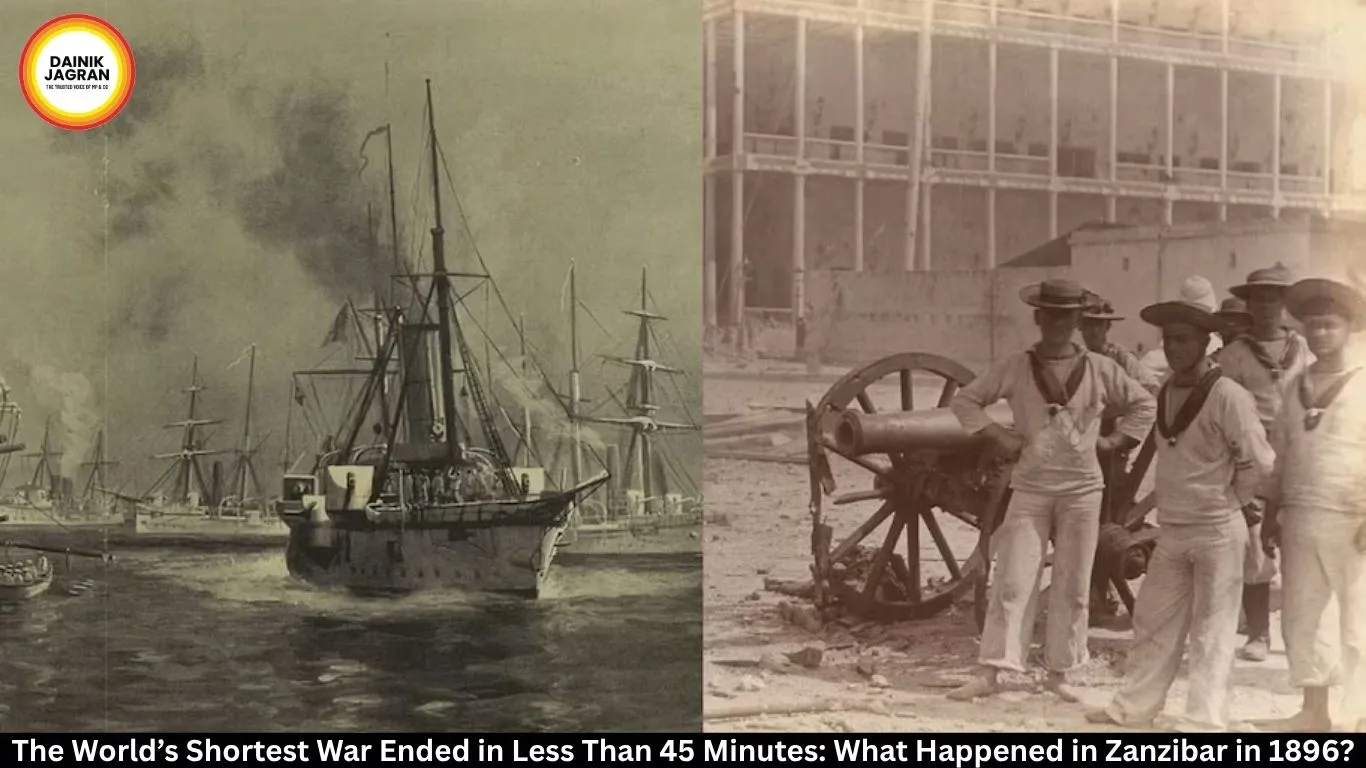
Anglo-Zanzibar War: How the World’s Shortest War Ended in 45 Minutes

Digital desk

Anglo-Zanzibar War: How the World’s Shortest War Ended in 45 Minutes

The Anglo-Zanzibar War of 1896 lasted just 38 to 45 minutes, making it the shortest war in recorded history. Know why Britain attacked Zanzibar and how the conflict ended.

Wars are usually associated with long battles, heavy casualties and months or even years of fighting. But history records one conflict that was over almost before the first cup of tea could cool.

The Anglo-Zanzibar War, fought on August 27, 1896, is widely regarded as the shortest war in recorded history. The confrontation between Britain and the Sultanate of Zanzibar lasted only around 38 to 45 minutes, ending with the British bombardment of the Sultan's palace and the collapse of the defending forces.

But what led to a war that ended almost as quickly as it began?

Also Read... Presidential Joke Day: The Reagan Joke Behind the Unusual US Historical Day

Why Did the Conflict Begin?

The roots of the conflict lay in Zanzibar's political succession.

Also Read... This Day in World History: Chad Independence, IBM PC, Alcatraz and Babe Ruth

Zanzibar, an island territory off the coast of present-day Tanzania in East Africa, was strategically important to Britain because of its location along major Indian Ocean trade routes.

Also Read... This Day in Indian History: Khudiram Bose, Hamid Ansari, Yashpal Sharma and D. Subbarao

On August 25, 1896, Sultan Hamad bin Thuwaini, who was regarded as friendly towards the British, died unexpectedly.

His cousin, Khalid bin Barghash, quickly moved into the palace and declared himself the new Sultan without British approval.

Britain opposed Khalid's succession and backed another candidate, Hamoud bin Mohammed. British authorities ordered Khalid to leave the palace and step down.

Khalid refused.

Britain Issues an Ultimatum

British officials gave Khalid a deadline of 9 am on August 27, 1896, to surrender the palace.

Instead of leaving, Khalid gathered supporters and positioned armed men around the palace. His forces were reportedly equipped with several guns and artillery pieces, but they were vastly outmatched by the British naval forces waiting offshore.

When the deadline passed, negotiations ended and the British prepared to attack.

Bombardment Begins

At around 9 am, British warships positioned off Zanzibar opened fire on the Sultan's palace.

The bombardment quickly overwhelmed Khalid's forces. The palace was heavily damaged and caught fire as British shells struck the compound.

The defending forces had little ability to respond effectively to the British ships and their superior weaponry.

Within minutes, the situation inside the palace had become untenable.

A War That Lasted Minutes

The fighting ended after roughly 38 minutes, although some historical accounts put the duration closer to 40 or 45 minutes.

Khalid's forces abandoned the palace and Khalid himself fled to the German consulate, where he sought protection.

The Sultan's flag was eventually lowered and the British stopped firing.

The conflict was over almost as quickly as it had begun.

What Happened After the War?

The British-backed candidate, Hamoud bin Mohammed, was subsequently installed as Sultan.

The British victory strengthened their control over Zanzibar and demonstrated the enormous military imbalance between the colonial power and the Sultanate.

Khalid remained in exile for years before eventually being captured by British forces during the First World War.

The conflict also became a striking example of how political succession, colonial influence and military power could intersect in the late 19th century.

Why Is It Called the Shortest War?

The Anglo-Zanzibar War is generally recognised as the shortest war in recorded history because the actual fighting lasted less than an hour.

Estimates of the exact duration vary, with most historical accounts placing it at approximately 38 to 45 minutes.

The war was brief, but it was not bloodless. Zanzibar's forces suffered significant casualties, while British forces reported no fatalities during the bombardment.

More than a century later, the conflict continues to attract attention because of its extraordinary brevity.

A dispute over the succession to a throne escalated into an armed confrontation, only for one side to be overwhelmed within minutes.

The Anglo-Zanzibar War therefore remains an unusual chapter in military history — a conflict that began with an ultimatum and ended before an ordinary meal could even be finished.


 

english.dainikjagranmpcg.com
10 Aug 2026 By Abhishek Joshi

Anglo-Zanzibar War: How the World’s Shortest War Ended in 45 Minutes

Digital desk

Wars are usually associated with long battles, heavy casualties and months or even years of fighting. But history records one conflict that was over almost before the first cup of tea could cool.

The Anglo-Zanzibar War, fought on August 27, 1896, is widely regarded as the shortest war in recorded history. The confrontation between Britain and the Sultanate of Zanzibar lasted only around 38 to 45 minutes, ending with the British bombardment of the Sultan's palace and the collapse of the defending forces.

But what led to a war that ended almost as quickly as it began?

Why Did the Conflict Begin?

The roots of the conflict lay in Zanzibar's political succession.

Zanzibar, an island territory off the coast of present-day Tanzania in East Africa, was strategically important to Britain because of its location along major Indian Ocean trade routes.

On August 25, 1896, Sultan Hamad bin Thuwaini, who was regarded as friendly towards the British, died unexpectedly.

His cousin, Khalid bin Barghash, quickly moved into the palace and declared himself the new Sultan without British approval.

Britain opposed Khalid's succession and backed another candidate, Hamoud bin Mohammed. British authorities ordered Khalid to leave the palace and step down.

Khalid refused.

Britain Issues an Ultimatum

British officials gave Khalid a deadline of 9 am on August 27, 1896, to surrender the palace.

Instead of leaving, Khalid gathered supporters and positioned armed men around the palace. His forces were reportedly equipped with several guns and artillery pieces, but they were vastly outmatched by the British naval forces waiting offshore.

When the deadline passed, negotiations ended and the British prepared to attack.

Bombardment Begins

At around 9 am, British warships positioned off Zanzibar opened fire on the Sultan's palace.

The bombardment quickly overwhelmed Khalid's forces. The palace was heavily damaged and caught fire as British shells struck the compound.

The defending forces had little ability to respond effectively to the British ships and their superior weaponry.

Within minutes, the situation inside the palace had become untenable.

A War That Lasted Minutes

The fighting ended after roughly 38 minutes, although some historical accounts put the duration closer to 40 or 45 minutes.

Khalid's forces abandoned the palace and Khalid himself fled to the German consulate, where he sought protection.

The Sultan's flag was eventually lowered and the British stopped firing.

The conflict was over almost as quickly as it had begun.

What Happened After the War?

The British-backed candidate, Hamoud bin Mohammed, was subsequently installed as Sultan.

The British victory strengthened their control over Zanzibar and demonstrated the enormous military imbalance between the colonial power and the Sultanate.

Khalid remained in exile for years before eventually being captured by British forces during the First World War.

The conflict also became a striking example of how political succession, colonial influence and military power could intersect in the late 19th century.

Why Is It Called the Shortest War?

The Anglo-Zanzibar War is generally recognised as the shortest war in recorded history because the actual fighting lasted less than an hour.

Estimates of the exact duration vary, with most historical accounts placing it at approximately 38 to 45 minutes.

The war was brief, but it was not bloodless. Zanzibar's forces suffered significant casualties, while British forces reported no fatalities during the bombardment.

More than a century later, the conflict continues to attract attention because of its extraordinary brevity.

A dispute over the succession to a throne escalated into an armed confrontation, only for one side to be overwhelmed within minutes.

The Anglo-Zanzibar War therefore remains an unusual chapter in military history — a conflict that began with an ultimatum and ended before an ordinary meal could even be finished.

 

https://english.dainikjagranmpcg.com/special-news/anglo-zanzibar-war-how-the-world%E2%80%99s-shortest-war-ended-in-45/article-25538

--------

🚨 Beat the News Rush – Join Now!

Get breaking alerts, hot exclusives, and game-changing stories instantly on your phone. No delays, no fluff – just the edge you need. ⚡

Tap to join: 

🟢 WhatsApp Channel: Dainik Jagran MP CG

Crave more?

🅕 Facebook: Dainik Jagran MP CG English

🅧 Twitter (X): Dainik Jagran MP CG

🅘 Instagram: Dainik Jagran MP CG

Share the fire – keep your crew ahead! 🗞️🔥

Trending News