Two Days Without Food: The Sacrifice Behind Mirabai’s Gold

Digital Desk

Two Days Without Food: The Sacrifice Behind Mirabai’s Gold

Mirabai Chanu’s Commonwealth Games triumph was built not only on strength and technique, but also on an extreme struggle to enter the women’s 48kg category.


Gold After A Gruelling Cut

Mirabai Chanu gave India its first gold medal at the 2026 Commonwealth Games on July 26, but her first request after the victory was not about photographs or celebrations. She wanted the media interaction completed quickly so that she could finally eat.

The Indian weightlifting star revealed that she had gone without food for two days while trying to make the 48kg competition limit. She also said she had avoided water for three days, highlighting the severe weight cut behind her gold-winning performance.

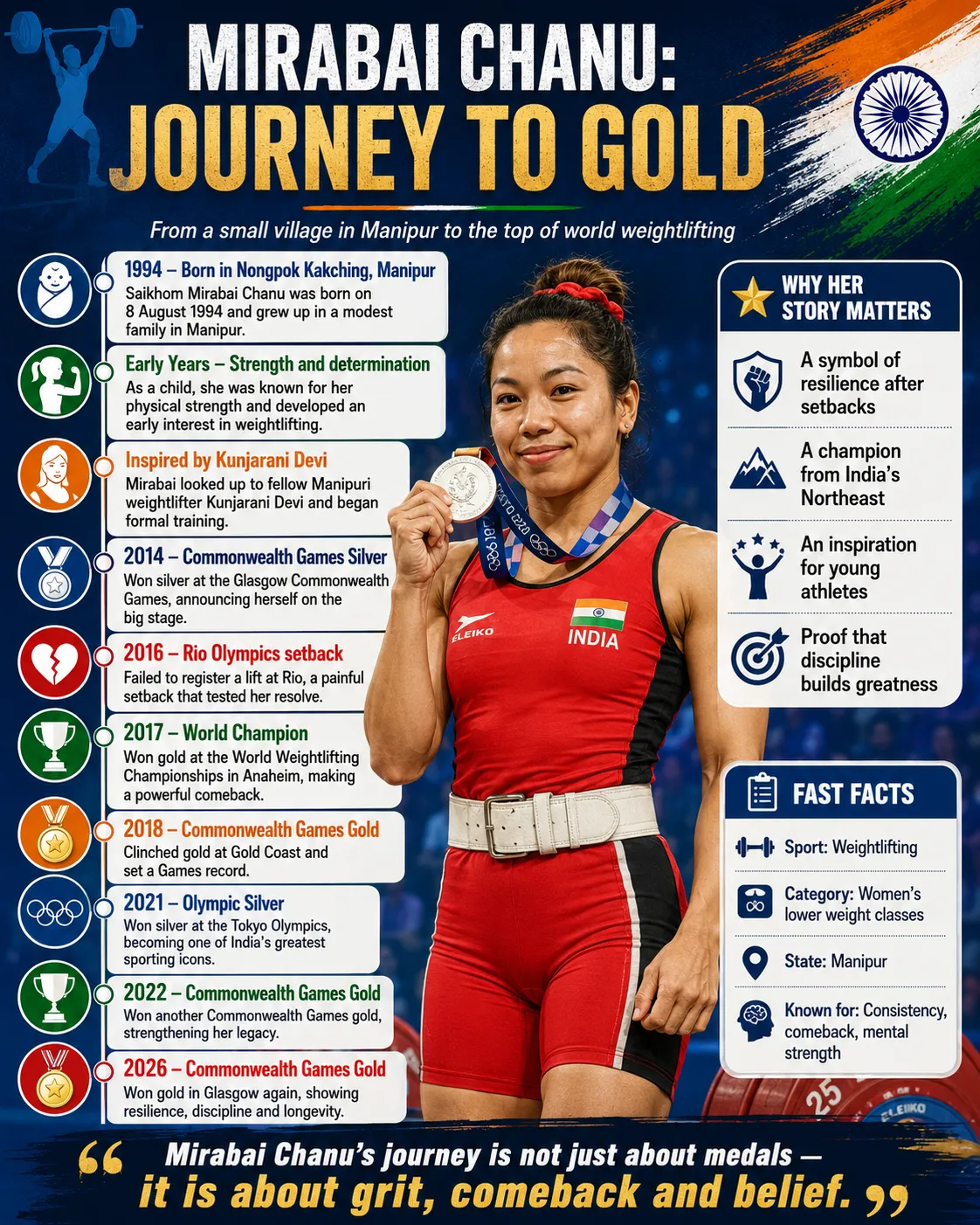
Chanu lifted a combined 190kg in Glasgow and secured her third successive Commonwealth Games gold. Her performance included a Commonwealth Games record despite failed opening attempts in both the snatch and clean and jerk.

Why She Stopped Eating

Chanu’s natural body weight is around 50.5kg. Competing in the 48kg division therefore required her to shed more than two kilograms before the official weigh-in.

Weight-category athletes often control food, fluid and sodium intake before competitions. In Chanu’s case, however, the final reduction reportedly became so difficult that she stopped eating and drinking entirely for a short period.

This was not her regular diet or a fitness method for the public to copy. Rapid dehydration and prolonged fasting can reduce energy, concentration and physical performance, and should only occur, if at all, under a qualified sports medicine and nutrition team.

Her Everyday Breakfast

Away from the final pre-competition weight cut, Chanu follows a simple, measured eating routine designed to preserve strength without pushing her above the category limit.

She has previously said that her breakfast can include boiled eggs, boiled chana and boiled mushrooms. These foods provide protein and nutrients while allowing tight control over portions and calories. She also said that bread and milk are often restricted because she must constantly manage her body weight.

Her comments challenge the popular belief that weightlifters eat very large meals. Elite lifters need enough fuel for training and recovery, but athletes in lighter weight divisions must balance power with strict body-weight control.

Mirabai’s Training Day

Chanu has described a structured training schedule that begins with around an hour of mobility work, stretching, running and physical training.

She reportedly eats breakfast at about 8am before beginning her main weight-training session from around 10am to 12.30pm. The routine combines technique practice with strength work and recovery, rather than continuous heavy lifting throughout the day.

Her schedule can change before major competitions. Coaches adjust training volume, body-weight targets, recovery and food intake depending on the event and her physical condition.

What She Eats Later

A complete current daily diet chart has not been made public. Available interviews indicate that her meals are portion-controlled and built around protein-rich, relatively simple foods rather than elaborate dishes.

She has spoken about eggs, chana, mushrooms and seafood in interviews. Her diet varies according to the training phase and the weight she must reach, which means there is no single fixed menu that she follows throughout the year.

Chanu has also said that she treats herself to pizza after successful tournaments. In 2025, she described pizza as a celebratory indulgence rather than part of her normal training diet.

Reports have not reliably confirmed exactly what she ate immediately after the Glasgow victory.

Pressure Behind The Medal

Chanu’s emotional response after winning reflected more than the strain of a single competition. She returned to the top after injuries, difficult international campaigns and the disappointment of finishing fourth at the Paris Olympics.

The Glasgow gold added another chapter to a career that includes an Olympic silver medal, a world title and three consecutive Commonwealth Games victories.

Her achievement also exposed the uncomfortable reality of weight-category sports. Athletes may need to become lighter while retaining enough strength to lift several times their own body weight.

Discipline, Not A Diet Trend

Mirabai Chanu’s food routine cannot be reduced to a viral “champion’s diet”. Her meals, training and weight targets are monitored around the demands of elite competition.

Young athletes should not imitate her two-day fast or water restriction. A professional programme uses coaches, sports dietitians, doctors and regular performance assessments. What helped an experienced international athlete reach a specific weigh-in target could be dangerous for an unsupervised person.

The strongest lesson from Mirabai’s gold is not that eating less creates champions. It is that elite sport demands extraordinary planning, discipline and sacrifice—and that athlete safety must remain as important as the medal itself.


Mirabai’s Routine At A Glance

Natural weight: Around 50.5kg
Competition category: 48kg
Reported pre-event cut: No food for two days and no water for three days
Breakfast foods: Boiled eggs, boiled chana and boiled mushrooms
Morning routine: Mobility, stretching, running and physical training
Main training: Approximately 10am to 12.30pm
Foods often restricted: Bread and milk
Celebration food: Pizza after a successful tournament



--------

🚨 Beat the News Rush – Join Now!

Get breaking alerts, hot exclusives, and game-changing stories instantly on your phone. No delays, no fluff – just the edge you need. ⚡

Tap to join: 

🟢 WhatsApp Channel: Dainik Jagran MP CG

Crave more?

🅕 Facebook: Dainik Jagran MP CG English

🅧 Twitter (X): Dainik Jagran MP CG

🅘 Instagram: Dainik Jagran MP CG

Share the fire – keep your crew ahead! 🗞️🔥

english.dainikjagranmpcg.com
28 Jul 2026 By Danik Jagran English

Two Days Without Food: The Sacrifice Behind Mirabai’s Gold

Digital Desk

Gold After A Gruelling Cut

Mirabai Chanu gave India its first gold medal at the 2026 Commonwealth Games on July 26, but her first request after the victory was not about photographs or celebrations. She wanted the media interaction completed quickly so that she could finally eat.

The Indian weightlifting star revealed that she had gone without food for two days while trying to make the 48kg competition limit. She also said she had avoided water for three days, highlighting the severe weight cut behind her gold-winning performance.

Chanu lifted a combined 190kg in Glasgow and secured her third successive Commonwealth Games gold. Her performance included a Commonwealth Games record despite failed opening attempts in both the snatch and clean and jerk.

Why She Stopped Eating

Chanu’s natural body weight is around 50.5kg. Competing in the 48kg division therefore required her to shed more than two kilograms before the official weigh-in.

Weight-category athletes often control food, fluid and sodium intake before competitions. In Chanu’s case, however, the final reduction reportedly became so difficult that she stopped eating and drinking entirely for a short period.

This was not her regular diet or a fitness method for the public to copy. Rapid dehydration and prolonged fasting can reduce energy, concentration and physical performance, and should only occur, if at all, under a qualified sports medicine and nutrition team.

Her Everyday Breakfast

Away from the final pre-competition weight cut, Chanu follows a simple, measured eating routine designed to preserve strength without pushing her above the category limit.

She has previously said that her breakfast can include boiled eggs, boiled chana and boiled mushrooms. These foods provide protein and nutrients while allowing tight control over portions and calories. She also said that bread and milk are often restricted because she must constantly manage her body weight.

Her comments challenge the popular belief that weightlifters eat very large meals. Elite lifters need enough fuel for training and recovery, but athletes in lighter weight divisions must balance power with strict body-weight control.

Mirabai’s Training Day

Chanu has described a structured training schedule that begins with around an hour of mobility work, stretching, running and physical training.

She reportedly eats breakfast at about 8am before beginning her main weight-training session from around 10am to 12.30pm. The routine combines technique practice with strength work and recovery, rather than continuous heavy lifting throughout the day.

Her schedule can change before major competitions. Coaches adjust training volume, body-weight targets, recovery and food intake depending on the event and her physical condition.

What She Eats Later

A complete current daily diet chart has not been made public. Available interviews indicate that her meals are portion-controlled and built around protein-rich, relatively simple foods rather than elaborate dishes.

She has spoken about eggs, chana, mushrooms and seafood in interviews. Her diet varies according to the training phase and the weight she must reach, which means there is no single fixed menu that she follows throughout the year.

Chanu has also said that she treats herself to pizza after successful tournaments. In 2025, she described pizza as a celebratory indulgence rather than part of her normal training diet.

Reports have not reliably confirmed exactly what she ate immediately after the Glasgow victory.

Pressure Behind The Medal

Chanu’s emotional response after winning reflected more than the strain of a single competition. She returned to the top after injuries, difficult international campaigns and the disappointment of finishing fourth at the Paris Olympics.

The Glasgow gold added another chapter to a career that includes an Olympic silver medal, a world title and three consecutive Commonwealth Games victories.

Her achievement also exposed the uncomfortable reality of weight-category sports. Athletes may need to become lighter while retaining enough strength to lift several times their own body weight.

Discipline, Not A Diet Trend

Mirabai Chanu’s food routine cannot be reduced to a viral “champion’s diet”. Her meals, training and weight targets are monitored around the demands of elite competition.

Young athletes should not imitate her two-day fast or water restriction. A professional programme uses coaches, sports dietitians, doctors and regular performance assessments. What helped an experienced international athlete reach a specific weigh-in target could be dangerous for an unsupervised person.

The strongest lesson from Mirabai’s gold is not that eating less creates champions. It is that elite sport demands extraordinary planning, discipline and sacrifice—and that athlete safety must remain as important as the medal itself.


Mirabai’s Routine At A Glance

Natural weight: Around 50.5kg
Competition category: 48kg
Reported pre-event cut: No food for two days and no water for three days
Breakfast foods: Boiled eggs, boiled chana and boiled mushrooms
Morning routine: Mobility, stretching, running and physical training
Main training: Approximately 10am to 12.30pm
Foods often restricted: Bread and milk
Celebration food: Pizza after a successful tournament

 
https://english.dainikjagranmpcg.com/sports/two-days-without-food-the-sacrifice-behind-mirabai%E2%80%99s-gold/article-23929

Trending News