

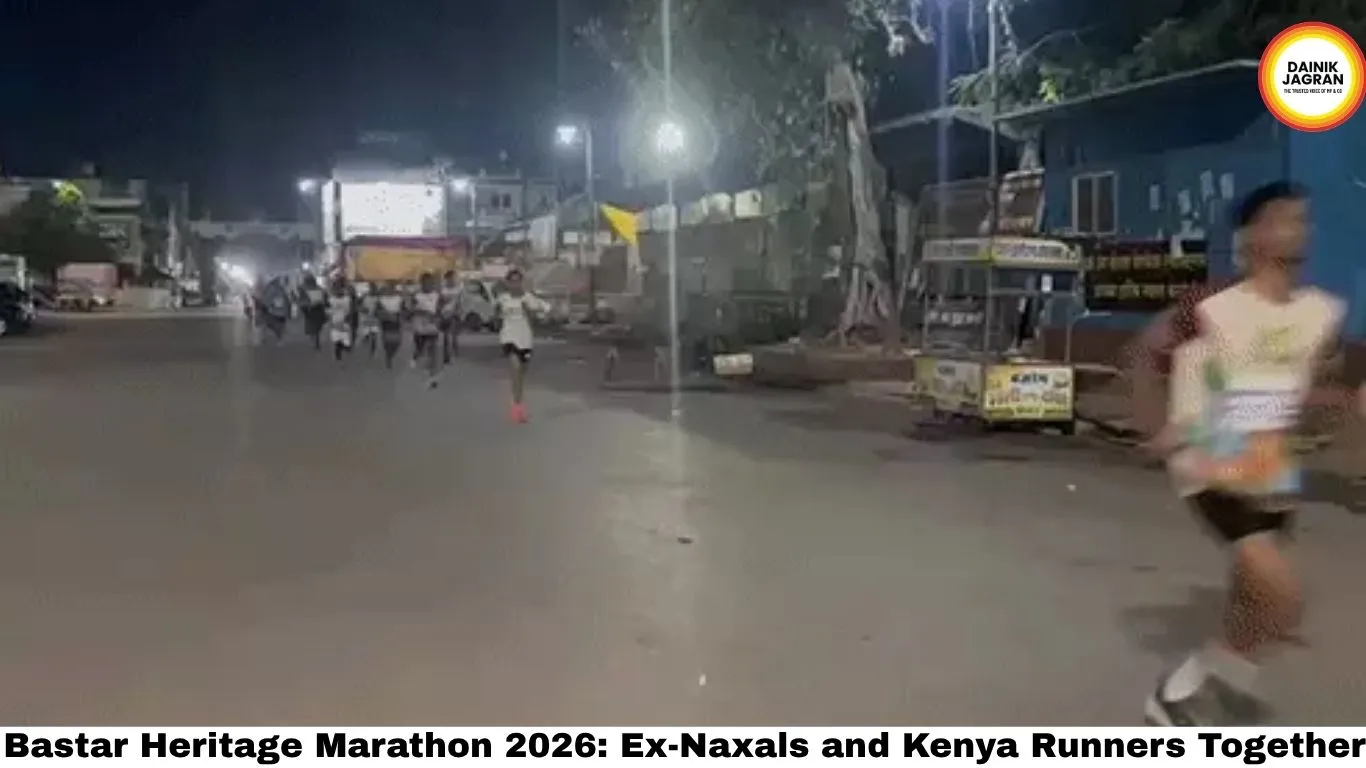
Bastar Heritage Marathon 2026: Ex-Naxals and Kenya Runners Together

Digital Desk

 Bastar Heritage Marathon 2026: Ex-Naxals and Kenya Runners Together

Over 5,000 runners including 200 ex-Naxals and 68 athletes from Kenya and Ethiopia participate in Bastar Heritage Marathon 2026 at Jagdalpur — a symbol of Bastar's peace transformation.

Over 5,000 runners — including 200 surrendered Maoists and 68 international athletes from Kenya and Ethiopia — converge at Jagdalpur for the Bastar Heritage Marathon, in a powerful symbol of Bastar's transformation from red corridor to peace zone.


A Race Unlike Any Other

On March 22, 2026, the roads of Jagdalpur will witness something that would have been unimaginable a decade ago. Men and women who once carried weapons in the dense forests of Bastar will run shoulder to shoulder with world-class athletes from Kenya and Ethiopia — all of them covering 42 kilometres through sal forests, quiet tribal hamlets, and undulating terrain, from the historic Lalbagh Ground in Jagdalpur all the way to the majestic Chitrakote waterfall, widely known as the Niagara of Asia.

The Bastar Heritage Marathon 2026 is not merely a sporting event. It is a carefully choreographed statement about what Bastar is becoming — and how far it has already come.


68 International Runners, Two African Powerhouses

The international participation at this edition of the marathon has elevated its profile significantly. A total of 68 runners from abroad have registered — 42 from Ethiopia and 26 from Kenya. Both nations have long dominated long-distance running on the global stage, producing some of the most decorated distance athletes in Olympic and World Championship history. Their presence transforms what is essentially a regional marathon into a genuinely competitive international race, and it has generated considerable excitement among both organisers and local participants who will run alongside them.

The 42-kilometre route through Bastar's forests and villages will be an experience unlike any standard road marathon — the terrain itself is part of the challenge, and the cultural immersion is unlike anything athletes from East Africa are likely to have encountered before.


200 Former Maoists Take to the Starting Line

The most symbolically significant aspect of the Bastar Heritage Marathon is the participation of more than 200 surrendered Naxalites. These are men and women from Bijapur, Sukma, Narayanpur and other districts across the Bastar division who, at varying points in the recent past, laid down arms and chose to rejoin civilian life under the state government's rehabilitation programmes — including the 'Lon Varratu' (Come Back Home) initiative in Dantewada and the 'Poona Margam' scheme, which translates to "Rehabilitation and Rejuvenation."

Many of these former cadres had never participated in organised sports before. In the months leading up to the marathon, they underwent structured coaching at local grounds under experienced trainers. For the women among them — and there are several — the shift has been described by officials as particularly profound. Moving away from environments defined by fear and conflict, they now speak of growing safety, social acceptance, and a sense of belonging that sport has helped restore.

Their presence on the starting line is a testament to a rehabilitation architecture that has moved beyond paperwork and into lived experience.


The Route: Forests, Waterfalls and a New Narrative

The marathon begins at Lalbagh Ground — the administrative heart of Jagdalpur and the headquarters of Bastar district — and concludes at Chitrakote, the widest waterfall in India. The 42-kilometre course passes through dense sal forest, tribal villages, open fields and winding rural roads that capture the ecological and cultural richness of Bastar at every step.

The event has been structured in four distance categories: a full marathon at 42.195 km, a half marathon at 21 km, a 10 km run and a 5 km fun run — ensuring accessibility for runners of all abilities. A separate Bastar-category has been created to give local runners a dedicated platform to compete against international athletes and develop their talent within a structured competitive framework. Prize money of ₹25 lakh has been announced for the top finishers.


Bastar's Stunning Transformation

The marathon is the latest expression of a transformation that has reshaped Bastar's identity over the past few years. The region, once synonymous with Maoist violence and referred to as the epicentre of India's left-wing extremism crisis, has seen a dramatic shift. Tourist arrivals have increased nearly 40-fold according to government data. Ancient temples, riverside caves, dense national parks and tribal cultural festivals — once inaccessible due to the security situation — are now drawing visitors from across India and abroad.

Dudhmaras village in Kanger Valley National Park was selected by United Nations Tourism in 2024 for its rural tourism development programme — placing Bastar formally on the global tourism map. Folk music from the region has found audiences in urban cafes and on streaming platforms. A Bastar-inspired album featuring local tribal musicians fused with contemporary instrumentation has clocked millions of views online. Former STF outposts have been converted into tourist resorts.

This is the Bastar that the Heritage Marathon seeks to present to the world.


Security, Administration and Intent

The district administration has left little to chance. Officials confirm that comprehensive security arrangements are in place along the entire marathon route. Emergency medical teams, hydration stations, and crowd management infrastructure have been deployed. Local self-help groups, school children, and tribal cultural groups are expected to line the route, creating a festive and welcoming atmosphere for both domestic and international participants.

The marathon also carries a deeply political message. The state government has been vocal about its intent to fully eliminate left-wing extremism from Chhattisgarh by early 2026 — a deadline set publicly by senior Union government officials. While security operations continue in isolated pockets, the Bastar Heritage Marathon signals that the political and administrative focus has unmistakably shifted from conflict management to development, tourism, and reintegration.


What the Marathon Means Beyond the Finish Line

In a forest that once echoed with the sound of gunfire, the sound of running feet — of Kenyan long-distance champions, surrendered Maoists, local schoolchildren and urban recreational runners all moving together toward the same finish line — carries a weight that goes beyond athletics.

For Bastar, this is a new kind of race. Not one defined by fear or survival, but by aspiration. The marathon is a frame through which a region long defined by its conflicts is choosing to define itself by its culture, its landscape, and its people's capacity to begin again.

english.dainikjagranmpcg.com
22 Mar 2026 By Jiya.S

Bastar Heritage Marathon 2026: Ex-Naxals and Kenya Runners Together

Digital Desk

Over 5,000 runners — including 200 surrendered Maoists and 68 international athletes from Kenya and Ethiopia — converge at Jagdalpur for the Bastar Heritage Marathon, in a powerful symbol of Bastar's transformation from red corridor to peace zone.


A Race Unlike Any Other

On March 22, 2026, the roads of Jagdalpur will witness something that would have been unimaginable a decade ago. Men and women who once carried weapons in the dense forests of Bastar will run shoulder to shoulder with world-class athletes from Kenya and Ethiopia — all of them covering 42 kilometres through sal forests, quiet tribal hamlets, and undulating terrain, from the historic Lalbagh Ground in Jagdalpur all the way to the majestic Chitrakote waterfall, widely known as the Niagara of Asia.

The Bastar Heritage Marathon 2026 is not merely a sporting event. It is a carefully choreographed statement about what Bastar is becoming — and how far it has already come.


68 International Runners, Two African Powerhouses

The international participation at this edition of the marathon has elevated its profile significantly. A total of 68 runners from abroad have registered — 42 from Ethiopia and 26 from Kenya. Both nations have long dominated long-distance running on the global stage, producing some of the most decorated distance athletes in Olympic and World Championship history. Their presence transforms what is essentially a regional marathon into a genuinely competitive international race, and it has generated considerable excitement among both organisers and local participants who will run alongside them.

The 42-kilometre route through Bastar's forests and villages will be an experience unlike any standard road marathon — the terrain itself is part of the challenge, and the cultural immersion is unlike anything athletes from East Africa are likely to have encountered before.


200 Former Maoists Take to the Starting Line

The most symbolically significant aspect of the Bastar Heritage Marathon is the participation of more than 200 surrendered Naxalites. These are men and women from Bijapur, Sukma, Narayanpur and other districts across the Bastar division who, at varying points in the recent past, laid down arms and chose to rejoin civilian life under the state government's rehabilitation programmes — including the 'Lon Varratu' (Come Back Home) initiative in Dantewada and the 'Poona Margam' scheme, which translates to "Rehabilitation and Rejuvenation."

Many of these former cadres had never participated in organised sports before. In the months leading up to the marathon, they underwent structured coaching at local grounds under experienced trainers. For the women among them — and there are several — the shift has been described by officials as particularly profound. Moving away from environments defined by fear and conflict, they now speak of growing safety, social acceptance, and a sense of belonging that sport has helped restore.

Their presence on the starting line is a testament to a rehabilitation architecture that has moved beyond paperwork and into lived experience.


The Route: Forests, Waterfalls and a New Narrative

The marathon begins at Lalbagh Ground — the administrative heart of Jagdalpur and the headquarters of Bastar district — and concludes at Chitrakote, the widest waterfall in India. The 42-kilometre course passes through dense sal forest, tribal villages, open fields and winding rural roads that capture the ecological and cultural richness of Bastar at every step.

The event has been structured in four distance categories: a full marathon at 42.195 km, a half marathon at 21 km, a 10 km run and a 5 km fun run — ensuring accessibility for runners of all abilities. A separate Bastar-category has been created to give local runners a dedicated platform to compete against international athletes and develop their talent within a structured competitive framework. Prize money of ₹25 lakh has been announced for the top finishers.


Bastar's Stunning Transformation

The marathon is the latest expression of a transformation that has reshaped Bastar's identity over the past few years. The region, once synonymous with Maoist violence and referred to as the epicentre of India's left-wing extremism crisis, has seen a dramatic shift. Tourist arrivals have increased nearly 40-fold according to government data. Ancient temples, riverside caves, dense national parks and tribal cultural festivals — once inaccessible due to the security situation — are now drawing visitors from across India and abroad.

Dudhmaras village in Kanger Valley National Park was selected by United Nations Tourism in 2024 for its rural tourism development programme — placing Bastar formally on the global tourism map. Folk music from the region has found audiences in urban cafes and on streaming platforms. A Bastar-inspired album featuring local tribal musicians fused with contemporary instrumentation has clocked millions of views online. Former STF outposts have been converted into tourist resorts.

This is the Bastar that the Heritage Marathon seeks to present to the world.


Security, Administration and Intent

The district administration has left little to chance. Officials confirm that comprehensive security arrangements are in place along the entire marathon route. Emergency medical teams, hydration stations, and crowd management infrastructure have been deployed. Local self-help groups, school children, and tribal cultural groups are expected to line the route, creating a festive and welcoming atmosphere for both domestic and international participants.

The marathon also carries a deeply political message. The state government has been vocal about its intent to fully eliminate left-wing extremism from Chhattisgarh by early 2026 — a deadline set publicly by senior Union government officials. While security operations continue in isolated pockets, the Bastar Heritage Marathon signals that the political and administrative focus has unmistakably shifted from conflict management to development, tourism, and reintegration.


What the Marathon Means Beyond the Finish Line

In a forest that once echoed with the sound of gunfire, the sound of running feet — of Kenyan long-distance champions, surrendered Maoists, local schoolchildren and urban recreational runners all moving together toward the same finish line — carries a weight that goes beyond athletics.

For Bastar, this is a new kind of race. Not one defined by fear or survival, but by aspiration. The marathon is a frame through which a region long defined by its conflicts is choosing to define itself by its culture, its landscape, and its people's capacity to begin again.

https://english.dainikjagranmpcg.com/states/chhattisgarh/-bastar-heritage-marathon-2026-ex-naxals-and-kenya-runners-together/article-15770

Related Posts

Advertisement

Latest News


