

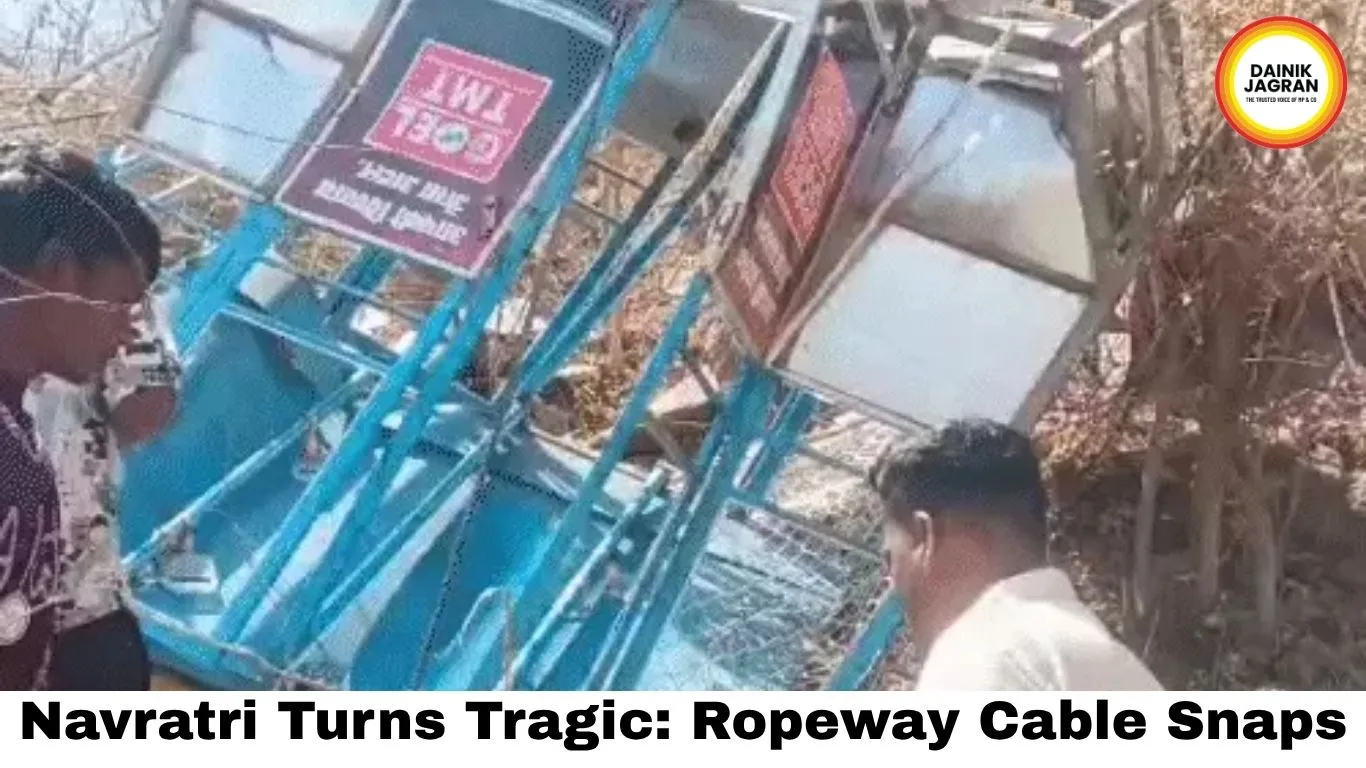
Khallari Mata Ropeway Collapse: 1 Dead, 17 Injured in Chhattisgarh

Digital Desk

 Khallari Mata Ropeway Collapse: 1 Dead, 17 Injured in Chhattisgarh

A ropeway cable snapped at Khallari Mata Temple in Mahasamund, Chhattisgarh during Navratri — killing 28-year-old Ayushi Satkar and injuring 17 others. CM orders high-level probe.

Navratri Turns Tragic: Ropeway Cable Snaps at Khallari Mata Temple, Kills Raipur Woman, 17 Injured

A ropeway trolley plunged from nearly 200 feet at Chhattisgarh's Khallari Mata Temple in Mahasamund during Navratri rush — killing 28-year-old Ayushi Satkar and injuring 17 others, days after the system resumed operations following maintenance.

A Day of Devotion Turned to Grief

The first Sunday of Chaitra Navratri 2026 brought thousands of devotees to the Khallari Mata Temple in Mahasamund district of Chhattisgarh — a hilltop shrine that draws its faithful every year during the nine-day festival with a combination of spiritual devotion and the physical challenge of reaching a goddess perched nearly 1,100 feet above the surrounding plains. For most who came on March 22, it was a morning of prayer. For one family from Raipur, it became a tragedy they will carry forever.

At approximately 10:00 am, as a loaded ropeway trolley was descending the hillside with pilgrims returning from offering prayers, the main cable suddenly snapped. The trolley lost all support mid-journey and plunged downward, crashing violently against the rocky hillside. The impact was catastrophic. One woman died at the scene. Seventeen others were injured — several of them seriously.

The Deceased: Ayushi Satkar, 28, Raipur

The woman who lost her life has been identified as Ayushi Satkar, 28 years old, a resident of Raipur. She was among the pilgrims descending from the temple when the cable failed. She died on the spot from the injuries sustained in the fall. Among the injured were members of her own family — her husband and a teenage relative — who were on the same trolley. Four critically injured individuals were referred to hospitals in Raipur for specialised treatment. The remaining injured received initial care at the Bagbahara Community Health Centre. At least one person is reported to remain in critical condition as of Sunday evening.

The victims included elderly devotees and children — a reminder that the ropeway was being used not only by young adults but by families who could not manage the 800-step staircase that is the alternative route to the hilltop shrine.

The Ropeway Had Just Resumed After Maintenance

One detail that has attracted immediate and sharp scrutiny is the timeline of the ropeway's maintenance history. The ropeway system at Khallari Mata Temple had reportedly undergone maintenance between March 16 and 18 — concluding just four days before the accident. It had resumed operations for the Navratri rush shortly after that maintenance window closed. The fact that a cable snapped within days of a maintenance cycle raises serious questions about the quality of the inspection, whether all cables and trolley components were properly assessed, and whether the ropeway was declared fit for the high-traffic festival load it was about to face.

Investigators are treating this timeline as a central focus of their inquiry. It is not yet clear whether the cable that snapped was one of those examined or replaced during the March 16–18 maintenance, or whether it was a component that the maintenance team did not flag as requiring attention.

Panic, Chaos and a Swift Rescue Response

Eyewitness accounts describe the moments after the cable snap as a scene of absolute chaos. Devotees on the hillside and at the temple premises screamed and scrambled as the trolley lost control and fell. Some tried to help survivors immediately at the scene before any official response arrived. Police personnel and locals quickly mobilised, transporting victims to hospitals using both official vehicles and private cars — an improvised but apparently effective immediate response that limited the casualty count.

The ropeway service was suspended immediately following the accident and will remain closed until further notice while technical teams conduct a detailed inspection of the entire system.

CM Vishnu Deo Sai Orders Probe, Promises Accountability

Chhattisgarh Chief Minister Vishnu Deo Sai responded swiftly, describing the incident as extremely tragic and painful. He expressed deep condolences to Ayushi Satkar's family and prayed for the recovery of those injured. He directed officials to ensure the best possible medical care for all victims and announced a comprehensive high-level inquiry into the accident. He stated clearly that strict action would be taken against those found responsible if negligence is established — and underscored that safety lapses at public facilities of this nature are entirely unacceptable.

A Pattern That Demands a National Reckoning

The Khallari Mata ropeway accident is not an isolated incident. A similar accident occurred at a ropeway near Bamleshwari Devi hill in Rajnandgaon district of Chhattisgarh last year, injuring a BJP leader. Across India, ropeway accidents at pilgrimage sites have claimed multiple lives in recent years. In 2022, the Deoghar ropeway collapse in Jharkhand left passengers stranded for days and killed two people in rescue operations. In 2023, the Vaishno Devi ropeway in Jammu experienced a cable fault mid-operation. These incidents have consistently generated investigations, promises of reform, and fresh safety guidelines — followed, in most cases, by inadequate enforcement and a return to business as usual until the next accident.

India has no dedicated national ropeway safety regulator. Pilgrimage ropeways fall under a patchwork of state-level tourism, forest, and revenue department jurisdictions, with no uniform inspection frequency, no mandatory third-party certification requirement, and no standardised load-testing protocols for festival-season surge capacity. The Khallari Mata accident is the latest and most urgent argument for fixing that gap.

What Comes Next

The high-level inquiry ordered by Chief Minister Sai will examine the maintenance history of the ropeway, the qualifications and accountability of the operator, the inspection records, and whether the system was technically certified for the volume of traffic it was carrying during Navratri. The findings are expected within the coming week. Criminal negligence proceedings are likely if the investigation confirms that the cable failure was preventable and resulted from inadequate maintenance or false certification.

The ropeway will remain shut until cleared by technical inspectors. Devotees wishing to reach the Khallari Mata shrine for the remainder of Navratri will have to climb the 800-step staircase — or wait for the festival season to end before making the journey.


english.dainikjagranmpcg.com
23 Mar 2026 By Jiya.S

Khallari Mata Ropeway Collapse: 1 Dead, 17 Injured in Chhattisgarh

Digital Desk

Navratri Turns Tragic: Ropeway Cable Snaps at Khallari Mata Temple, Kills Raipur Woman, 17 Injured

A ropeway trolley plunged from nearly 200 feet at Chhattisgarh's Khallari Mata Temple in Mahasamund during Navratri rush — killing 28-year-old Ayushi Satkar and injuring 17 others, days after the system resumed operations following maintenance.

A Day of Devotion Turned to Grief

The first Sunday of Chaitra Navratri 2026 brought thousands of devotees to the Khallari Mata Temple in Mahasamund district of Chhattisgarh — a hilltop shrine that draws its faithful every year during the nine-day festival with a combination of spiritual devotion and the physical challenge of reaching a goddess perched nearly 1,100 feet above the surrounding plains. For most who came on March 22, it was a morning of prayer. For one family from Raipur, it became a tragedy they will carry forever.

At approximately 10:00 am, as a loaded ropeway trolley was descending the hillside with pilgrims returning from offering prayers, the main cable suddenly snapped. The trolley lost all support mid-journey and plunged downward, crashing violently against the rocky hillside. The impact was catastrophic. One woman died at the scene. Seventeen others were injured — several of them seriously.

The Deceased: Ayushi Satkar, 28, Raipur

The woman who lost her life has been identified as Ayushi Satkar, 28 years old, a resident of Raipur. She was among the pilgrims descending from the temple when the cable failed. She died on the spot from the injuries sustained in the fall. Among the injured were members of her own family — her husband and a teenage relative — who were on the same trolley. Four critically injured individuals were referred to hospitals in Raipur for specialised treatment. The remaining injured received initial care at the Bagbahara Community Health Centre. At least one person is reported to remain in critical condition as of Sunday evening.

The victims included elderly devotees and children — a reminder that the ropeway was being used not only by young adults but by families who could not manage the 800-step staircase that is the alternative route to the hilltop shrine.

The Ropeway Had Just Resumed After Maintenance

One detail that has attracted immediate and sharp scrutiny is the timeline of the ropeway's maintenance history. The ropeway system at Khallari Mata Temple had reportedly undergone maintenance between March 16 and 18 — concluding just four days before the accident. It had resumed operations for the Navratri rush shortly after that maintenance window closed. The fact that a cable snapped within days of a maintenance cycle raises serious questions about the quality of the inspection, whether all cables and trolley components were properly assessed, and whether the ropeway was declared fit for the high-traffic festival load it was about to face.

Investigators are treating this timeline as a central focus of their inquiry. It is not yet clear whether the cable that snapped was one of those examined or replaced during the March 16–18 maintenance, or whether it was a component that the maintenance team did not flag as requiring attention.

Panic, Chaos and a Swift Rescue Response

Eyewitness accounts describe the moments after the cable snap as a scene of absolute chaos. Devotees on the hillside and at the temple premises screamed and scrambled as the trolley lost control and fell. Some tried to help survivors immediately at the scene before any official response arrived. Police personnel and locals quickly mobilised, transporting victims to hospitals using both official vehicles and private cars — an improvised but apparently effective immediate response that limited the casualty count.

The ropeway service was suspended immediately following the accident and will remain closed until further notice while technical teams conduct a detailed inspection of the entire system.

CM Vishnu Deo Sai Orders Probe, Promises Accountability

Chhattisgarh Chief Minister Vishnu Deo Sai responded swiftly, describing the incident as extremely tragic and painful. He expressed deep condolences to Ayushi Satkar's family and prayed for the recovery of those injured. He directed officials to ensure the best possible medical care for all victims and announced a comprehensive high-level inquiry into the accident. He stated clearly that strict action would be taken against those found responsible if negligence is established — and underscored that safety lapses at public facilities of this nature are entirely unacceptable.

A Pattern That Demands a National Reckoning

The Khallari Mata ropeway accident is not an isolated incident. A similar accident occurred at a ropeway near Bamleshwari Devi hill in Rajnandgaon district of Chhattisgarh last year, injuring a BJP leader. Across India, ropeway accidents at pilgrimage sites have claimed multiple lives in recent years. In 2022, the Deoghar ropeway collapse in Jharkhand left passengers stranded for days and killed two people in rescue operations. In 2023, the Vaishno Devi ropeway in Jammu experienced a cable fault mid-operation. These incidents have consistently generated investigations, promises of reform, and fresh safety guidelines — followed, in most cases, by inadequate enforcement and a return to business as usual until the next accident.

India has no dedicated national ropeway safety regulator. Pilgrimage ropeways fall under a patchwork of state-level tourism, forest, and revenue department jurisdictions, with no uniform inspection frequency, no mandatory third-party certification requirement, and no standardised load-testing protocols for festival-season surge capacity. The Khallari Mata accident is the latest and most urgent argument for fixing that gap.

What Comes Next

The high-level inquiry ordered by Chief Minister Sai will examine the maintenance history of the ropeway, the qualifications and accountability of the operator, the inspection records, and whether the system was technically certified for the volume of traffic it was carrying during Navratri. The findings are expected within the coming week. Criminal negligence proceedings are likely if the investigation confirms that the cable failure was preventable and resulted from inadequate maintenance or false certification.

The ropeway will remain shut until cleared by technical inspectors. Devotees wishing to reach the Khallari Mata shrine for the remainder of Navratri will have to climb the 800-step staircase — or wait for the festival season to end before making the journey.


https://english.dainikjagranmpcg.com/states/chhattisgarh/-khallari-mata-ropeway-collapse-1-dead-17-injured-in/article-15824

Related Posts

Advertisement

Latest News


