


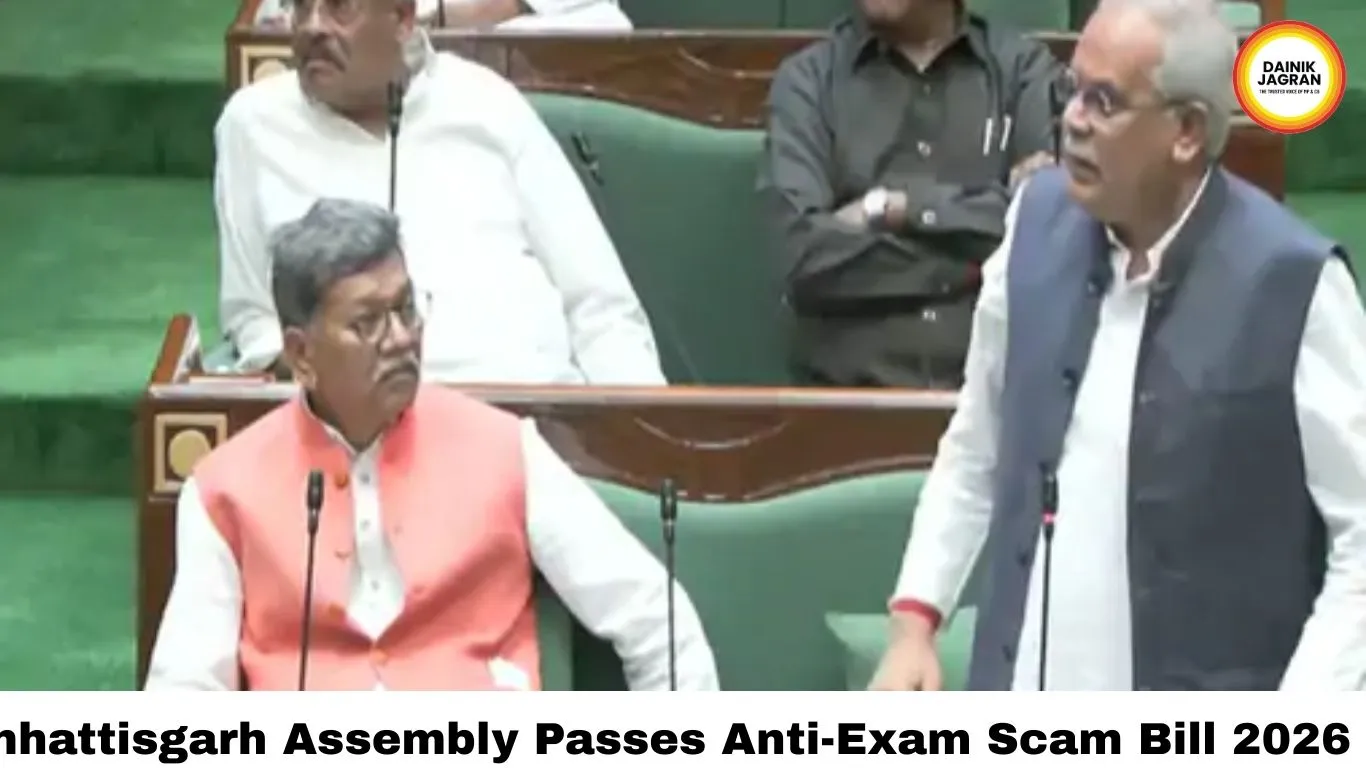
Chhattisgarh Assembly Passes Anti-Exam Scam Bill 2026: New Law, New Staff Selection Board, and a State Finally Getting Serious About Recruitment Fraud — But Will It Be Enough?
Digital Desk
A Bill Born From Broken Trust — Chhattisgarh Confronts Its Examination Demons
For years, Chhattisgarh's recruitment examination system has carried a wound it could never quite close. From the CGPSC scam that saw the CBI descend on Raipur and Mahasamund in search of incriminating documents, to the Revenue Inspector examination irregularities that sent Congress members walking out of the assembly in outrage, to the Class 12 Hindi paper that went viral on WhatsApp last week — this is a state where the integrity of examinations has become one of the most urgent political and social questions of our time.
This week, the Chhattisgarh Legislative Assembly moved to answer it. Two landmark pieces of legislation — the Chhattisgarh Staff Selection Board Bill, 2026 and the Chhattisgarh Public Recruitment and Professional Examinations (Prevention of Unfair Means) Bill, 2026 — have been cleared and placed before the Assembly, representing the most comprehensive legislative overhaul of the state's recruitment examination architecture since Chhattisgarh's formation.
Two Bills, One Mission: What the Legislation Actually Does
The first and more structurally significant of the two is the Chhattisgarh Staff Selection Board Bill, 2026. Under this legislation, a dedicated Staff Selection Board will be established with a singular mandate: to conduct recruitment examinations and select candidates for technical and non-technical Group C and Group D posts across all state government offices.
This matters more than it might initially appear. Currently, recruitment for these posts — which include positions like patwaris, forest guards, lab assistants, sub-inspectors, and junior engineers — flows through an existing examination architecture that has repeatedly shown itself to be vulnerable to manipulation, paper leaks, and insider corruption. A dedicated, independently structured board with its own mandate, oversight mechanisms, and operational protocols represents a genuine structural shift — not just a renaming exercise.
The second bill is equally important in a different way. The Chhattisgarh Public Recruitment and Professional Examinations (Prevention of Unfair Means) Bill, 2026 is a purpose-built anti-fraud legislation aimed at placing serious legal consequences on anyone involved in examination malpractice — whether as a paper thief, a conduit on WhatsApp, a corrupt examination centre operator, or a government insider enabling the system. Deputy Chief Minister Arun Sao confirmed when announcing the cabinet approval that the bill's primary objective is ensuring greater transparency, fairness, and credibility in the public examination system.
The Shadow of Vyapam — and Why CG Cannot Afford to Repeat It
Any discussion of examination reform in Chhattisgarh must reckon honestly with what happened next door in Madhya Pradesh — and what happened within Chhattisgarh itself. The Vyapam scam in MP, a massive recruitment and admission fraud involving politicians, senior officials, and businessmen that produced years of CBI investigations, mysterious deaths, and a complete collapse of public trust in the examination system, is the worst-case scenario that Chhattisgarh is legislating against.
The CGPSC scam — in which recruitment for posts of deputy collector, deputy superintendent of police, and other senior government positions during 2020 to 2022 came under CBI investigation — showed that Chhattisgarh was not immune to this disease. The CBI searches across Raipur and Mahasamund in April 2025 were a stark reminder that the previous Congress government's recruitment machinery had serious integrity failures. The current BJP government under Chief Minister Vishnu Deo Sai came to power partly on the promise of cleaning up this system. These two bills are the most concrete legislative expression of that promise to date.
The Opposition's Position: Right Demand, Wrong Timing?
The Congress opposition, which has been vocal throughout the ongoing budget session about recruitment irregularities — staging walkouts, demanding CBI probes, and raising the Revenue Inspector examination controversy repeatedly — finds itself in a complicated position with these bills.
On one hand, the opposition has been demanding exactly this kind of systemic reform for months. On the other hand, accepting the government's legislative solution too readily risks surrendering the political ground they have fought hard to occupy. The walkouts and protests on the assembly floor during this session have kept recruitment fraud in the headlines — which is legitimate and important democratic pressure. But if those same opposition members vote against or obstruct reforms that their own constituency has been demanding, they will have some difficult questions to answer.
The test of whether these bills represent genuine reform or political window-dressing lies not in their passage through the assembly but in what happens in the twelve months after. Will the new Staff Selection Board have genuine operational independence and adequate funding? Will the Prevention of Unfair Means Act be invoked with the same vigour against politically connected offenders as against ordinary perpetrators? These are the questions that matter — and only time, and a vigilant press and civil society, will answer them.
Laws Are Only as Strong as the Will to Enforce Them
India has passed anti-exam fraud legislation before. Rajasthan raised the maximum penalty for examination cheating to life imprisonment in 2023. The Central Government passed the Public Examinations (Prevention of Unfair Means) Act in February 2024. Uttarakhand, Gujarat, Jharkhand, and Odisha all have versions of anti-cheating laws on their books.
And yet, as the Class 12 Hindi paper circulated on WhatsApp across Chhattisgarh just last week, as NSUI activists marched on the Madhyamik Shiksha Mandal's office in Raipur, as a fresh FIR was filed yet again — it is clear that legislation alone does not fix the systemic vulnerabilities that make paper leaks possible in the first place.
What actually changes the equation is operational reform: digitally encrypted question paper delivery that eliminates the physical printing and transport chain where most leaks originate; randomised question sets across examination centres; real-time monitoring through CCTV with independent oversight; whistleblower protections for insiders who expose fraud; and an investigating agency for examination crimes that is structurally independent of both the board being investigated and the political establishment of the day.
The Chhattisgarh Assembly's exam scam bills of 2026 are a necessary step. They create the legal framework. But they are not sufficient on their own. The hundreds of thousands of young people in Chhattisgarh who appear for Group C, Group D, and board examinations every year — who study for months or years, who compete honestly, and who deserve a level playing field — are owed not just a law but a system. Building that system, and then actually running it without fear or favour, is the real test for the Vishnu Deo Sai government.
The law has been written. Now comes the harder part.
.jpg)




