


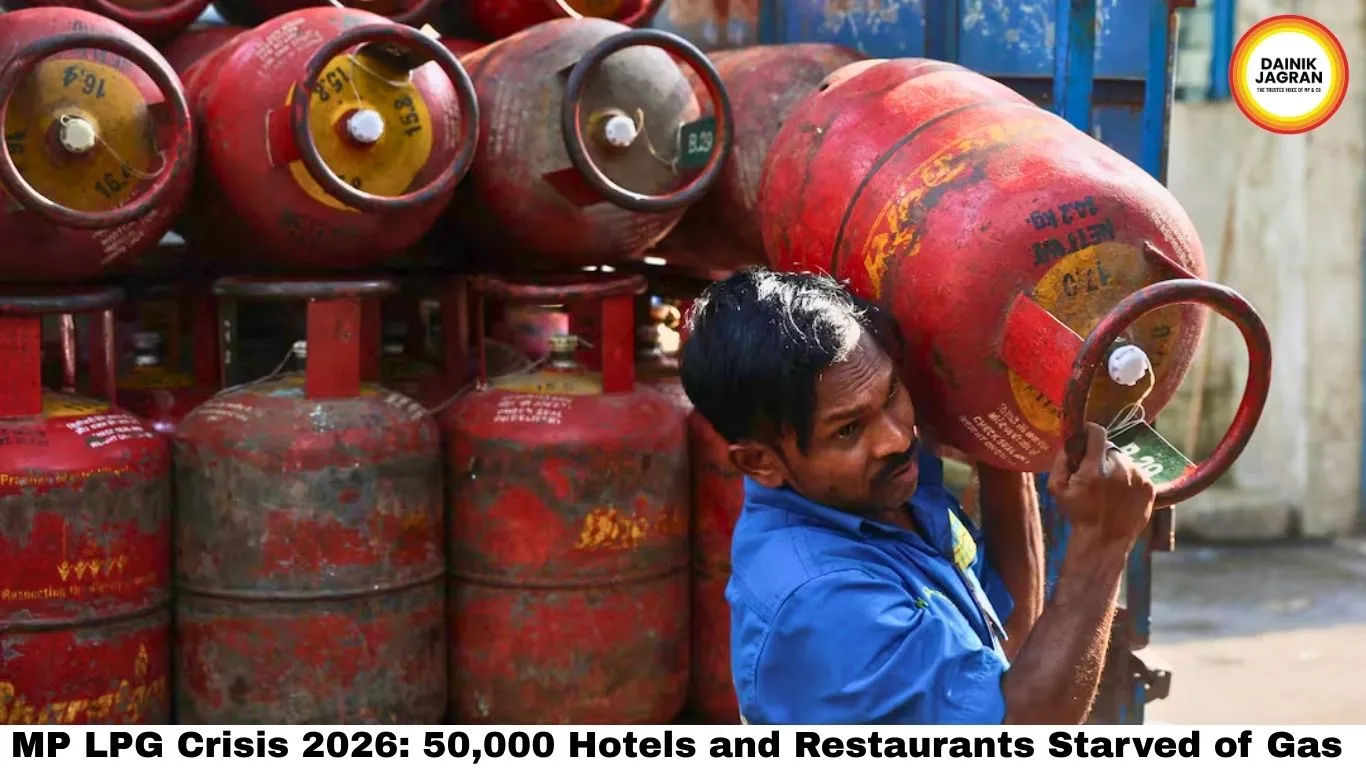
MP LPG Crisis 2026: 50,000 Hotels and Restaurants Starved of Gas — Bhopal's Kitchens Pay the Price of a War They Never Started
Digital Desk
When a War in West Asia Turns Off Madhya Pradesh's Stoves
Walk down any food street in Bhopal right now, and something feels deeply wrong. The familiar hiss of gas burners is gone. Pani puri carts stand dark. Hotel kitchens are in crisis mode. The MP LPG crisis 2026 has turned everyday life upside down — and it did not begin in any warehouse or gas agency in this city. It began thousands of kilometres away, in the Strait of Hormuz.
When the Iran-US-Israel conflict escalated on February 28, 2026, it effectively choked the narrow waterway through which nearly 90 percent of India's LPG imports travel. The consequences have landed squarely on Madhya Pradesh — and the damage is real, visible, and spreading fast.
50,000 Hotels. Zero Cylinders. Ten Days and Counting.
The numbers alone tell a devastating story. Over 50,000 hotels and restaurants across Madhya Pradesh have been running without a single commercial LPG cylinder for nearly ten days — with no confirmed date for resumption.
Commercial LPG cylinder distribution was temporarily stopped in Bhopal, with exemptions granted only for hospitals and educational institutions. For everyone else — the neighbourhood dhaba, the wedding caterer, the evening snack stall — the answer has simply been: no gas available.
Gas companies began issuing flat refusals on commercial cylinders, with stocks exhausted for three consecutive days. The Bhopal Hotel Association confirmed four consecutive days of zero supply at the peak of the disruption. The Confederation of All India Traders (CAIT) urgently appealed to the MP administration to restore at least a limited supply of commercial LPG cylinders to prevent the complete shutdown of the hospitality and food service sector.
The appeal was blunt: if supply is not restored, thousands of livelihoods face collapse.
Street Food, Wedding Seasons, and a City Running on Empty
The commercial LPG cylinder shortage in Bhopal has hit every layer of the food economy. Pani puri vendors, tea stalls, and snack sellers were among the first businesses to feel the impact, with many stall owners saying supplies slowed sharply, forcing them to reduce operations or close stalls altogether.
The ripple effects go further. Food delivery orders on major platforms dropped by 50 to 60 percent, directly hurting gig workers across the state. Wedding caterers who had signed fixed-price contracts months ago are scrambling for firewood and induction cooktops — neither of which scales efficiently for feeding hundreds of guests.
CAIT noted that switching to induction cooking was not immediately practical, since most hotel and restaurant kitchens are designed for gas-based systems and would need seven to ten days to receive equipment and increased power capacity. The administration's suggestion to switch to wood-fire cooking was also ruled out on safety and hygiene grounds.
Black Markets, Price Shocks, and a Political Scandal
Where official supply fails, black markets have rushed in to fill the gap. Investigations across Bhopal uncovered illegal LPG refilling operations where cylinders were being sold at prices as high as ₹4,000 — more than double the official rate.
As of March 11, 2026, the domestic 14.2 kg cylinder price in Bhopal stood at ₹918.50 — a ₹60 jump from February — while the commercial 19 kg cylinder rose to ₹1,889.00, up ₹144 from the previous month.
Then came a political bombshell that cut through every official assurance. Nine domestic cylinders were found stockpiled in the kitchen of the BJP state headquarters in Bhopal — enough to last nearly a month — while 6,000 ordinary households across the city remained without supply. The optics could not have been worse.
Is Relief Finally on the Way?
The central government has not been entirely inactive. An LPG Control Order issued on March 8, 2026 directed all refineries to maximise LPG production and channel their entire output to the three Oil Marketing Companies for domestic cooking gas, boosting LPG production by 28 percent in just five days.
Two LPG tankers carrying a combined 92,700 metric tonnes of cooking gas successfully crossed the Strait of Hormuz and were scheduled to dock at Kandla and Mundra ports on March 16 and 17. A partial restoration of 20 percent commercial cylinder supply has also been announced in Bhopal.
But the math remains sobering. At 22 days of total national buffer, India remains dangerously exposed to any further Hormuz disruption.
Opinion: This Crisis Was Waiting to Happen
The MP LPG crisis of 2026 is not just a supply disruption — it is the consequence of decades of strategic negligence. India has 332 million active domestic LPG connections and imports over 60 percent of its LPG needs — most of it flowing through a single narrow strait. That is not an energy policy. That is a vulnerability.
The government must treat this moment as a turning point, not a temporary emergency to be managed and forgotten. Fast-tracking piped natural gas networks in Tier 2 and Tier 3 cities, building strategic LPG reserves large enough to absorb a 60-day supply shock, fixing the digital booking infrastructure that collapses under pressure, and genuinely subsidising induction cooking for small vendors and low-income households — these are not ambitious asks. They are the minimum.
For Bhopal's pani puri vendors, hotel owners, and gig workers, a geopolitical conflict thousands of kilometres away has already taken food off their tables and income out of their hands. The question now is whether India will build a system that ensures this never happens again — or simply wait for the next tanker to arrive and call it resolved.
The flame in Madhya Pradesh's kitchens needs to be relit. And this time, the government must make sure it cannot be so easily extinguished.
.jpg)




