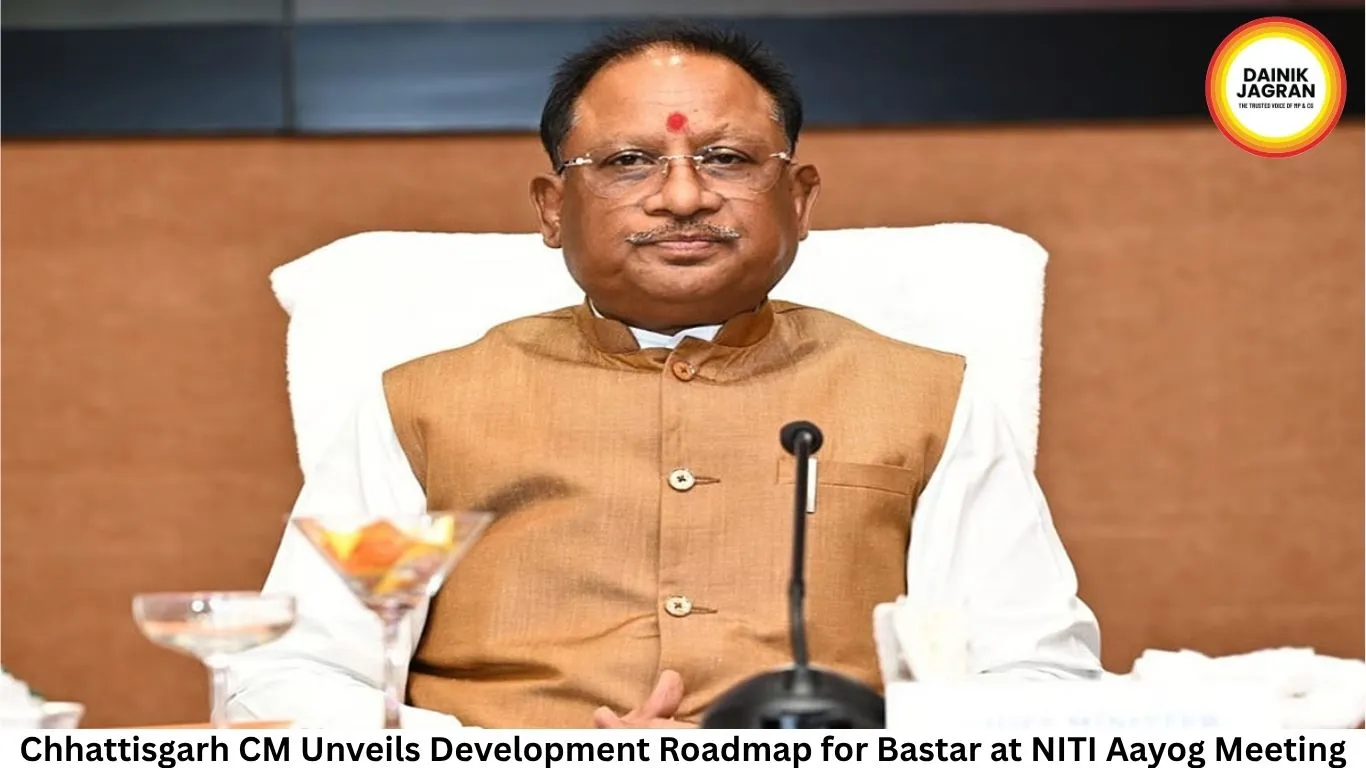
Chhattisgarh CM Unveils Development Roadmap for Bastar at NITI Aayog Meeting

Digital Desk

Chhattisgarh CM Unveils Development Roadmap for Bastar at NITI Aayog Meeting

Vishnu Deo Sai outlines plans to double tribal incomes, boost tourism, expand irrigation, and attract high-tech investments in a Naxalism-free Bastar.

Bastar is poised for a major economic transformation as Chhattisgarh Chief Minister Vishnu Deo Sai presented an ambitious development roadmap during the 11th Governing Council meeting of NITI Aayog. Addressing the gathering chaired by Prime Minister Narendra Modi, the Chief Minister highlighted efforts to turn Bastar into a model region for prosperity, employment, education, tourism, and modern industry.

Presenting his vision at the meeting attended by Union ministers, chief ministers, lieutenant governors, and senior policymakers, Sai said the state government is working to transform Bastar from a region once affected by Left-wing extremism into a hub of inclusive growth and investment.

The strategy focuses on increasing rural incomes, strengthening infrastructure, improving social services, and creating new economic opportunities for tribal communities across the region.

Focus on Income Growth

A key objective of the government's plan is to double the income of tribal households within the next three years. According to the Chief Minister, the target is to raise average monthly family incomes from below ₹15,000 to approximately ₹30,000.

The strategy combines agriculture, animal husbandry, forest-based livelihoods, small-scale industries, and welfare programmes. A major component is the promotion of a "White Revolution" through dairy development.

Under the initiative, tribal families are being provided with milch cows and buffaloes to establish sustainable sources of income. The programme is also expected to generate employment in milk collection, transportation, processing, and local marketing, particularly benefiting women and young people.

Irrigation and Agriculture Expansion

The state government is implementing two major irrigation projects worth more than ₹2,000 crore to improve water availability in the Indravati river region.

These projects aim to provide year-round irrigation across approximately 32,000 hectares, enabling farmers to diversify beyond traditional paddy cultivation. Officials expect increased production of vegetables, fruits, and cash crops, improving agricultural productivity and farm incomes.

The government believes improved irrigation infrastructure will play a significant role in strengthening Bastar's rural economy.

Tourism as a Growth Engine

Tourism has been identified as one of the primary drivers of future employment in Bastar. The government plans to develop Chitrakot and Sirpur into world-class tourism destinations.

Projects include the expansion of water sports, adventure tourism, jungle safaris, and eco-tourism facilities. In Sirpur, authorities are planning a global meditation centre, museum, and riverfront development to attract domestic and international visitors.

Officials estimate that growth in tourism will generate employment opportunities across hospitality, transportation, guiding services, handicrafts, retail businesses, and local entrepreneurship.

Healthcare and Service Delivery

To strengthen healthcare services, the state is creating approximately 3.6 million digital health profiles. These records are intended to improve patient care, facilitate information sharing among medical professionals, and enhance healthcare access in rural areas.

The government is also converting around 200 security camps in Bastar into integrated service centres known as "Seva Dera." These facilities will provide villagers with access to 371 central and state government schemes, including ration distribution, pensions, healthcare, education, and banking services.

Education and Technology Push

The development strategy includes major investments in education and digital infrastructure. The government has announced ₹100 crore for Education Cities in Abujhmad and Jagargunda.

The state has also expanded educational infrastructure through 341 PM SHRI schools and 5,857 smart classrooms. Bilingual textbooks in 16 local languages are being introduced to improve learning outcomes among tribal students.

Meanwhile, Chhattisgarh is positioning itself as an emerging destination for technology-driven industries. The Chief Minister highlighted ongoing investments in artificial intelligence, semiconductor manufacturing, electronics, and digital innovation.

Investment and Export Growth

According to Sai, Chhattisgarh has implemented 435 governance and business reforms while strengthening its single-window clearance system to attract investors.

Two semiconductor manufacturing units are currently under construction in the state. New investments in sectors such as sports equipment, electronics, bio-ethanol, garments, and textiles are also generating employment opportunities.

The state's One District-One Product (ODOP) initiative has helped local products access wider markets. Exports under the programme reached ₹761.76 crore by February 2026 during the current financial year, with aromatic rice emerging as a major contributor.


--------

🚨 Beat the News Rush – Join Now!

Get breaking alerts, hot exclusives, and game-changing stories instantly on your phone. No delays, no fluff – just the edge you need. ⚡

Tap to join: 

🟢 WhatsApp Channel: Dainik Jagran MP CG

Crave more?

🅕 Facebook: Dainik Jagran MP CG English

🅧 Twitter (X): Dainik Jagran MP CG

🅘 Instagram: Dainik Jagran MP CG

Share the fire – keep your crew ahead! 🗞️🔥

english.dainikjagranmpcg.com
18 Jun 2026 By Rishita

Chhattisgarh CM Unveils Development Roadmap for Bastar at NITI Aayog Meeting

Digital Desk

Bastar is poised for a major economic transformation as Chhattisgarh Chief Minister Vishnu Deo Sai presented an ambitious development roadmap during the 11th Governing Council meeting of NITI Aayog. Addressing the gathering chaired by Prime Minister Narendra Modi, the Chief Minister highlighted efforts to turn Bastar into a model region for prosperity, employment, education, tourism, and modern industry.

Presenting his vision at the meeting attended by Union ministers, chief ministers, lieutenant governors, and senior policymakers, Sai said the state government is working to transform Bastar from a region once affected by Left-wing extremism into a hub of inclusive growth and investment.

The strategy focuses on increasing rural incomes, strengthening infrastructure, improving social services, and creating new economic opportunities for tribal communities across the region.

Focus on Income Growth

A key objective of the government's plan is to double the income of tribal households within the next three years. According to the Chief Minister, the target is to raise average monthly family incomes from below ₹15,000 to approximately ₹30,000.

The strategy combines agriculture, animal husbandry, forest-based livelihoods, small-scale industries, and welfare programmes. A major component is the promotion of a "White Revolution" through dairy development.

Under the initiative, tribal families are being provided with milch cows and buffaloes to establish sustainable sources of income. The programme is also expected to generate employment in milk collection, transportation, processing, and local marketing, particularly benefiting women and young people.

Irrigation and Agriculture Expansion

The state government is implementing two major irrigation projects worth more than ₹2,000 crore to improve water availability in the Indravati river region.

These projects aim to provide year-round irrigation across approximately 32,000 hectares, enabling farmers to diversify beyond traditional paddy cultivation. Officials expect increased production of vegetables, fruits, and cash crops, improving agricultural productivity and farm incomes.

The government believes improved irrigation infrastructure will play a significant role in strengthening Bastar's rural economy.

Tourism as a Growth Engine

Tourism has been identified as one of the primary drivers of future employment in Bastar. The government plans to develop Chitrakot and Sirpur into world-class tourism destinations.

Projects include the expansion of water sports, adventure tourism, jungle safaris, and eco-tourism facilities. In Sirpur, authorities are planning a global meditation centre, museum, and riverfront development to attract domestic and international visitors.

Officials estimate that growth in tourism will generate employment opportunities across hospitality, transportation, guiding services, handicrafts, retail businesses, and local entrepreneurship.

Healthcare and Service Delivery

To strengthen healthcare services, the state is creating approximately 3.6 million digital health profiles. These records are intended to improve patient care, facilitate information sharing among medical professionals, and enhance healthcare access in rural areas.

The government is also converting around 200 security camps in Bastar into integrated service centres known as "Seva Dera." These facilities will provide villagers with access to 371 central and state government schemes, including ration distribution, pensions, healthcare, education, and banking services.

Education and Technology Push

The development strategy includes major investments in education and digital infrastructure. The government has announced ₹100 crore for Education Cities in Abujhmad and Jagargunda.

The state has also expanded educational infrastructure through 341 PM SHRI schools and 5,857 smart classrooms. Bilingual textbooks in 16 local languages are being introduced to improve learning outcomes among tribal students.

Meanwhile, Chhattisgarh is positioning itself as an emerging destination for technology-driven industries. The Chief Minister highlighted ongoing investments in artificial intelligence, semiconductor manufacturing, electronics, and digital innovation.

Investment and Export Growth

According to Sai, Chhattisgarh has implemented 435 governance and business reforms while strengthening its single-window clearance system to attract investors.

Two semiconductor manufacturing units are currently under construction in the state. New investments in sectors such as sports equipment, electronics, bio-ethanol, garments, and textiles are also generating employment opportunities.

The state's One District-One Product (ODOP) initiative has helped local products access wider markets. Exports under the programme reached ₹761.76 crore by February 2026 during the current financial year, with aromatic rice emerging as a major contributor.
https://english.dainikjagranmpcg.com/states/chhattisgarh/chhattisgarh-cm-unveils-development-roadmap-for-bastar-at-niti-aayog/article-20300

Latest News