Chhattisgarh LPG Crisis 2026: Wood and Coal Make a Comeback as Gas Runs Dry — Assembly Protests, 350+ Cylinders Seized, Steel Industry Warns of Production Hit
Digital Desk
Chhattisgarh's LPG crisis deepens as households switch to coal and wood amid West Asia war disruptions. Congress storms Assembly, 350+ cylinders seized in Raipur raids. Full ground report.
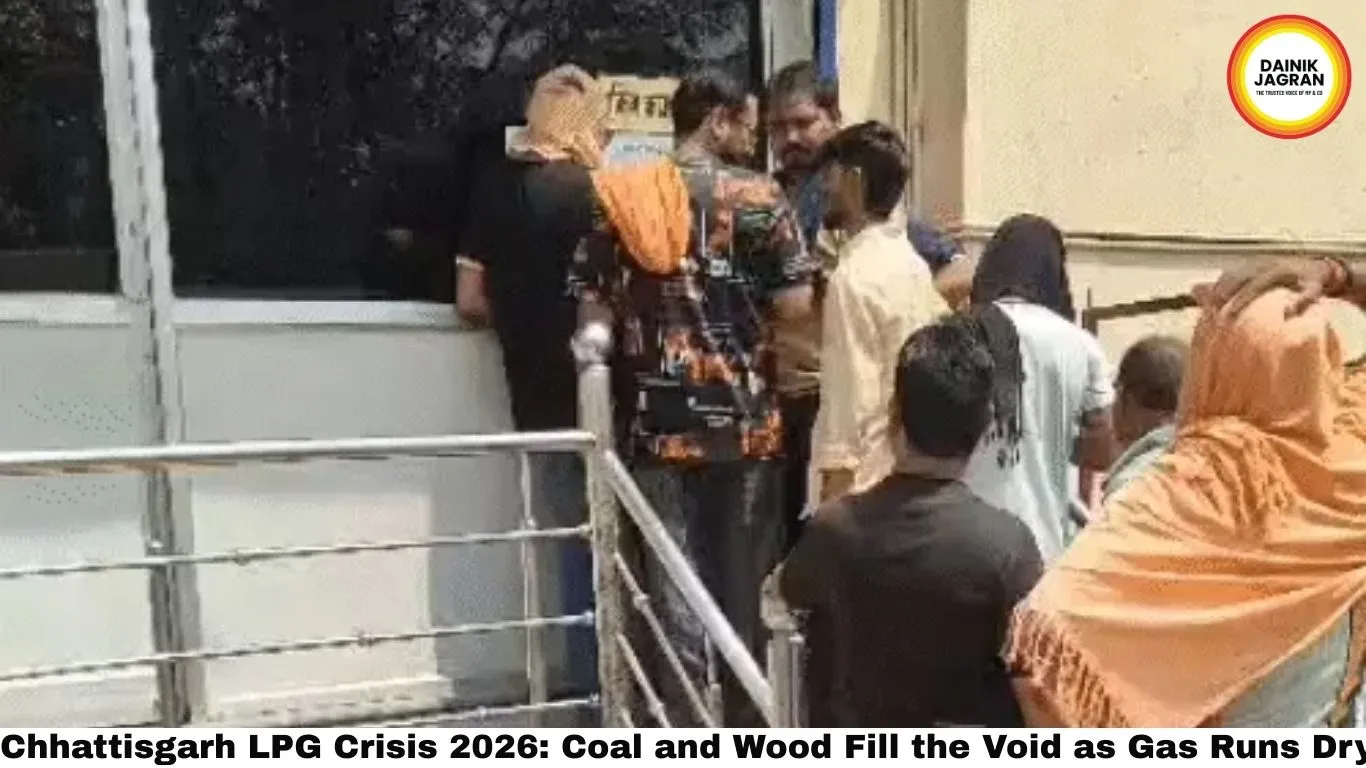
Across Chhattisgarh, a quiet and alarming regression is underway. In kitchens that once ran on clean LPG, families are relighting coal stoves and breaking out firewood. In dhabas and tea stalls, the familiar blue flame has been replaced by the crackle of burning coal. And in the Chhattisgarh Legislative Assembly, the LPG crisis that began in the Strait of Hormuz has exploded into full-blown political confrontation — with the Congress forcing chaos on the floor of the House and the ruling BJP government struggling to defend a crisis it did not create but cannot yet resolve.
From the Gulf to Chhattisgarh's Kitchen: How the Crisis Arrived
The Chhattisgarh Legislative Assembly witnessed chaotic scenes on March 12 as the main opposition Congress party staged a vehement protest over the reported shortage of LPG cylinders in the state, directly linking the crisis to the ongoing conflict in West Asia between Iran and Israel. Daily Post Nigeria
The chain of causation is clear. Iran's effective closure of the Strait of Hormuz — through which India routes the majority of its LPG imports — triggered a supply emergency that the Union government managed by invoking the Essential Commodities Act, prioritising domestic household cylinders and capping commercial supply at just 20% of average monthly requirements. The consequences for Chhattisgarh's 3.6 million domestic LPG consumers — and tens of thousands of commercial establishments — have been immediate and severe.
Congress Storms the Assembly
During Zero Hour on March 12, Leader of the Opposition Charan Das Mahant highlighted the acute difficulties faced by over 3.6 million domestic LPG consumers in Chhattisgarh. He accused the state government of failing to prevent black marketing and hoarding, despite earlier assurances from Chief Minister Vishnu Deo Sai that no shortages would occur — with prices hiked shortly after such promises, exacerbating public hardship. Daily Post Nigeria
Mahant submitted an adjournment motion seeking a detailed floor debate on the issue. When the demand for discussion was denied, Congress MLAs trooped into the Well of the House, shouting slogans and demanding accountability. Former CM Bhupesh Baghel demanded full transparency from the government on current domestic and commercial LPG stockpiles and concrete steps to restore supply. He noted that commercial gas supplies have been particularly hit, leading to nearly 50% of hotels in major cities closing operations, including in Chhattisgarh. Daily Post Nigeria
350+ Cylinders Seized in Raipur Raids
The government's response has not been entirely passive. In a major enforcement action on March 13, Raipur authorities seized over 350 LPG cylinders in targeted raids against black marketeers — with the CM ordering zero tolerance for illegal hoarding and profiteering. The raids exposed a grey market where cylinders were being sold at up to ₹4,000 each — more than double the official commercial rate.
The Essential Commodities Act and the LPG Control Order 2026 have both been invoked to give enforcement agencies sharper legal teeth. To manage demand and prevent hoarding, the government introduced a 25-day minimum booking gap in urban areas and expanded the Delivery Authentication Code system to 90% of consumers. ANI News
Coal, Wood, and Induction Cookers: The Fallback Economy
With commercial gas supply slashed, Chhattisgarh's hospitality trade has been forced into rapid improvisation. The LPG shortage arising out of the West Asia crisis has fuelled induction cooktop sales dramatically, with several models going increasingly out of stock from retail stores and e-commerce sites across Chhattisgarh. Punch Induction cooker demand has reportedly surged 25 times above normal in some areas, with inventories wiped out within hours of fresh stock arriving.
But for smaller operators — tea stalls, roadside dhabas, local sweet shops — induction cooktops are neither affordable nor practical at scale. These establishments have reverted to coal and firewood, reversing years of clean-fuel adoption driven by the Pradhan Mantri Ujjwala Yojana. The environmental and health consequences of this regression — increased indoor air pollution, particulate matter emissions in densely populated commercial areas — are a secondary crisis that has received almost no policy attention.
Steel Industry Sounds the Alarm
The fallout is not limited to kitchens and restaurants. Manish Dhuppad from the Chhattisgarh Mini Steel Plant Association warned that coal and LPG prices may be adversely affected, and scrap imports could also be hit, since a major share comes from Dubai and the Middle East. International Bar Association According to the Chhattisgarh Mini Steel Plant Association, these factors combine to create significant production cost escalation — with direct energy input cost inflation for LPG and coal, scrap metal supply constraints, logistics cost increases, and currency depreciation effects on import-dependent inputs. Vanguard News
For a state whose economy is anchored in steel and mineral production, the ripple effects of the LPG crisis could prove far more lasting than the kitchen-level disruptions that are currently dominating headlines.
What the Government Has Said
Chief Minister Vishnu Deo Sai has maintained that Chhattisgarh has adequate buffer stocks and that the crisis is being actively managed. The state administration has directed district collectors to prevent hoarding at the distributor level, launched control rooms in major cities to receive complaints, and advised commercial establishments to shift to alternative fuels for the interim period. The government has also activated alternate fuel options including making kerosene available through PDS channels, and the Ministry of Environment, Forest and Climate Change has advised state pollution control boards to permit the use of biomass, RDF pellets, and kerosene or coal as alternate fuels for the hospitality and restaurant segment for one month. ANI News
The Deeper Problem No One Is Saying Aloud
The Chhattisgarh LPG crisis of March 2026 is, at its core, an energy security crisis — not a supply management problem. India has approximately 22 days of total LPG supply buffer — dangerously thin for a country of 1.4 billion people. Punch The Hormuz closure exposed in days what energy analysts have warned about for years: India's dependence on a single, geopolitically fragile import corridor makes every Indian kitchen hostage to foreign conflicts it has no control over.
Coal fires in Raipur dhabas and empty cylinders in Bilaspur homes are not just inconveniences. They are the visible symptoms of a structural failure in India's energy planning — and Chhattisgarh is paying the price.
Chhattisgarh LPG Crisis 2026: Wood and Coal Make a Comeback as Gas Runs Dry — Assembly Protests, 350+ Cylinders Seized, Steel Industry Warns of Production Hit
Digital Desk
Across Chhattisgarh, a quiet and alarming regression is underway. In kitchens that once ran on clean LPG, families are relighting coal stoves and breaking out firewood. In dhabas and tea stalls, the familiar blue flame has been replaced by the crackle of burning coal. And in the Chhattisgarh Legislative Assembly, the LPG crisis that began in the Strait of Hormuz has exploded into full-blown political confrontation — with the Congress forcing chaos on the floor of the House and the ruling BJP government struggling to defend a crisis it did not create but cannot yet resolve.
From the Gulf to Chhattisgarh's Kitchen: How the Crisis Arrived
The Chhattisgarh Legislative Assembly witnessed chaotic scenes on March 12 as the main opposition Congress party staged a vehement protest over the reported shortage of LPG cylinders in the state, directly linking the crisis to the ongoing conflict in West Asia between Iran and Israel. Daily Post Nigeria
The chain of causation is clear. Iran's effective closure of the Strait of Hormuz — through which India routes the majority of its LPG imports — triggered a supply emergency that the Union government managed by invoking the Essential Commodities Act, prioritising domestic household cylinders and capping commercial supply at just 20% of average monthly requirements. The consequences for Chhattisgarh's 3.6 million domestic LPG consumers — and tens of thousands of commercial establishments — have been immediate and severe.
Congress Storms the Assembly
During Zero Hour on March 12, Leader of the Opposition Charan Das Mahant highlighted the acute difficulties faced by over 3.6 million domestic LPG consumers in Chhattisgarh. He accused the state government of failing to prevent black marketing and hoarding, despite earlier assurances from Chief Minister Vishnu Deo Sai that no shortages would occur — with prices hiked shortly after such promises, exacerbating public hardship. Daily Post Nigeria
Mahant submitted an adjournment motion seeking a detailed floor debate on the issue. When the demand for discussion was denied, Congress MLAs trooped into the Well of the House, shouting slogans and demanding accountability. Former CM Bhupesh Baghel demanded full transparency from the government on current domestic and commercial LPG stockpiles and concrete steps to restore supply. He noted that commercial gas supplies have been particularly hit, leading to nearly 50% of hotels in major cities closing operations, including in Chhattisgarh. Daily Post Nigeria
350+ Cylinders Seized in Raipur Raids
The government's response has not been entirely passive. In a major enforcement action on March 13, Raipur authorities seized over 350 LPG cylinders in targeted raids against black marketeers — with the CM ordering zero tolerance for illegal hoarding and profiteering. The raids exposed a grey market where cylinders were being sold at up to ₹4,000 each — more than double the official commercial rate.
The Essential Commodities Act and the LPG Control Order 2026 have both been invoked to give enforcement agencies sharper legal teeth. To manage demand and prevent hoarding, the government introduced a 25-day minimum booking gap in urban areas and expanded the Delivery Authentication Code system to 90% of consumers. ANI News
Coal, Wood, and Induction Cookers: The Fallback Economy
With commercial gas supply slashed, Chhattisgarh's hospitality trade has been forced into rapid improvisation. The LPG shortage arising out of the West Asia crisis has fuelled induction cooktop sales dramatically, with several models going increasingly out of stock from retail stores and e-commerce sites across Chhattisgarh. Punch Induction cooker demand has reportedly surged 25 times above normal in some areas, with inventories wiped out within hours of fresh stock arriving.
But for smaller operators — tea stalls, roadside dhabas, local sweet shops — induction cooktops are neither affordable nor practical at scale. These establishments have reverted to coal and firewood, reversing years of clean-fuel adoption driven by the Pradhan Mantri Ujjwala Yojana. The environmental and health consequences of this regression — increased indoor air pollution, particulate matter emissions in densely populated commercial areas — are a secondary crisis that has received almost no policy attention.
Steel Industry Sounds the Alarm
The fallout is not limited to kitchens and restaurants. Manish Dhuppad from the Chhattisgarh Mini Steel Plant Association warned that coal and LPG prices may be adversely affected, and scrap imports could also be hit, since a major share comes from Dubai and the Middle East. International Bar Association According to the Chhattisgarh Mini Steel Plant Association, these factors combine to create significant production cost escalation — with direct energy input cost inflation for LPG and coal, scrap metal supply constraints, logistics cost increases, and currency depreciation effects on import-dependent inputs. Vanguard News
For a state whose economy is anchored in steel and mineral production, the ripple effects of the LPG crisis could prove far more lasting than the kitchen-level disruptions that are currently dominating headlines.
What the Government Has Said
Chief Minister Vishnu Deo Sai has maintained that Chhattisgarh has adequate buffer stocks and that the crisis is being actively managed. The state administration has directed district collectors to prevent hoarding at the distributor level, launched control rooms in major cities to receive complaints, and advised commercial establishments to shift to alternative fuels for the interim period. The government has also activated alternate fuel options including making kerosene available through PDS channels, and the Ministry of Environment, Forest and Climate Change has advised state pollution control boards to permit the use of biomass, RDF pellets, and kerosene or coal as alternate fuels for the hospitality and restaurant segment for one month. ANI News
The Deeper Problem No One Is Saying Aloud
The Chhattisgarh LPG crisis of March 2026 is, at its core, an energy security crisis — not a supply management problem. India has approximately 22 days of total LPG supply buffer — dangerously thin for a country of 1.4 billion people. Punch The Hormuz closure exposed in days what energy analysts have warned about for years: India's dependence on a single, geopolitically fragile import corridor makes every Indian kitchen hostage to foreign conflicts it has no control over.
Coal fires in Raipur dhabas and empty cylinders in Bilaspur homes are not just inconveniences. They are the visible symptoms of a structural failure in India's energy planning — and Chhattisgarh is paying the price.