

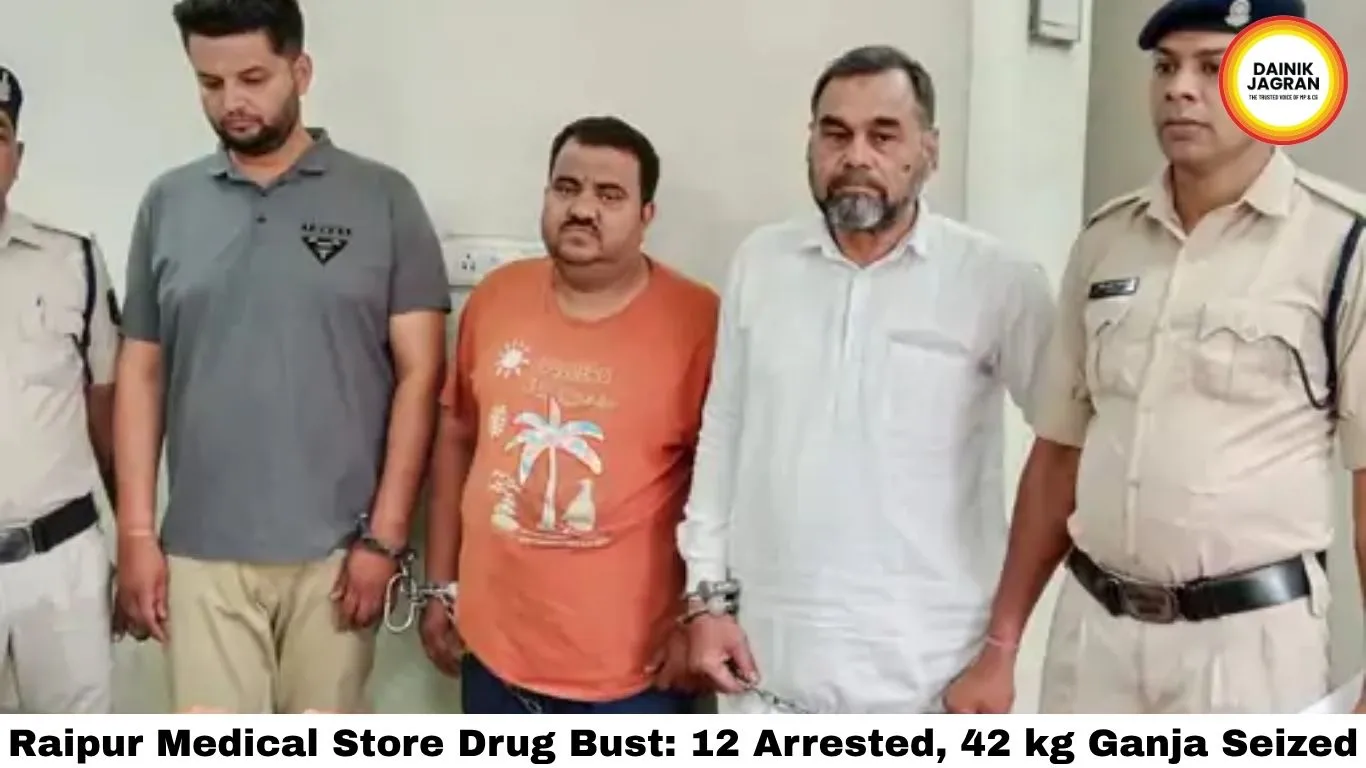
Raipur Medical Store Drug Bust: 12 Arrested, 42 kg Ganja Seized
Digital Desk
Raipur police arrest 12 people including a medical store owner for using a licensed pharmacy as a drug distribution front — 42 kg ganja seized in one of the city's largest single-raid marijuana busts.
Medical Store Used as Drug Cover: 12 Arrested in Raipur as Police Seize 42 kg Ganja in Targeted Crackdown
Raipur police bust a ganja supply network operating under the cover of a medical store — 12 accused arrested, 42 kg of marijuana seized, NDPS case registered as city's anti-narcotics drive intensifies.
A Medical Shop With a Second Business
In a city where law enforcement has been systematically dismantling drug networks over the past several months, Raipur police have now uncovered one of its more brazen concealment methods. A medical store — a legally licensed pharmacy operating in plain sight in a residential locality — was being used as a front to store and distribute marijuana. Acting on intelligence inputs, a police team conducted a targeted raid and arrested 12 individuals connected to the operation, seizing 42 kilograms of ganja from the premises and related locations.
The operation marks one of the largest single-raid marijuana seizures in Raipur city limits in recent months — and raises urgent questions about how a licensed medical establishment was being used to facilitate a narcotics distribution network without detection.
The Raid — How It Unfolded
Acting on specific intelligence about suspicious activity at the medical store, the Raipur police team conducted a surprise raid at the premises. On arrival, investigators found not only ganja stored at the shop itself but evidence of an active distribution network — including packaging material, weighing equipment, and mobile phones used to coordinate deliveries to clients across multiple localities in the city.
The store owner was among those arrested at the scene. Eleven other individuals — including workers, delivery associates, and customers who were present during the raid — were also taken into custody. All 12 have been booked under relevant provisions of the Narcotics Drugs and Psychotropic Substances Act. The seized 42 kilograms of ganja has been sent for forensic analysis and formal valuation.
The Medical Store Cover — A Sophisticated Deception
The use of a medical store as a cover for drug distribution represents a calculated exploitation of the premises' legitimacy. A licensed pharmacy draws no particular police attention — it receives regular deliveries, has walk-in customers at all hours, and handles cash transactions routinely. For a drug distribution operation, these features are operationally ideal.
The medical store in question reportedly maintained normal pharmaceutical operations as a front — selling medicines, handling prescriptions, and operating visibly as a legitimate business. The ganja was stored in back-room areas and distributed through a separate channel of contacts who visited under the guise of regular customers. Investigators are now examining whether the store's pharmaceutical licence had been fraudulently obtained or whether the owner had pivoted an existing legitimate business into a dual-use criminal operation.
Part of Raipur's Intensified Anti-Narcotics Drive
The raid is the latest in a sustained wave of anti-narcotics operations that Raipur Commissionerate Police have been conducting since early 2026. The broader context is significant. Between January 1, 2025 and January 31, 2026, Chhattisgarh police registered 1,434 drug cases, arrested 2,599 accused, and seized over 20,000 kilograms of ganja along with heroin, opium, and psychotropic substances. The state government sanctioned 100 new posts for Anti-Narcotics Task Force units across 10 districts specifically to intensify this campaign.
In Raipur itself, the crackdown has been multi-pronged — targeting not just carriers and street-level dealers but the supply chain infrastructure that sustains urban drug distribution. The medical store bust fits precisely into this approach: identifying and dismantling the storage and distribution nodes that allow narcotics to flow from source states like Odisha and Andhra Pradesh into Raipur's residential localities.
The Odisha–Chhattisgarh Drug Pipeline
The 42 kilograms of ganja seized in Raipur is almost certainly part of the well-documented Odisha–Chhattisgarh drug pipeline — one of the most persistent narcotics supply routes in central India. Odisha, particularly its southern tribal districts of Koraput, Malkangiri and Rayagada, is one of India's largest illegal cannabis cultivation zones. Harvested ganja moves northward through Jagdalpur, Kondagaon and Raipur along road and rail corridors, eventually reaching urban distribution networks in Raipur, Durg, Bilaspur and beyond.
Police in both states have been coordinating more closely in 2026 to interdict this supply chain — with Odisha destroying cannabis cultivation over nearly 30,000 acres and Chhattisgarh intensifying seizures at border entry points and within city distribution networks simultaneously.
What the Investigation Will Pursue
With 12 arrests in hand, investigators will now focus on three key questions. First — where was the ganja sourced from, and who were the supplier contacts? Second — how long had the medical store been operating as a distribution front, and how much ganja had already been sold through it? Third — were any other legitimate businesses in the same area being used for similar purposes?
Mobile phone data from the arrested individuals is expected to yield a map of the distribution network's customer base and supply contacts. Financial investigation is also likely — examining whether drug income was being laundered through the store's pharmaceutical transaction records.
Raipur Medical Store Drug Bust: 12 Arrested, 42 kg Ganja Seized
Digital Desk
Medical Store Used as Drug Cover: 12 Arrested in Raipur as Police Seize 42 kg Ganja in Targeted Crackdown
Raipur police bust a ganja supply network operating under the cover of a medical store — 12 accused arrested, 42 kg of marijuana seized, NDPS case registered as city's anti-narcotics drive intensifies.
A Medical Shop With a Second Business
In a city where law enforcement has been systematically dismantling drug networks over the past several months, Raipur police have now uncovered one of its more brazen concealment methods. A medical store — a legally licensed pharmacy operating in plain sight in a residential locality — was being used as a front to store and distribute marijuana. Acting on intelligence inputs, a police team conducted a targeted raid and arrested 12 individuals connected to the operation, seizing 42 kilograms of ganja from the premises and related locations.
The operation marks one of the largest single-raid marijuana seizures in Raipur city limits in recent months — and raises urgent questions about how a licensed medical establishment was being used to facilitate a narcotics distribution network without detection.
The Raid — How It Unfolded
Acting on specific intelligence about suspicious activity at the medical store, the Raipur police team conducted a surprise raid at the premises. On arrival, investigators found not only ganja stored at the shop itself but evidence of an active distribution network — including packaging material, weighing equipment, and mobile phones used to coordinate deliveries to clients across multiple localities in the city.
The store owner was among those arrested at the scene. Eleven other individuals — including workers, delivery associates, and customers who were present during the raid — were also taken into custody. All 12 have been booked under relevant provisions of the Narcotics Drugs and Psychotropic Substances Act. The seized 42 kilograms of ganja has been sent for forensic analysis and formal valuation.
The Medical Store Cover — A Sophisticated Deception
The use of a medical store as a cover for drug distribution represents a calculated exploitation of the premises' legitimacy. A licensed pharmacy draws no particular police attention — it receives regular deliveries, has walk-in customers at all hours, and handles cash transactions routinely. For a drug distribution operation, these features are operationally ideal.
The medical store in question reportedly maintained normal pharmaceutical operations as a front — selling medicines, handling prescriptions, and operating visibly as a legitimate business. The ganja was stored in back-room areas and distributed through a separate channel of contacts who visited under the guise of regular customers. Investigators are now examining whether the store's pharmaceutical licence had been fraudulently obtained or whether the owner had pivoted an existing legitimate business into a dual-use criminal operation.
Part of Raipur's Intensified Anti-Narcotics Drive
The raid is the latest in a sustained wave of anti-narcotics operations that Raipur Commissionerate Police have been conducting since early 2026. The broader context is significant. Between January 1, 2025 and January 31, 2026, Chhattisgarh police registered 1,434 drug cases, arrested 2,599 accused, and seized over 20,000 kilograms of ganja along with heroin, opium, and psychotropic substances. The state government sanctioned 100 new posts for Anti-Narcotics Task Force units across 10 districts specifically to intensify this campaign.
In Raipur itself, the crackdown has been multi-pronged — targeting not just carriers and street-level dealers but the supply chain infrastructure that sustains urban drug distribution. The medical store bust fits precisely into this approach: identifying and dismantling the storage and distribution nodes that allow narcotics to flow from source states like Odisha and Andhra Pradesh into Raipur's residential localities.
The Odisha–Chhattisgarh Drug Pipeline
The 42 kilograms of ganja seized in Raipur is almost certainly part of the well-documented Odisha–Chhattisgarh drug pipeline — one of the most persistent narcotics supply routes in central India. Odisha, particularly its southern tribal districts of Koraput, Malkangiri and Rayagada, is one of India's largest illegal cannabis cultivation zones. Harvested ganja moves northward through Jagdalpur, Kondagaon and Raipur along road and rail corridors, eventually reaching urban distribution networks in Raipur, Durg, Bilaspur and beyond.
Police in both states have been coordinating more closely in 2026 to interdict this supply chain — with Odisha destroying cannabis cultivation over nearly 30,000 acres and Chhattisgarh intensifying seizures at border entry points and within city distribution networks simultaneously.
What the Investigation Will Pursue
With 12 arrests in hand, investigators will now focus on three key questions. First — where was the ganja sourced from, and who were the supplier contacts? Second — how long had the medical store been operating as a distribution front, and how much ganja had already been sold through it? Third — were any other legitimate businesses in the same area being used for similar purposes?
Mobile phone data from the arrested individuals is expected to yield a map of the distribution network's customer base and supply contacts. Financial investigation is also likely — examining whether drug income was being laundered through the store's pharmaceutical transaction records.


