


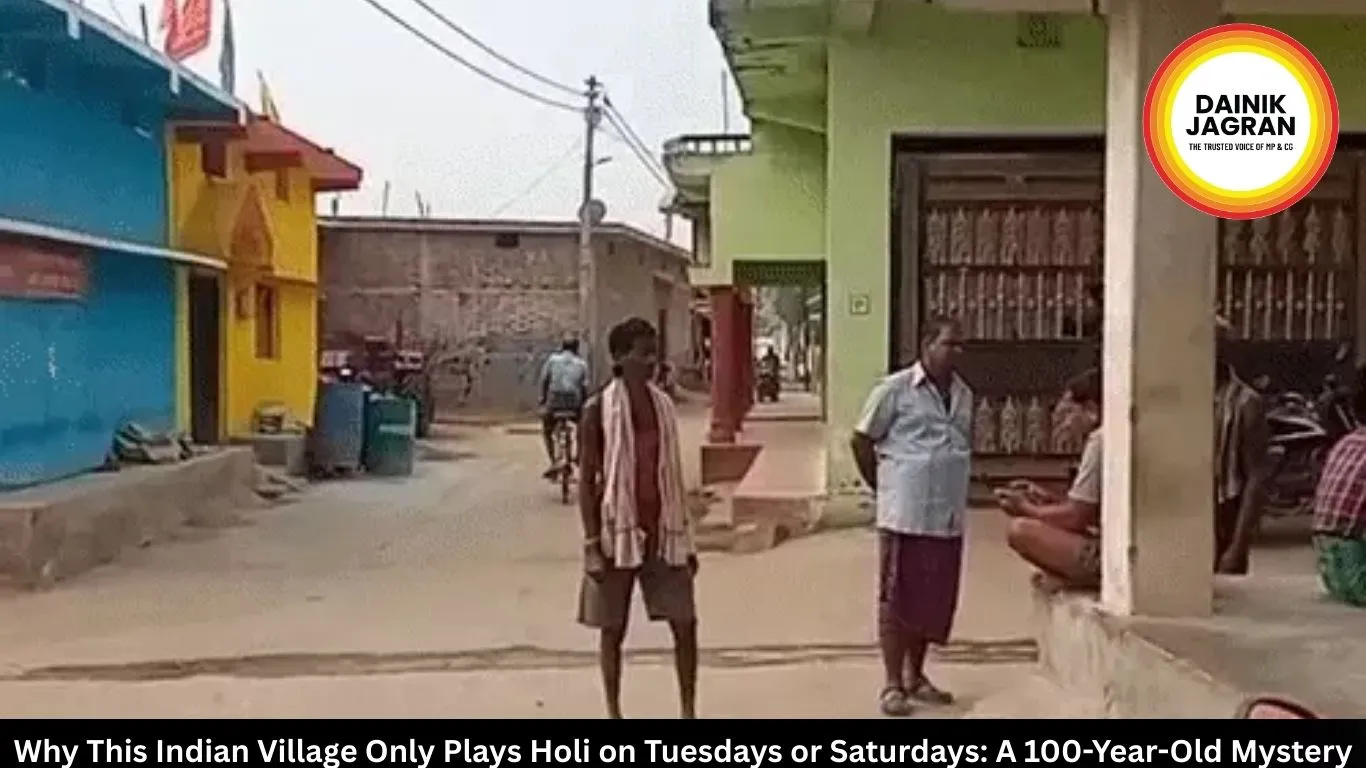
Why This Indian Village Only Plays Holi on Tuesdays or Saturdays: A 100-Year-Old Mystery
Digital Desk
While the rest of India follows the lunar calendar to celebrate the festival of colors, Salheona village in Chhattisgarh adheres to a much stricter, more mysterious rule. Located in the Baramkela block of the Sarangarh-Bilaigarh district, this community of 2,500 residents ignores the national holiday unless it falls specifically on a Tuesday or a Saturday.
For over a century, the people of Salheona have bypassed traditional dates to protect their homes from a localized "curse" that once threatened to burn their entire settlement to the ground.
The Haunting History: Why the Date Changed
The Salheona village Holi tradition isn't born out of mere preference, but out of historical necessity. According to village elders, nearly a hundred years ago, the village was plagued by spontaneous fires every time Holi was celebrated on its standard calendar date.
"Years ago, fires would break out suddenly during Holi. It would jump from one house to another, causing massive destruction," says Bhagra Sidar, a village elder. "This happened consecutively for three to four years, leaving the community in terror."
Desperate for a solution, the ancestors sought the counsel of Brahm Avdhut sages. The holy men suggested that the village perform a special "Shanti Yagna" (peace ritual) exclusively on a Tuesday or Saturday to appease the local deities and ward off the fire spirits. Since that day, the village has never looked back.
Rituals Before the Colors: A Day of Devotion
In Salheona, the festivities don't begin with a splash of water, but with hours of solemn prayer. Even if the rest of the state is covered in gulal, Salheona waits for its designated day.
-
The Eve of Holi: Holika Dahan is performed with strict Vedic rituals only on the night preceding the chosen Tuesday or Saturday.
-
The Morning Ritual: At 10:00 AM on the festival day, the entire village gathers for a two-hour ceremony involving Havan and Purnahuti (final offerings).
-
The Celebration: Only after the religious smoke clears—usually around noon—does the community begin applying colors, continuing the celebration until sunset.
A Tradition Embraced by the New Generation
In an era of rapid modernization, one might expect the youth to rebel against such specific constraints. However, in Salheona, the sentiment is quite the opposite. Local Panchayat member Nandkumar Sarathi notes that the fear of "An-honi" (unfavorable incidents) keeps the tradition alive.
"The younger generation follows these rules with the same devotion as our ancestors," Sarathi explains. "We believe that skipping these rituals or playing on the 'wrong' day could invite disaster back into our homes."
Why It Matters Today
This unique tradition highlights the diverse tapestry of Chhattisgarh unique festivals. In a world where cultural practices are often homogenized, Salheona serves as a living museum of how local folklore and history shape modern life. It reminds us that for many communities in India, faith is not just about celebration—it is about protection and communal harmony.
As the 2026 Holi season approaches, while experts debate the exact Muhurta for March 4th, the residents of Salheona will simply be looking at their weekly calendar, waiting for a Tuesday or Saturday to bring their village to life.
.jpg)




