

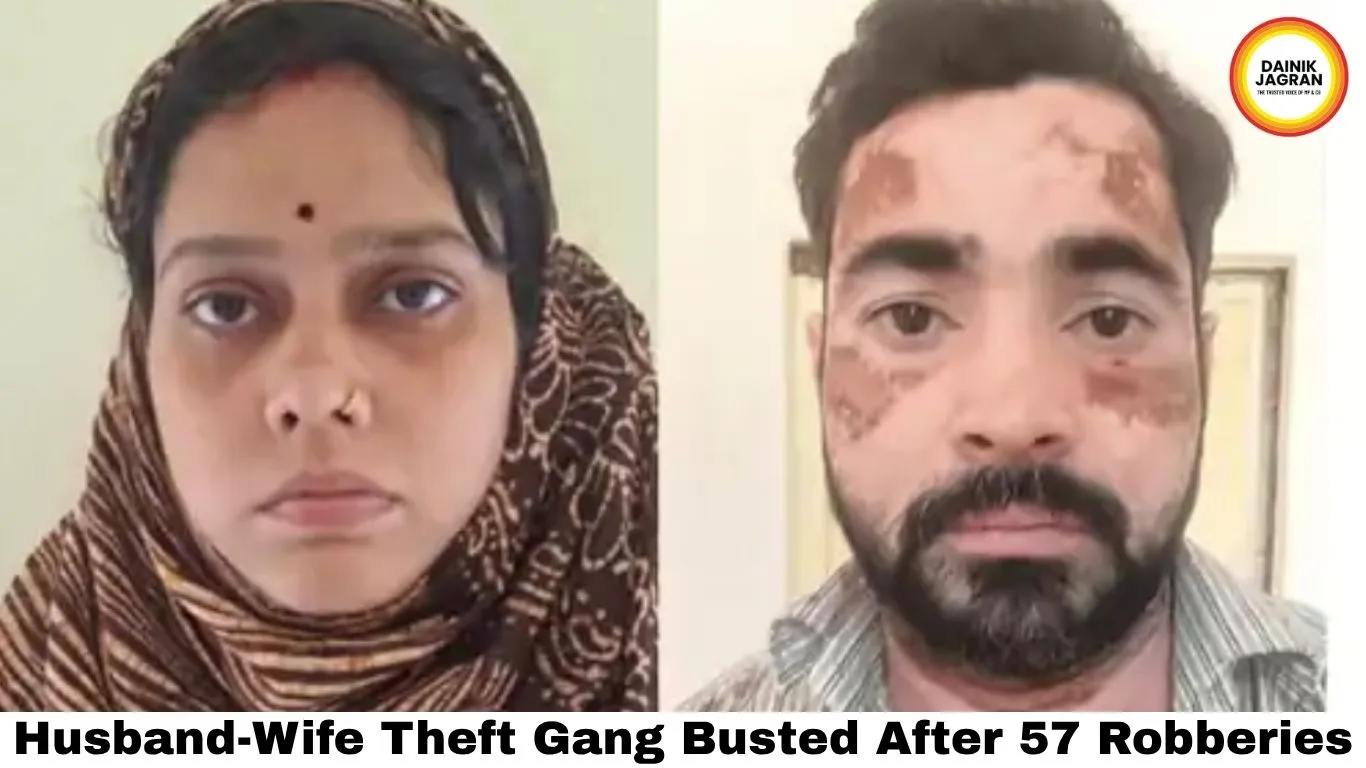
Gwalior's Real-Life Bunty-Babli Arrested After 57 Heists in 3 States
Digital Desk
Husband-wife theft duo Arvind and Jyoti Rajak arrested in Gwalior after 57 robberies across MP, UP and Gujarat. ₹17.75 lakh in gold and cash recovered; three-motorcycle evasion tactic cracked.
Gwalior's Real-Life Bunty-Babli: Husband-Wife Theft Gang Busted After 57 Robberies Across Three States
Arvind and Jyoti Rajak — a married couple from Gwalior — ran a meticulously planned interstate theft operation across MP, UP and Gujarat for months, using three motorcycles per heist and a domestic cover story to evade police checkpoints. ₹17.75 lakh in gold and cash recovered.
Life Imitates Cinema — With Real Consequences
When Bollywood coined the term "Bunty-Babli" for a roving husband-wife con duo, it was fiction. In Gwalior, it became reality. A married couple — Arvind Rajak, 32, and his wife Jyoti Rajak, 30 — operated one of the most methodically planned interstate theft networks Madhya Pradesh police have encountered in recent years. Fifty-seven documented robberies. Twelve cities. Three states. Months of evasion. And a domestic façade so convincing that police checkpoints waved them through — again and again.
The duo was arrested by Gwalior police on March 21, produced before a local court the following day, and remanded to judicial custody. The case is now being examined for linkages to unsolved thefts across the three-state corridor.
The Three-Motorcycle Method
What made the Rajak duo so difficult to catch for so long was not audacity — it was operational architecture. For every single theft operation, they deployed three different motorcycles. The first was used exclusively for reconnaissance — riding past the target location during daylight hours to assess entry points, resident patterns, and security arrangements. The second carried them to the target site on the night of the crime. The third — parked at a distance, in a different direction — served as the getaway vehicle.
This rotating-vehicle approach defeated CCTV-based tracking almost completely. Surveillance cameras across different districts of Madhya Pradesh, Uttar Pradesh, and Gujarat never flagged a consistent vehicle connected to the thefts. Without a vehicle to trace, investigators had almost nothing to build a pattern from — until six consecutive robberies in Gwalior's Maharajpura area forced a concentrated forensic analysis of hundreds of hours of footage.
How the Investigation Cracked the Case
The breakthrough came not from a single piece of evidence but from a pattern that only emerged after intense and time-consuming analysis. The spike in daytime housebreakings in Maharajpura had put Gwalior police under significant pressure — six targeted robberies in quick succession in the same area pointed to a professional operation rather than opportunistic crime.
Investigators went back through CCTV archives systematically — not looking for a vehicle, but for faces and movement patterns. The couple's behaviour during reconnaissance visits — the way they slowed down, the routes they took, the timing of their passes — eventually created a visual signature that investigators were able to match across multiple locations. Once identified, the net closed quickly.
Arvind and Jyoti: Their Roles, Their Record
Within the partnership, the division of labour was clear. Arvind was the primary executor — he handled the actual break-ins, moving through target properties with practiced efficiency. Jyoti's role was strategic rather than operational. She managed their movements between states, handled logistics, and provided the psychological cover that proved most valuable at police checkpoints: a man and woman traveling together as a couple, on a motorcycle, draw far less suspicion than a lone male on a getaway bike.
Their domestic cover was, in effect, a piece of criminal infrastructure — as carefully maintained as the three-motorcycle system.
Arvind's criminal record tells the story of a long career in theft. Fifty-six separate cases were already registered against him in districts spanning Jhansi, Sehore, Hoshangabad, and multiple cities in Gujarat before this arrest. Jyoti had one prior case in Jhansi. Their arrest is now expected to solve a significant number of pending, unresolved theft cases across all three states.
What Was Recovered
From the accused, Gwalior police recovered a substantial haul of stolen property. Two gold necklaces, two gold chains, four gold rings, and a pair of gold bracelets were seized — totalling approximately 105 grams of gold with an estimated market value of ₹15.75 lakh. Additionally, ₹2 lakh in cash was found on them — bringing the total recovered value to ₹17.75 lakh.
The items recovered represent only the fraction of stolen goods that the couple had not yet liquidated. Investigators are now actively working to identify the network of jewellery receivers — individuals who purchased stolen gold from the duo — who allowed them to convert their haul into untraceable cash across multiple cities.
Cracking the Receiver Network
The next phase of the investigation focuses on the downstream side of the operation. A theft network that sustains 57 robberies over months and crosses three state boundaries does not function in isolation. There are buyers — individuals or establishments — who knowingly or negligently purchased stolen jewellery from Arvind and Jyoti without adequate documentation. Identifying and prosecuting these receivers is as important as the arrest of the primary perpetrators, both for recovering additional stolen property and for dismantling the financial architecture that made the operation viable.
Police have confirmed that efforts to map this network are underway and that further arrests in the coming days cannot be ruled out.
A Win for Gwalior Police
ASP Vidita Dagar confirmed that both accused confessed during interrogation to their involvement in the Maharajpura thefts and cooperated with investigators in detailing their broader operational history. The arrest has been internally acknowledged as a significant breakthrough in the department's ongoing effort to tackle organised interstate property crime — a category that has been rising steadily across Madhya Pradesh in recent years.
For the residents of Maharajpura whose homes were violated repeatedly over the past several months, the arrest brings both relief and the beginning of what will be a lengthy process of evidence gathering, recovery attempts, and prosecution.
Gwalior's Real-Life Bunty-Babli Arrested After 57 Heists in 3 States
Digital Desk
Gwalior's Real-Life Bunty-Babli: Husband-Wife Theft Gang Busted After 57 Robberies Across Three States
Arvind and Jyoti Rajak — a married couple from Gwalior — ran a meticulously planned interstate theft operation across MP, UP and Gujarat for months, using three motorcycles per heist and a domestic cover story to evade police checkpoints. ₹17.75 lakh in gold and cash recovered.
Life Imitates Cinema — With Real Consequences
When Bollywood coined the term "Bunty-Babli" for a roving husband-wife con duo, it was fiction. In Gwalior, it became reality. A married couple — Arvind Rajak, 32, and his wife Jyoti Rajak, 30 — operated one of the most methodically planned interstate theft networks Madhya Pradesh police have encountered in recent years. Fifty-seven documented robberies. Twelve cities. Three states. Months of evasion. And a domestic façade so convincing that police checkpoints waved them through — again and again.
The duo was arrested by Gwalior police on March 21, produced before a local court the following day, and remanded to judicial custody. The case is now being examined for linkages to unsolved thefts across the three-state corridor.
The Three-Motorcycle Method
What made the Rajak duo so difficult to catch for so long was not audacity — it was operational architecture. For every single theft operation, they deployed three different motorcycles. The first was used exclusively for reconnaissance — riding past the target location during daylight hours to assess entry points, resident patterns, and security arrangements. The second carried them to the target site on the night of the crime. The third — parked at a distance, in a different direction — served as the getaway vehicle.
This rotating-vehicle approach defeated CCTV-based tracking almost completely. Surveillance cameras across different districts of Madhya Pradesh, Uttar Pradesh, and Gujarat never flagged a consistent vehicle connected to the thefts. Without a vehicle to trace, investigators had almost nothing to build a pattern from — until six consecutive robberies in Gwalior's Maharajpura area forced a concentrated forensic analysis of hundreds of hours of footage.
How the Investigation Cracked the Case
The breakthrough came not from a single piece of evidence but from a pattern that only emerged after intense and time-consuming analysis. The spike in daytime housebreakings in Maharajpura had put Gwalior police under significant pressure — six targeted robberies in quick succession in the same area pointed to a professional operation rather than opportunistic crime.
Investigators went back through CCTV archives systematically — not looking for a vehicle, but for faces and movement patterns. The couple's behaviour during reconnaissance visits — the way they slowed down, the routes they took, the timing of their passes — eventually created a visual signature that investigators were able to match across multiple locations. Once identified, the net closed quickly.
Arvind and Jyoti: Their Roles, Their Record
Within the partnership, the division of labour was clear. Arvind was the primary executor — he handled the actual break-ins, moving through target properties with practiced efficiency. Jyoti's role was strategic rather than operational. She managed their movements between states, handled logistics, and provided the psychological cover that proved most valuable at police checkpoints: a man and woman traveling together as a couple, on a motorcycle, draw far less suspicion than a lone male on a getaway bike.
Their domestic cover was, in effect, a piece of criminal infrastructure — as carefully maintained as the three-motorcycle system.
Arvind's criminal record tells the story of a long career in theft. Fifty-six separate cases were already registered against him in districts spanning Jhansi, Sehore, Hoshangabad, and multiple cities in Gujarat before this arrest. Jyoti had one prior case in Jhansi. Their arrest is now expected to solve a significant number of pending, unresolved theft cases across all three states.
What Was Recovered
From the accused, Gwalior police recovered a substantial haul of stolen property. Two gold necklaces, two gold chains, four gold rings, and a pair of gold bracelets were seized — totalling approximately 105 grams of gold with an estimated market value of ₹15.75 lakh. Additionally, ₹2 lakh in cash was found on them — bringing the total recovered value to ₹17.75 lakh.
The items recovered represent only the fraction of stolen goods that the couple had not yet liquidated. Investigators are now actively working to identify the network of jewellery receivers — individuals who purchased stolen gold from the duo — who allowed them to convert their haul into untraceable cash across multiple cities.
Cracking the Receiver Network
The next phase of the investigation focuses on the downstream side of the operation. A theft network that sustains 57 robberies over months and crosses three state boundaries does not function in isolation. There are buyers — individuals or establishments — who knowingly or negligently purchased stolen jewellery from Arvind and Jyoti without adequate documentation. Identifying and prosecuting these receivers is as important as the arrest of the primary perpetrators, both for recovering additional stolen property and for dismantling the financial architecture that made the operation viable.
Police have confirmed that efforts to map this network are underway and that further arrests in the coming days cannot be ruled out.
A Win for Gwalior Police
ASP Vidita Dagar confirmed that both accused confessed during interrogation to their involvement in the Maharajpura thefts and cooperated with investigators in detailing their broader operational history. The arrest has been internally acknowledged as a significant breakthrough in the department's ongoing effort to tackle organised interstate property crime — a category that has been rising steadily across Madhya Pradesh in recent years.
For the residents of Maharajpura whose homes were violated repeatedly over the past several months, the arrest brings both relief and the beginning of what will be a lengthy process of evidence gathering, recovery attempts, and prosecution.


