

Indore Commercial LPG Crisis: 4,000 Restaurants Without Gas, Week 3

Digital Desk

Indore Commercial LPG Crisis: 4,000 Restaurants Without Gas, Week 3

Indore's 4,000+ restaurants and food stalls enter third week without commercial LPG cylinders as the Strait of Hormuz closure bites. Chappan Dukan goes electric; black market surges.

Zero Gas, Zero Orders: Indore's 4,000 Restaurants and Street Food Stalls Fight to Stay Alive as Commercial LPG Crisis Enters Week Three

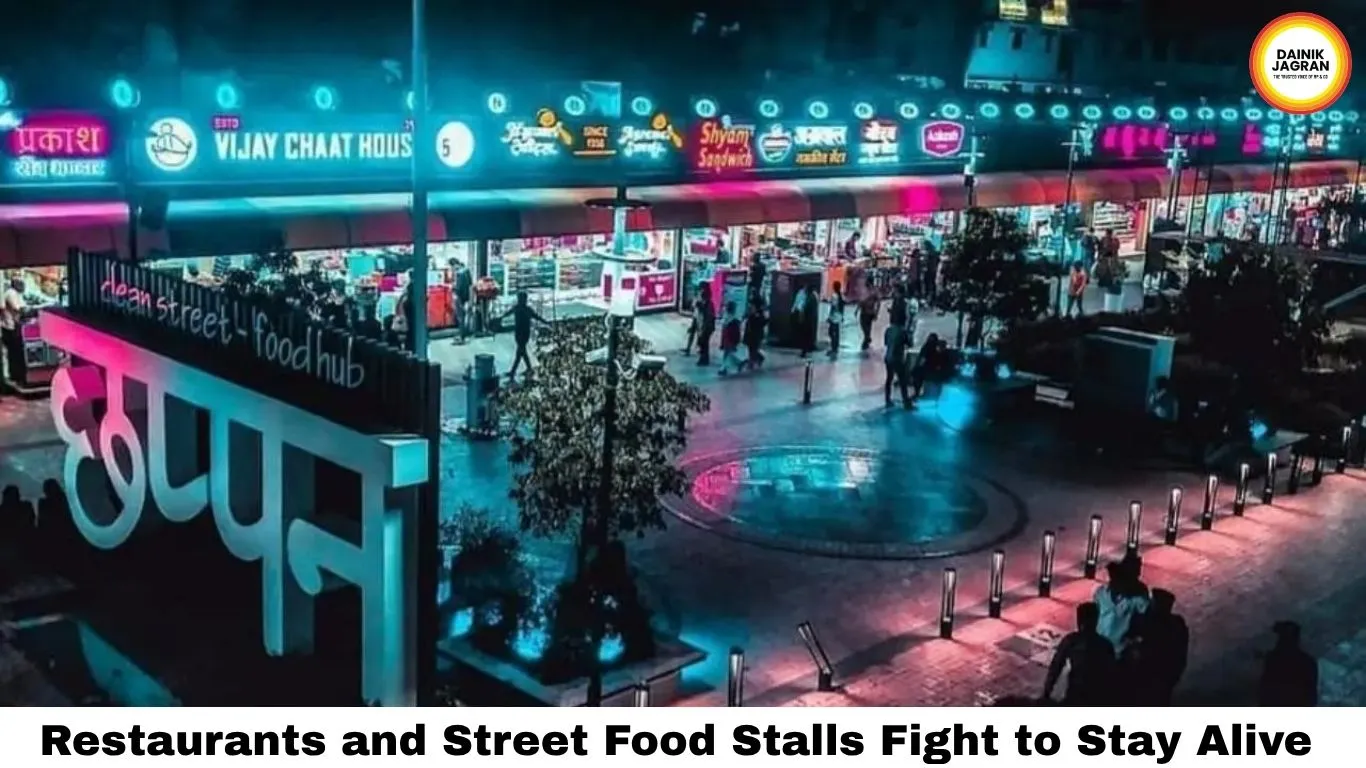
Chappan Dukan vendors cooking on coal, restaurants switching to tandoors, caterers scrambling for firewood — Indore's commercial LPG drought triggered by the Strait of Hormuz closure has now stretched into its third week with no confirmed date for full resumption.


The Flame That Went Out

Indore has always been India's cleanest city. Its streets are swept, its drains are clear, and its food culture — built around the legendary Chappan Dukan and hundreds of neighbourhood dhabas, tea stalls, and restaurants — is the soul of the city. But this week, that soul is cooking on coal.

Over 4,000 restaurants, food outlets, caterers, and street food vendors in Indore are operating without commercial LPG cylinders — or not operating at all. The commercial gas supply that powers this city's kitchens has been slashed to 20 percent of the average monthly requirement under a central government order issued on March 8. For the food economy of Madhya Pradesh's commercial capital, that 80 percent cut has been nothing short of devastating — and three weeks in, the situation has not normalised.


How It Started — and Why It Has Lasted

The origins of Indore's LPG emergency lie not in any local warehouse or distribution failure. They lie in the Strait of Hormuz — the narrow waterway through which nearly 90 percent of India's LPG imports travel. When the US-Israel-Iran war escalated on February 28, 2026, and Iran effectively disrupted the strait's traffic, India's energy supply chain buckled within days.

By March 9, commercial LPG cylinder distribution had been suspended across Madhya Pradesh — with exceptions made only for hospitals and educational institutions. The Union Ministry of Petroleum and Natural Gas invoked the Essential Commodities Act, issuing the LPG Control Order 2026 that directed all refineries to maximise LPG yields exclusively for domestic household consumption. Hotels, restaurants, caterers, and street food vendors — classified as commercial users — were cut off almost overnight.

The District Supply Controller confirmed that oil marketing companies suspended commercial LPG supply to food businesses specifically to prevent household consumers from facing further shortages. The logic was defensible. The consequences for Indore's food economy were immediate and severe.


Chappan Dukan: From Blue Flame to Electric Coil

At the iconic Chappan Dukan — the 56-stall street food hub that defines Indore's culinary identity — vendors who have served poha and jalebi over blue LPG flames for decades are now cooking on electric induction coils. Some smaller stalls have switched to coal entirely. A few have shut down temporarily, unable to absorb the cost and complexity of switching fuel mid-season.

A local tea and poha shop owner described the situation plainly: he bought coal to keep operating, but acknowledged he could not sustain it for long. His customers are daily wage workers and office-goers who buy ₹10 plates. He cannot raise prices. He cannot absorb fuel cost increases. And coal — while physically available — is operationally impractical and environmentally damaging for an urban food stall built around speed and cleanliness.

Larger restaurants have fared slightly better — those with traditional tandoors have pivoted their menus to tandoor-cooked items and suspended tawa-based preparations until commercial cylinders return. But menu contraction means reduced orders, reduced staff hours, and reduced revenue. One restaurant operator described the adjustment as operational triage — running the kitchen on what is available rather than what customers want.


The Black Market Fills the Gap

Where official supply fails, grey markets rapidly emerge. Commercial LPG cylinders priced at ₹1,750 per unit in February 2026 have been selling at ₹1,883 officially in March — and at premiums of ₹400 to ₹500 per cylinder above that in black market transactions reported across Indore. Domestic cylinders, which restaurants have been quietly sourcing through back channels to keep kitchens running, are also commanding a premium — with reports of cylinders changing hands at up to ₹4,000 in illegal refilling operations.

The Indore district administration responded by launching a dedicated LPG Crisis Control Room — a direct complaint channel for residents and business owners to report agencies charging over the counter, refusing legitimate supply, or selling to black market intermediaries. Raids were conducted on multiple agencies caught hoarding domestic cylinders for resale at inflated rates. The Indore Collector issued a public assurance that there is no fundamental shortage of gas in the district — and that black marketing would not be tolerated. That assurance sits uncomfortably alongside the reality being experienced by the vendors and restaurant owners who cannot get their supplies through official channels.


The Wider Damage

The knock-on effects of Indore's commercial LPG crisis extend far beyond restaurant balance sheets. Food delivery orders across Madhya Pradesh have fallen by 50 to 60 percent — a direct blow to the gig workers whose incomes depend entirely on restaurant order volumes. Wedding caterers who signed fixed-price contracts months ago are scrambling for firewood, induction cooktops, and tandoors — none of which scale efficiently for feeding hundreds of guests at outdoor events.

Across the state, over 50,000 hotels and restaurants have been operating without commercial cylinders since early March. Families in rural Madhya Pradesh and Chhattisgarh have reverted to firewood and coal stoves — reversing years of clean cooking adoption achieved under the Pradhan Mantri Ujjwala Yojana programme. Induction cooker sales in Bhopal and Indore have surged sevenfold. Prices of induction appliances have nearly doubled overnight as panicked buyers competed for limited stock.


Partial Relief — But Not Enough

The government's response has included partial resumption of commercial supply. Oil marketing companies have been directed to resume commercial cylinder distribution at 20 percent of the average monthly requirement — a step that has brought some relief to larger hotels and restaurants in Bhopal and Indore, but leaves the vast majority of the 50,000-plus affected establishments still critically short.

The government has stated that India holds 12 to 16 weeks of total LPG reserves. For the tea stall owner cooking on coal in Chappan Dukan, that figure is cold comfort. His stove is empty today. His customers need to eat today.


A Crisis That Was Always Coming

What the 2026 LPG emergency has exposed most sharply is not a supply management failure — it is a structural energy vulnerability that has been building for years. India has 332 million active domestic LPG connections. It imports over 60 percent of its LPG needs. Nearly all of it flows through a single narrow waterway. That is not an energy supply chain. That is a single point of failure — and the Iran-US-Israel war has triggered it.

The government must use this crisis as the forcing moment to fast-track piped natural gas expansion in cities, push induction cooking subsidies for small vendors and low-income households, and build strategic LPG reserves large enough to absorb future supply shocks without emptying the stoves of ordinary Indians. Indore's food streets will eventually relight. The question is whether the policy response will ensure they never go dark again.

english.dainikjagranmpcg.com
23 Mar 2026 By Jiya.S

Indore Commercial LPG Crisis: 4,000 Restaurants Without Gas, Week 3

Digital Desk

Zero Gas, Zero Orders: Indore's 4,000 Restaurants and Street Food Stalls Fight to Stay Alive as Commercial LPG Crisis Enters Week Three

Chappan Dukan vendors cooking on coal, restaurants switching to tandoors, caterers scrambling for firewood — Indore's commercial LPG drought triggered by the Strait of Hormuz closure has now stretched into its third week with no confirmed date for full resumption.


The Flame That Went Out

Indore has always been India's cleanest city. Its streets are swept, its drains are clear, and its food culture — built around the legendary Chappan Dukan and hundreds of neighbourhood dhabas, tea stalls, and restaurants — is the soul of the city. But this week, that soul is cooking on coal.

Over 4,000 restaurants, food outlets, caterers, and street food vendors in Indore are operating without commercial LPG cylinders — or not operating at all. The commercial gas supply that powers this city's kitchens has been slashed to 20 percent of the average monthly requirement under a central government order issued on March 8. For the food economy of Madhya Pradesh's commercial capital, that 80 percent cut has been nothing short of devastating — and three weeks in, the situation has not normalised.


How It Started — and Why It Has Lasted

The origins of Indore's LPG emergency lie not in any local warehouse or distribution failure. They lie in the Strait of Hormuz — the narrow waterway through which nearly 90 percent of India's LPG imports travel. When the US-Israel-Iran war escalated on February 28, 2026, and Iran effectively disrupted the strait's traffic, India's energy supply chain buckled within days.

By March 9, commercial LPG cylinder distribution had been suspended across Madhya Pradesh — with exceptions made only for hospitals and educational institutions. The Union Ministry of Petroleum and Natural Gas invoked the Essential Commodities Act, issuing the LPG Control Order 2026 that directed all refineries to maximise LPG yields exclusively for domestic household consumption. Hotels, restaurants, caterers, and street food vendors — classified as commercial users — were cut off almost overnight.

The District Supply Controller confirmed that oil marketing companies suspended commercial LPG supply to food businesses specifically to prevent household consumers from facing further shortages. The logic was defensible. The consequences for Indore's food economy were immediate and severe.


Chappan Dukan: From Blue Flame to Electric Coil

At the iconic Chappan Dukan — the 56-stall street food hub that defines Indore's culinary identity — vendors who have served poha and jalebi over blue LPG flames for decades are now cooking on electric induction coils. Some smaller stalls have switched to coal entirely. A few have shut down temporarily, unable to absorb the cost and complexity of switching fuel mid-season.

A local tea and poha shop owner described the situation plainly: he bought coal to keep operating, but acknowledged he could not sustain it for long. His customers are daily wage workers and office-goers who buy ₹10 plates. He cannot raise prices. He cannot absorb fuel cost increases. And coal — while physically available — is operationally impractical and environmentally damaging for an urban food stall built around speed and cleanliness.

Larger restaurants have fared slightly better — those with traditional tandoors have pivoted their menus to tandoor-cooked items and suspended tawa-based preparations until commercial cylinders return. But menu contraction means reduced orders, reduced staff hours, and reduced revenue. One restaurant operator described the adjustment as operational triage — running the kitchen on what is available rather than what customers want.


The Black Market Fills the Gap

Where official supply fails, grey markets rapidly emerge. Commercial LPG cylinders priced at ₹1,750 per unit in February 2026 have been selling at ₹1,883 officially in March — and at premiums of ₹400 to ₹500 per cylinder above that in black market transactions reported across Indore. Domestic cylinders, which restaurants have been quietly sourcing through back channels to keep kitchens running, are also commanding a premium — with reports of cylinders changing hands at up to ₹4,000 in illegal refilling operations.

The Indore district administration responded by launching a dedicated LPG Crisis Control Room — a direct complaint channel for residents and business owners to report agencies charging over the counter, refusing legitimate supply, or selling to black market intermediaries. Raids were conducted on multiple agencies caught hoarding domestic cylinders for resale at inflated rates. The Indore Collector issued a public assurance that there is no fundamental shortage of gas in the district — and that black marketing would not be tolerated. That assurance sits uncomfortably alongside the reality being experienced by the vendors and restaurant owners who cannot get their supplies through official channels.


The Wider Damage

The knock-on effects of Indore's commercial LPG crisis extend far beyond restaurant balance sheets. Food delivery orders across Madhya Pradesh have fallen by 50 to 60 percent — a direct blow to the gig workers whose incomes depend entirely on restaurant order volumes. Wedding caterers who signed fixed-price contracts months ago are scrambling for firewood, induction cooktops, and tandoors — none of which scale efficiently for feeding hundreds of guests at outdoor events.

Across the state, over 50,000 hotels and restaurants have been operating without commercial cylinders since early March. Families in rural Madhya Pradesh and Chhattisgarh have reverted to firewood and coal stoves — reversing years of clean cooking adoption achieved under the Pradhan Mantri Ujjwala Yojana programme. Induction cooker sales in Bhopal and Indore have surged sevenfold. Prices of induction appliances have nearly doubled overnight as panicked buyers competed for limited stock.


Partial Relief — But Not Enough

The government's response has included partial resumption of commercial supply. Oil marketing companies have been directed to resume commercial cylinder distribution at 20 percent of the average monthly requirement — a step that has brought some relief to larger hotels and restaurants in Bhopal and Indore, but leaves the vast majority of the 50,000-plus affected establishments still critically short.

The government has stated that India holds 12 to 16 weeks of total LPG reserves. For the tea stall owner cooking on coal in Chappan Dukan, that figure is cold comfort. His stove is empty today. His customers need to eat today.


A Crisis That Was Always Coming

What the 2026 LPG emergency has exposed most sharply is not a supply management failure — it is a structural energy vulnerability that has been building for years. India has 332 million active domestic LPG connections. It imports over 60 percent of its LPG needs. Nearly all of it flows through a single narrow waterway. That is not an energy supply chain. That is a single point of failure — and the Iran-US-Israel war has triggered it.

The government must use this crisis as the forcing moment to fast-track piped natural gas expansion in cities, push induction cooking subsidies for small vendors and low-income households, and build strategic LPG reserves large enough to absorb future supply shocks without emptying the stoves of ordinary Indians. Indore's food streets will eventually relight. The question is whether the policy response will ensure they never go dark again.

https://english.dainikjagranmpcg.com/states/madhya-pradesh/-draft--add-your-title/article-15810

Related Posts

Advertisement

Latest News


