


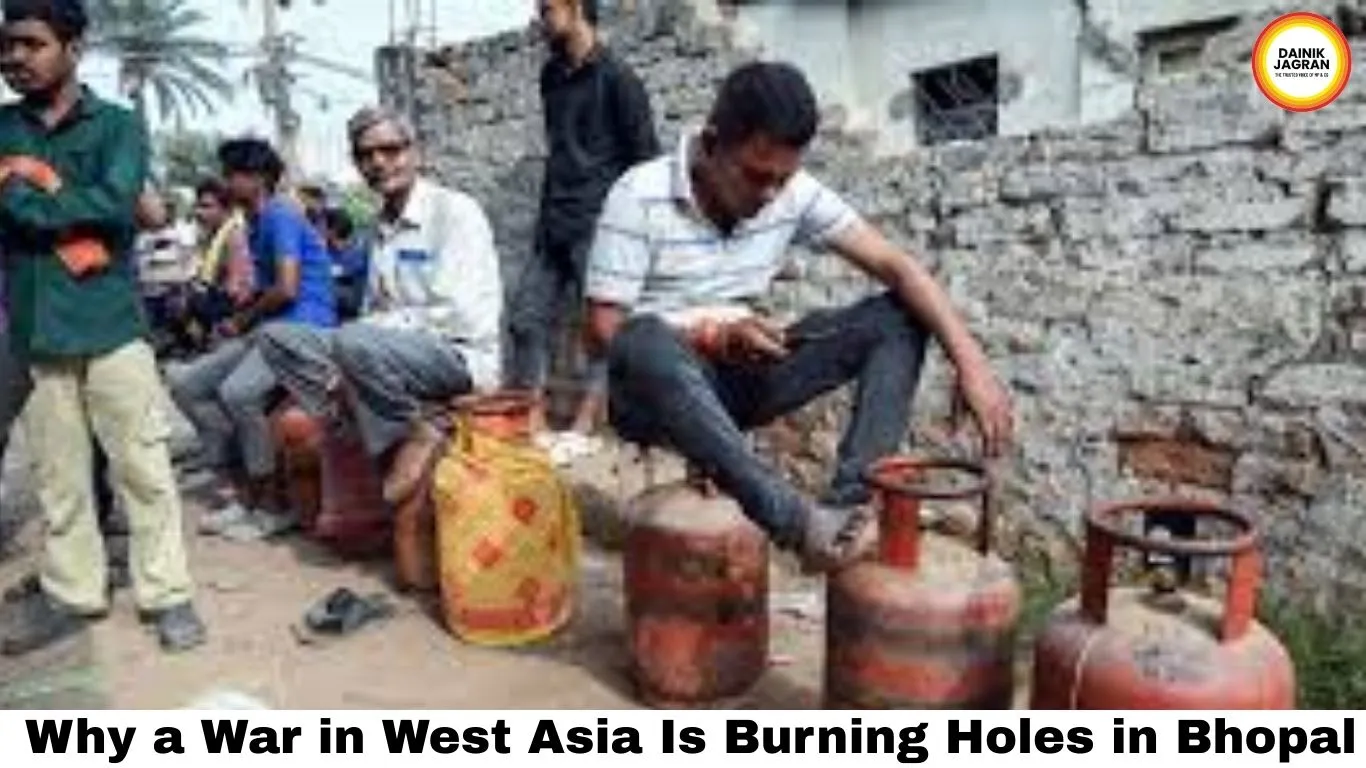
India's LPG Crisis 2026: Why a War in West Asia Is Burning Holes in Bhopal and Indore's Kitchens
Digital Desk
A war being fought thousands of kilometres away has quietly entered the kitchens of ordinary Indians. The ongoing conflict in West Asia that escalated in late February 2026 has choked the Strait of Hormuz — the narrow waterway through which nearly 90 percent of India's LPG imports travel. The result? A full-blown LPG gas cylinder crisis in 2026 that is hitting cities like Bhopal and Indore where it hurts most: at the stove.
Queues, Crashed Servers, and Empty Agencies
In Bhopal, thousands of families are standing in long queues outside gas agencies. Online booking systems have crashed under the surge in demand, pushing cylinder delivery timelines to seven or eight days. Induction cooker sales in the city have jumped sharply, with prices nearly doubling as panicked buyers search for any alternative they can find.
Over 2,000 hotels in Bhopal alone are facing a severe commercial cylinder shortage. Gas agencies have flatly refused further commercial supplies. Restaurant owners confirm that nearly 80 percent of eateries in the city are quietly buying domestic cylinders through back channels just to keep their kitchens running — a sign of how desperate the situation has become.
Indore's Famous Food Streets Go Electric and Coal
Indore is facing the same crisis, and the impact is visible on its famous streets. At the iconic Chappan Dukan food hub, vendors who have served poha and jalebi for decades over blue LPG flames are now cooking on electric induction coils. Some smaller tea and snack stalls have resorted to burning coal.
"We will see for a day or two, but we cannot run on coal forever," said one local shopkeeper, capturing the anxiety felt by hundreds of thousands of small vendors across Madhya Pradesh who cannot raise their prices and cannot absorb the cost of fuel alternatives.
Who Is Really Paying the Price?
The government has invoked the Essential Commodities Act, prioritised domestic household supply, and increased domestic LPG production by 25 percent. Prices, however, have already risen — a domestic cylinder jumped ₹60 overnight while commercial cylinders rose by ₹115. Food delivery orders across Madhya Pradesh have dropped by 50 to 60 percent, hitting gig workers hard. Wedding caterers who signed fixed-price contracts weeks ago are now scrambling for firewood and induction cooktops that neither scale nor come cheap.
This crisis did not begin with the West Asia war. The war simply exposed what was already broken. India has 332 million active domestic LPG connections and imports over 60 percent of its LPG needs — most of it flowing through a single narrow strait. That is not an energy policy. That is a vulnerability.
The government must use this moment to fast-track piped natural gas networks in cities, push induction cooking subsidies for small vendors and low-income households, and build strategic LPG reserves large enough to absorb future shocks without sending families to queue in the sun.
The flame in Bhopal and Indore's kitchens may be back to normal soon. But if India does not fix its energy infrastructure now — while the lesson is still fresh and painful — the next crisis will be worse, and ordinary people will pay for it again.




.jpg)




