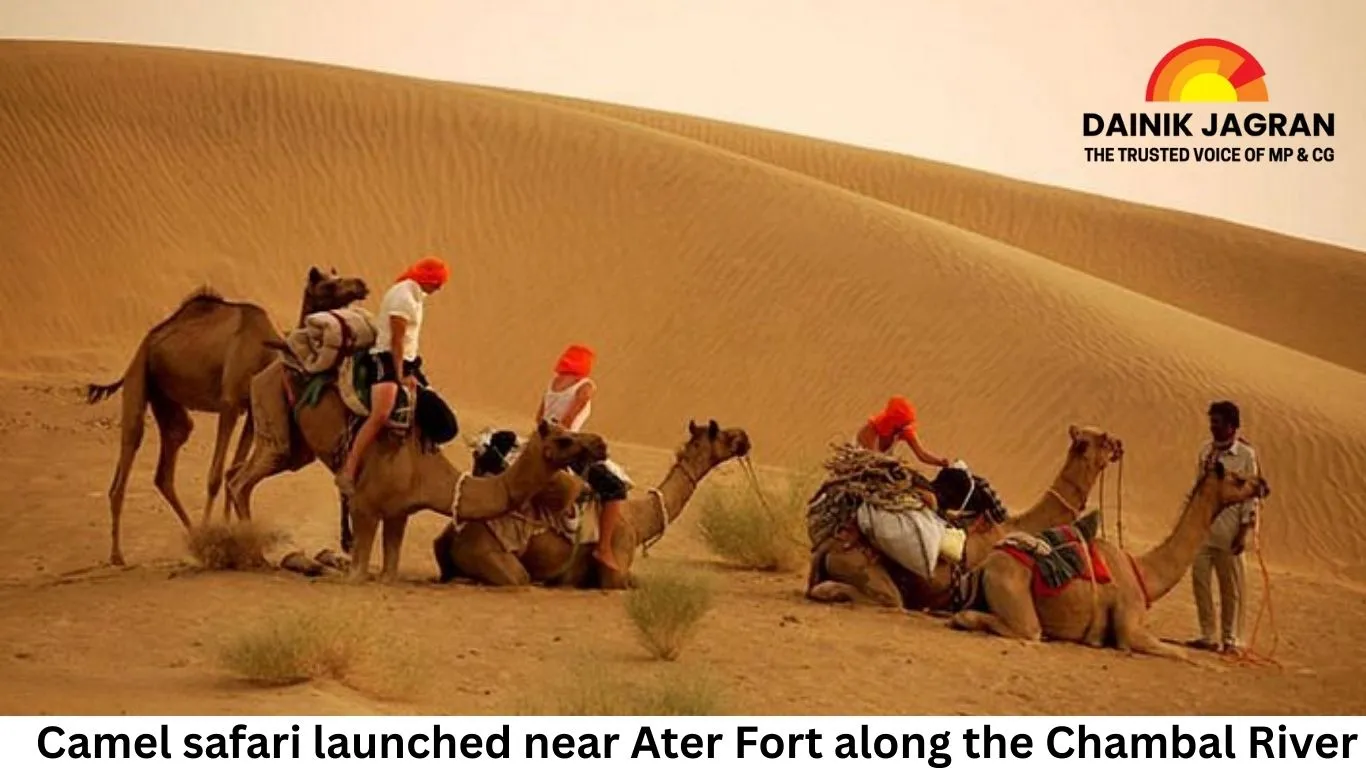
Camel safari launched near Ater Fort along the Chambal River, offering a Goa-like experience
Digital Desk
Once known for its ravines and dacoit legends, the Chambal region is now carving a new identity as a tourism destination. The stretch of the Chambal River flowing at the foothills of the historic Ater Fort in Bhind district is attracting visitors with a beach-like experience reminiscent of Goa.
Soft sandy riverbanks, open skies, and camel rides using traditional Rajasthani camels have become a major attraction. The Forest Department has launched a camel safari along the Chambal riverfront, initially involving 11 camels owned by local residents.
Two safari packages on offer
-
₹200 package: A camel ride of around 2 to 2.5 km along the sandy banks of the Chambal River.
-
₹500 package: A longer route of nearly 10 km, covering Ater Fort, Chamunda Devi Temple, ravine areas, and other nearby historical sites.
Timings and ticket availability
The camel safari operates from 11:00 am to 4:00 pm. Tickets can be purchased offline from the Forest Department office located outside Ater town.
Local cuisine and camping plans
To further enhance the tourist experience, the Forest Department is planning to open a restaurant offering local delicacies such as dal-baati-churma, gatte ki sabzi, kadhi-pakora, laddoos, and bedai-sabzi. Plans are also underway to introduce riverside camping similar to Rishikesh, along with boating facilities in the future.
Transport remains a key challenge
One of the biggest hurdles to tourism growth is transportation. Although Ater is just 25 km from Bhind, there is no public transport available after 4:00 pm. Improved connectivity could significantly boost tourist footfall.
Employment opportunities for locals
Forest Ranger Kritika Shukla said the initiative aims not only to promote tourism but also to generate employment for local residents. Through eco-tourism, the department is striving to maintain a balance between environmental conservation and economic development.
--------
🚨 Beat the News Rush – Join Now!
Get breaking alerts, hot exclusives, and game-changing stories instantly on your phone. No delays, no fluff – just the edge you need. ⚡
Tap to join:
🟢 WhatsApp Channel: Dainik Jagran MP CG
Crave more?
🅕 Facebook: Dainik Jagran MP CG English
🅧 Twitter (X): Dainik Jagran MP CG
🅘 Instagram: Dainik Jagran MP CG
Share the fire – keep your crew ahead! 🗞️🔥
Camel safari launched near Ater Fort along the Chambal River, offering a Goa-like experience
Digital Desk
Soft sandy riverbanks, open skies, and camel rides using traditional Rajasthani camels have become a major attraction. The Forest Department has launched a camel safari along the Chambal riverfront, initially involving 11 camels owned by local residents.
Two safari packages on offer
-
₹200 package: A camel ride of around 2 to 2.5 km along the sandy banks of the Chambal River.
-
₹500 package: A longer route of nearly 10 km, covering Ater Fort, Chamunda Devi Temple, ravine areas, and other nearby historical sites.
Timings and ticket availability
The camel safari operates from 11:00 am to 4:00 pm. Tickets can be purchased offline from the Forest Department office located outside Ater town.
Local cuisine and camping plans
To further enhance the tourist experience, the Forest Department is planning to open a restaurant offering local delicacies such as dal-baati-churma, gatte ki sabzi, kadhi-pakora, laddoos, and bedai-sabzi. Plans are also underway to introduce riverside camping similar to Rishikesh, along with boating facilities in the future.
Transport remains a key challenge
One of the biggest hurdles to tourism growth is transportation. Although Ater is just 25 km from Bhind, there is no public transport available after 4:00 pm. Improved connectivity could significantly boost tourist footfall.
Employment opportunities for locals
Forest Ranger Kritika Shukla said the initiative aims not only to promote tourism but also to generate employment for local residents. Through eco-tourism, the department is striving to maintain a balance between environmental conservation and economic development.