
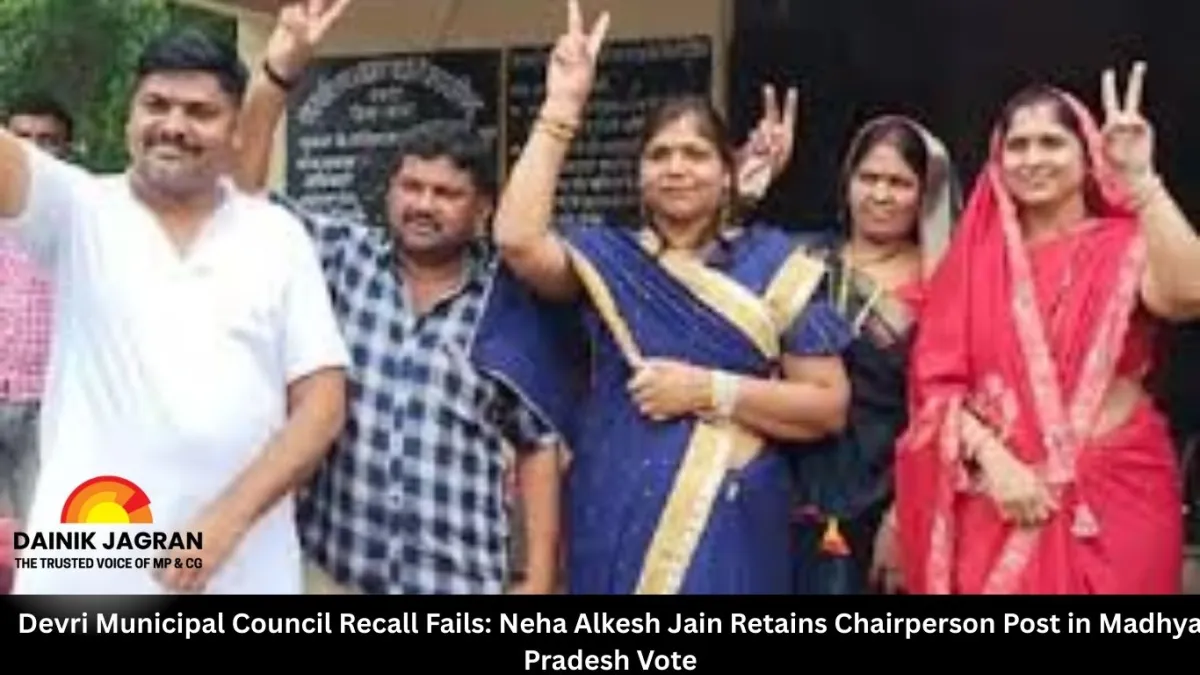

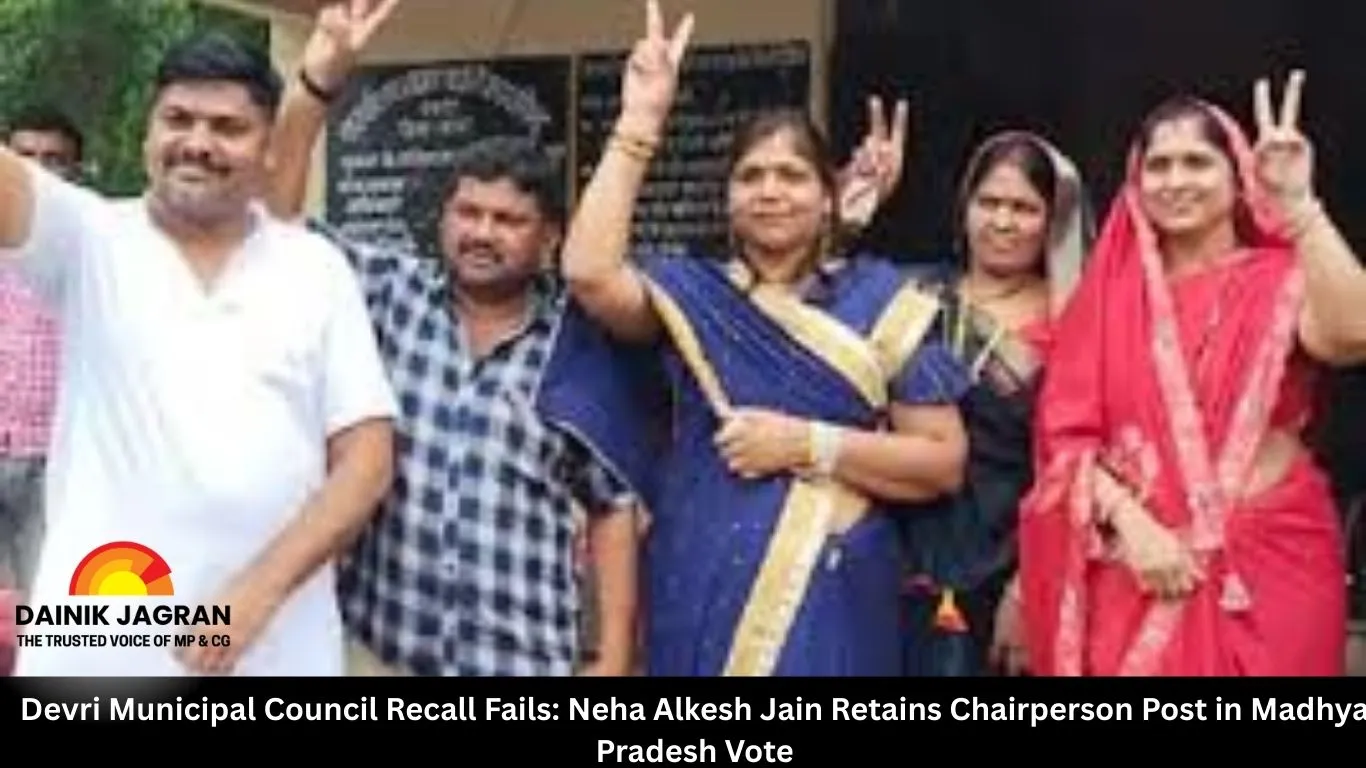
Devri Municipal Council Recall Fails: Neha Alkesh Jain Retains Chairperson Post in Madhya Pradesh Vote
Digital Desk
In a Test of Public Trust, Devri Voters Back Sitting Chairperson Neha Alkesh Jain
In a decisive verdict that underscores the complexities of local governance, the chairperson of Devri Municipal Council in Madhya Pradesh’s Sagar district, Neha Alkesh Jain, has successfully retained her position after surviving a high-stakes recall referendum. The vote, a direct test of her administration's public standing, concluded with Jain continuing in her role, highlighting voter sentiment in the region.
The State Election Commission, through Secretary Deepak Singh, announced the results on Wednesday, January 21, 2026. The numbers told a clear story: of the 13,367 votes cast in the January 19 referendum, a majority of 7,282 voted against recalling Jain, while 6,085 voted in favor of her removal. This margin means Jain will continue to serve as the council's chairperson, a significant political outcome for the local leader.
The Return of the Recall Clause: A 2025 Legal Shift
This referendum was not just a local event but a bellwether for a revived state policy. The legal provision to recall a Mayor or Municipal Council Chairperson was first introduced in Madhya Pradesh in 2000. Between its inception and its eventual lapse in 2018, 41 such recall votes were conducted. Of those, 21 chairpersons retained their seats, while 20 were removed—a near-even split showcasing the mechanism's potency.
The clause was reintroduced through a legislative amendment in 2025, making the Devri vote the first test case under this renewed framework. “The Devri referendum is being closely watched,” explains a Bhopal-based political analyst we spoke to. “It sets a precedent for how the revived recall provision will function. A successful retention by the incumbent signals that the threshold for removal remains substantial and that voters are weighing continuity against discontent.”
What This Means for Local Governance and Leadership
The result in Devri offers several key takeaways. Firstly, it demonstrates a level of resilience in Jain’s local support base. Surviving a recall requires mobilizing one's constituents actively, suggesting a degree of approval for her tenure's work. Secondly, it reaffirms the recall process as a robust, if dramatic, tool of direct democracy at the grassroots level, allowing citizens to mid-term course-correct their leadership.For other municipal chairpersons across Madhya Pradesh, the Devri outcome may offer a sigh of relief, indicating that recall is a challenging hurdle for petitioners to clear. However, it also serves as a stark reminder that their performance is under constant public scrutiny, with a formal mechanism now back in place to challenge it.
Conclusion: A Verdict for Stability, For Now
The dust has settled in Devri with a verdict for stability. Neha Alkesh Jain’s continuation as chairperson provides her administration with a renewed, voter-validated mandate. However, the very fact that the recall was triggered points to existing divisions and dissent. The eyes of Madhya Pradesh's local bodies will now be on how Jain governs post-referendum—whether she views this as an endorsement of all past actions or as a second chance to address the grievances that led to the recall petition in the first place. For voters, the power to hold leaders directly accountable is once again a live feature of their democratic toolkit.


.jpg)




